
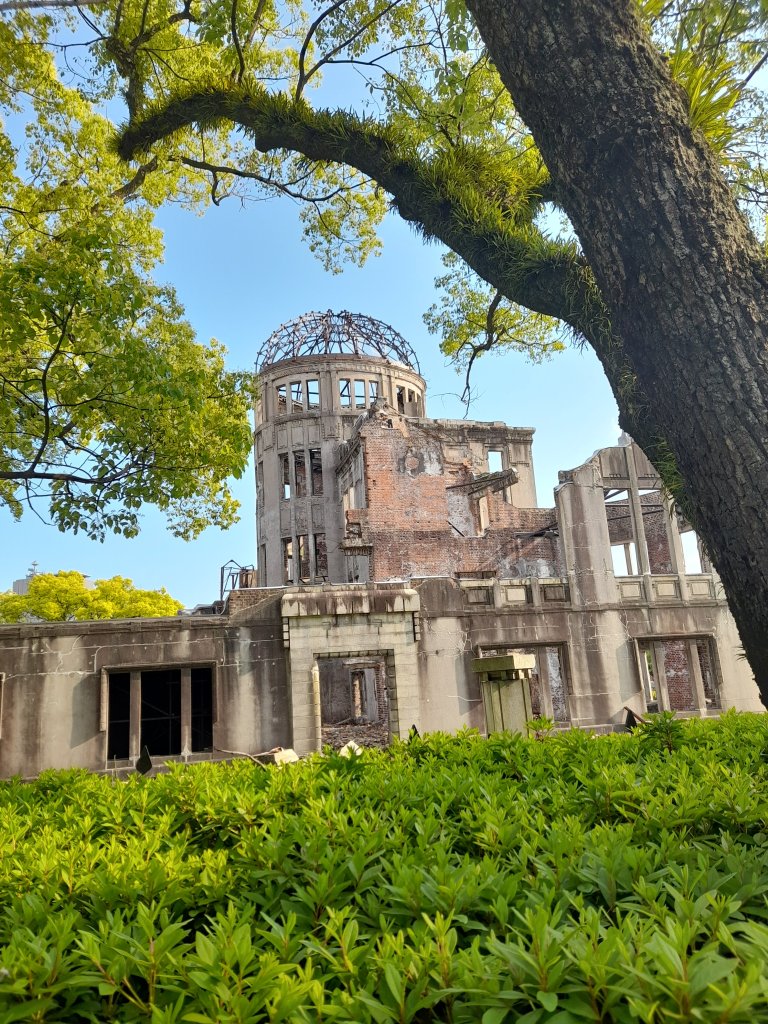
The Hiroshima Bomb Dome, also known as the Genbaku Dome, is the only surviving building in the vicinity of the Hiroshima atomic bomb blast on August 6, 1945. The dome was originally the Hiroshima Prefectural Industrial Promotion Hall and was designed by Czech architect Jan Letzel.
After the atomic bomb was dropped, the building was one of the few structures still standing near the epicenter of the blast. It served as a reference point for rescue workers and became a symbol of hope and recovery for the people of Hiroshima.
In 1996, the Hiroshima Bomb Dome was designated a UNESCO World Heritage Site and is now a popular destination for visitors to Hiroshima. It stands as a reminder of the consequences of war and the importance of peace.
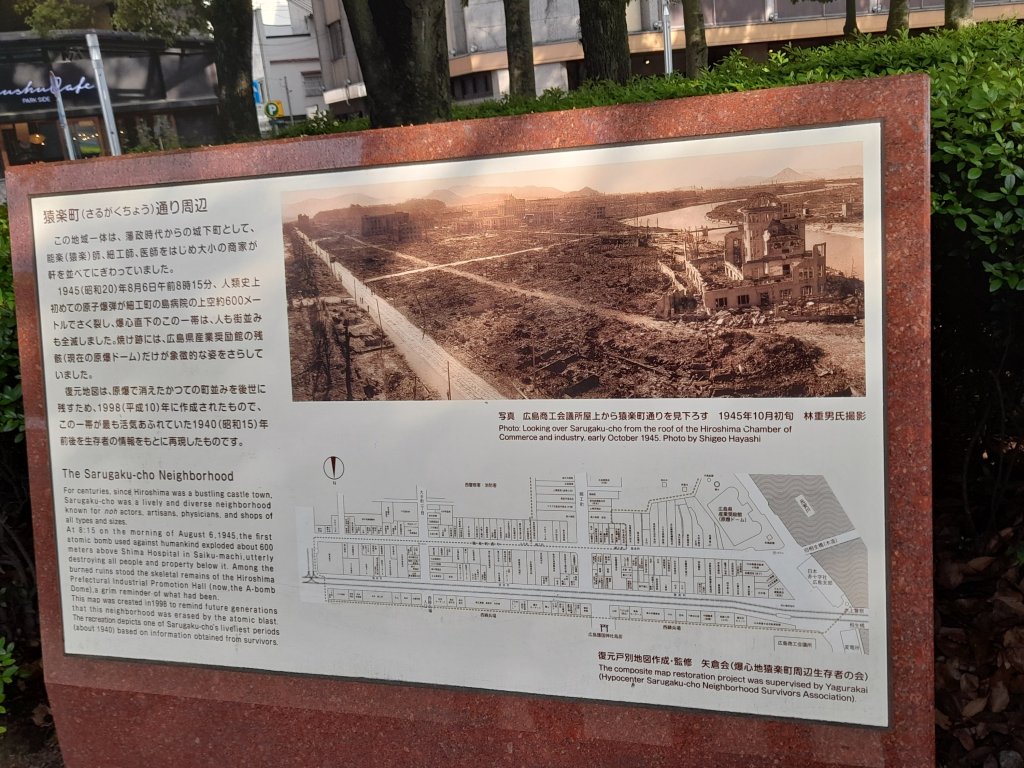

plaque
I took Gary and Diane just 130m down a side street to see a little known plaque next to the hospital wall.
This marks the exact point (the hypocentre), at which 600m above the bomb exploded.
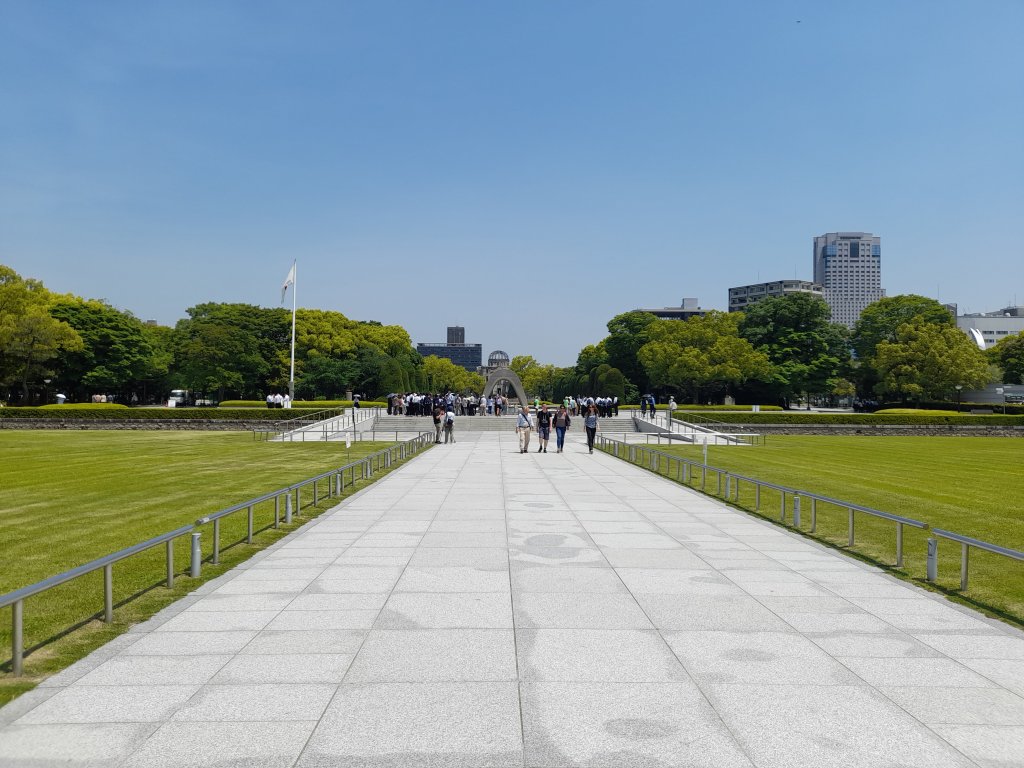
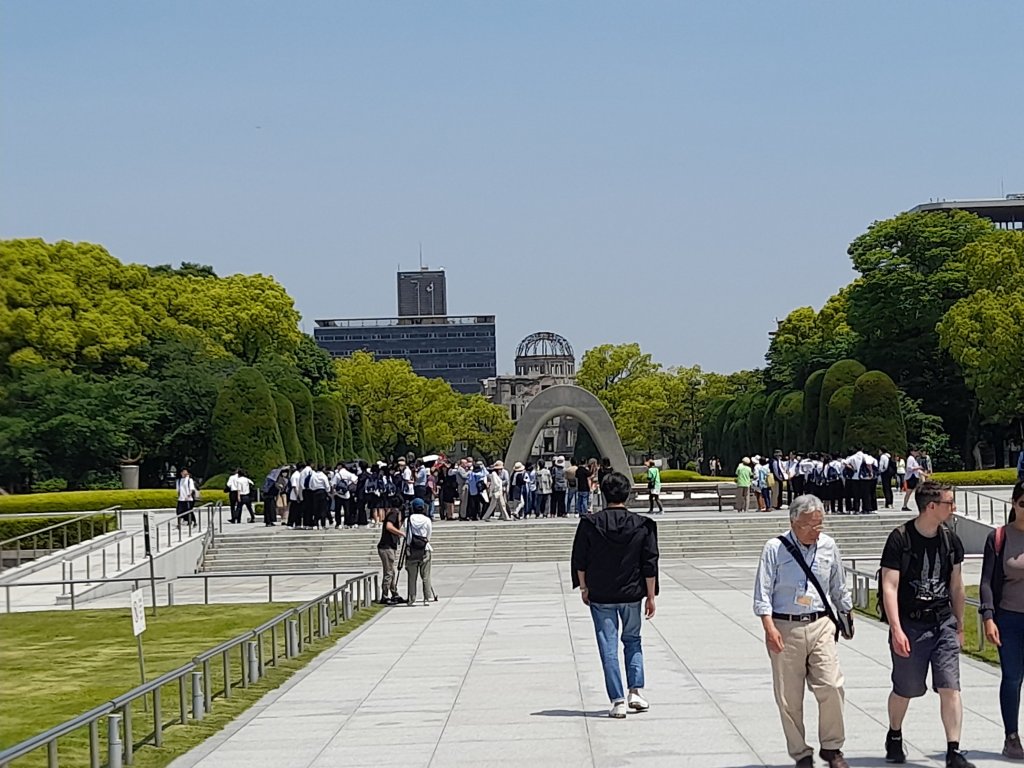
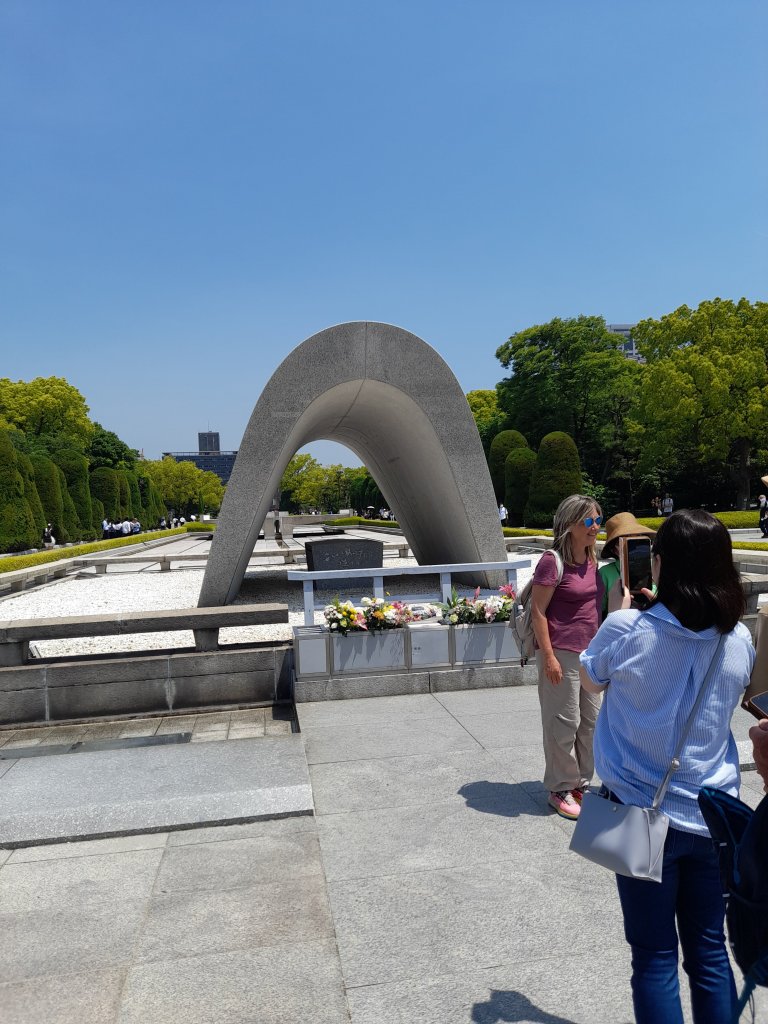
In the morning we walked just 200m from our hotel to the peace park and toured the museum.
We spent a very emotional hour here learning of the aftermath of the bombing. Many of the exhibits were horrifying to see,
One of the exhibits was a “Hiroshima Shadow”
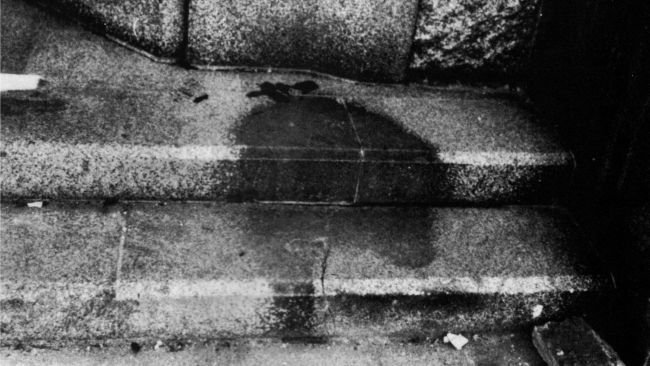
A man was sitting on the steps of the bank, waiting for it to open, at the time of the blast.
His body was instantly vaporised leaving his ‘shadow’ as the only reminder of his existence.
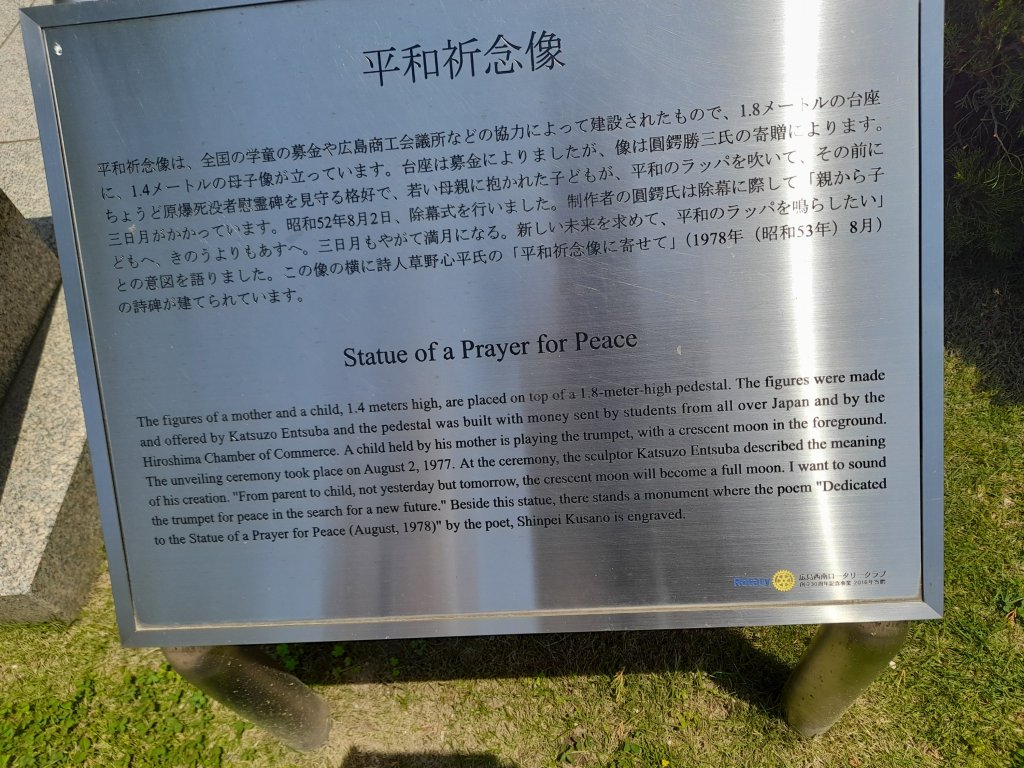
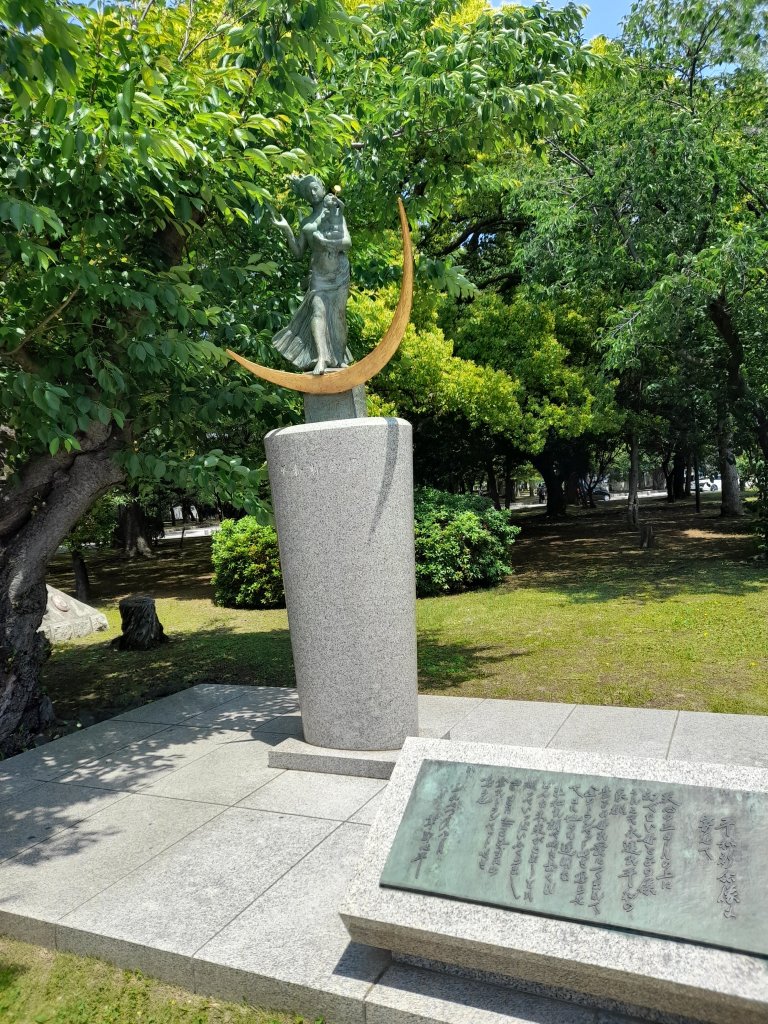

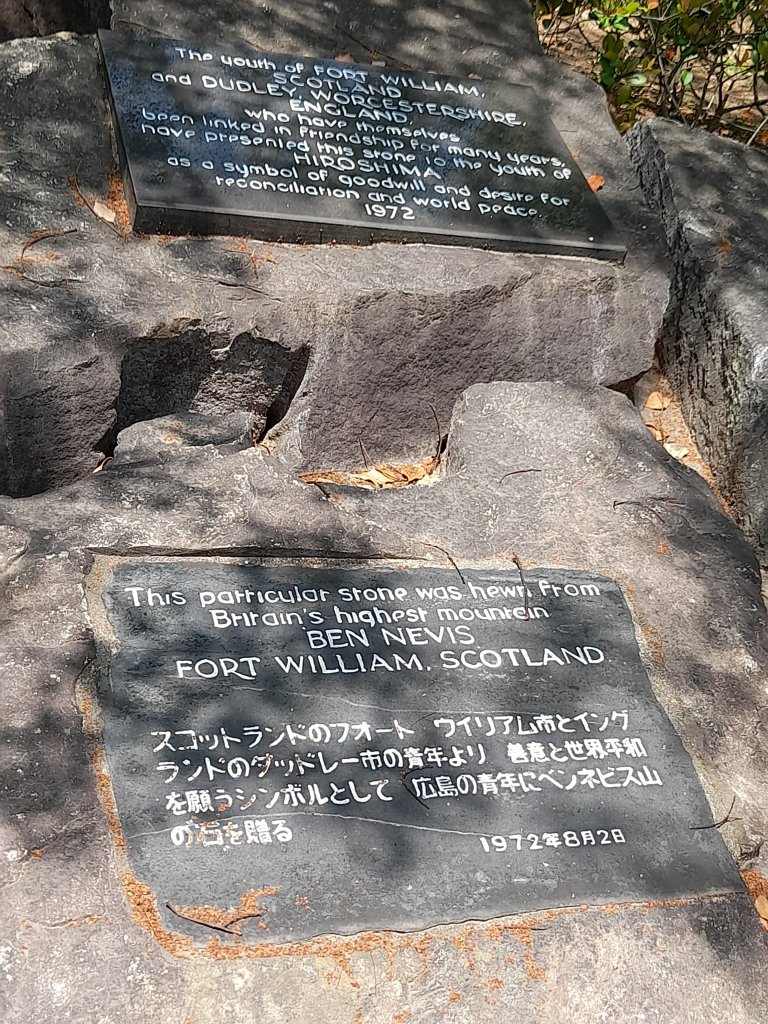
There are many memorials in the park including this one fom Scotland

The mound contains the ashes of around 70,000 victims. Rach year on August 6th a service is held here for the souls of those who perished.
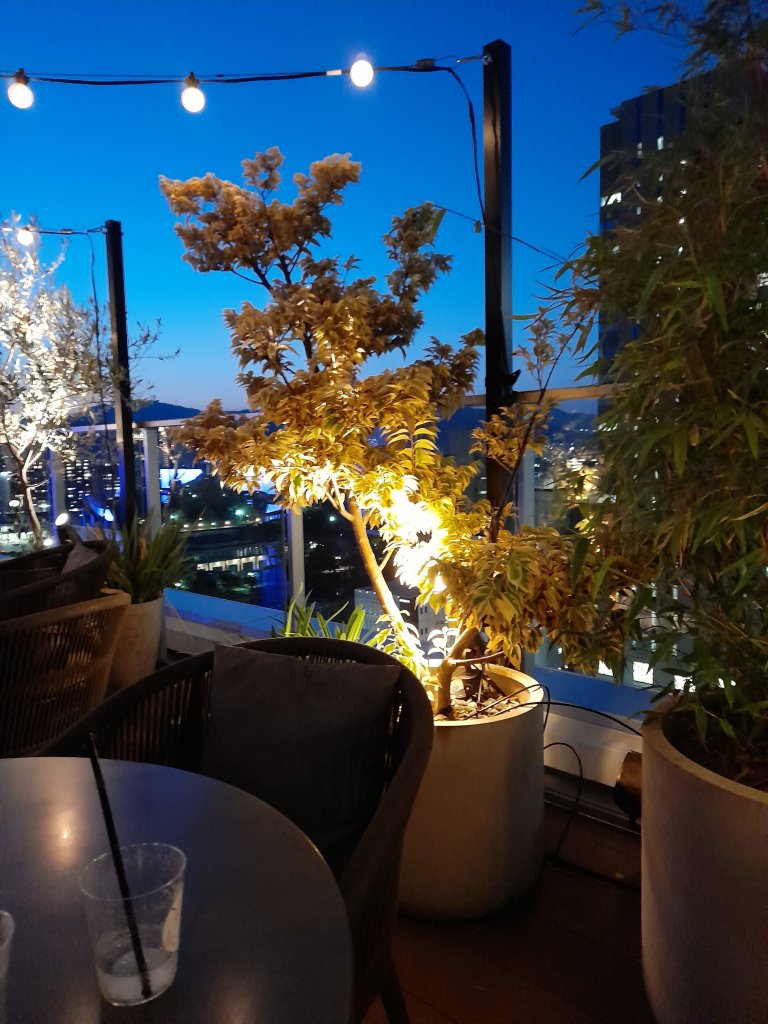
After a hot and emotional day we headed back to our hotel for a drink on the 14th floor rooftop bar to reflect on our day.
TTFN
Bibbley

 Uncle Bob's Scenic Tours
This has to be one of favourite places we have been, so emotional, and so beautiful, cried in the museum, sad when we left .
LikeLike