Chongqing Part 3

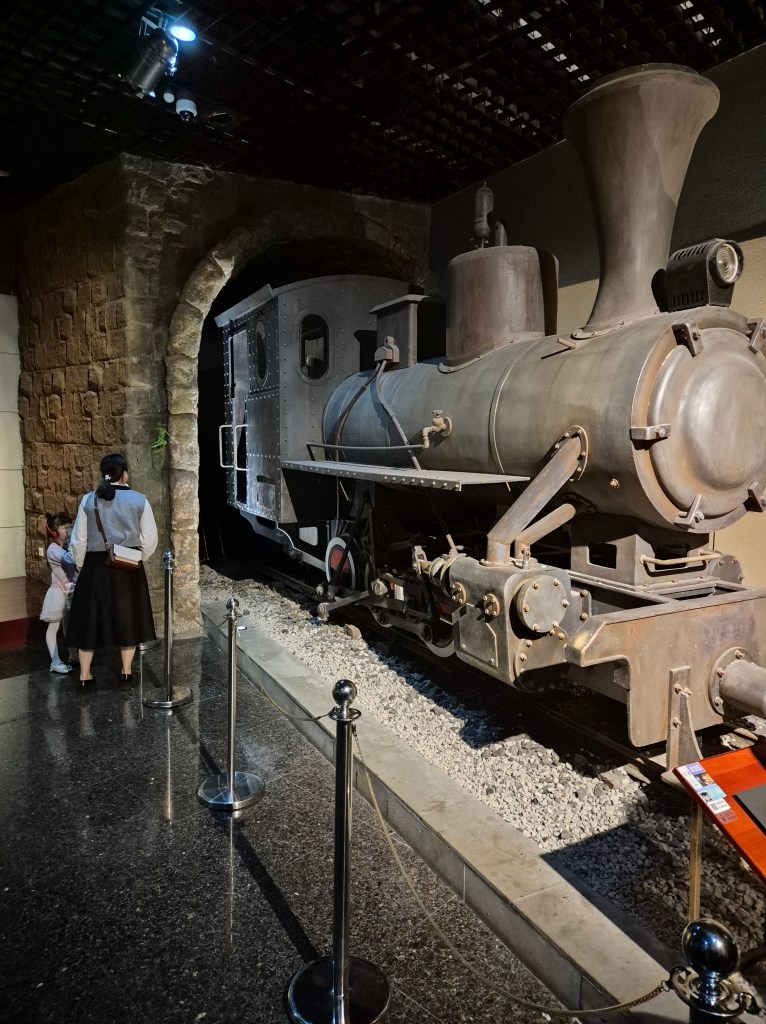
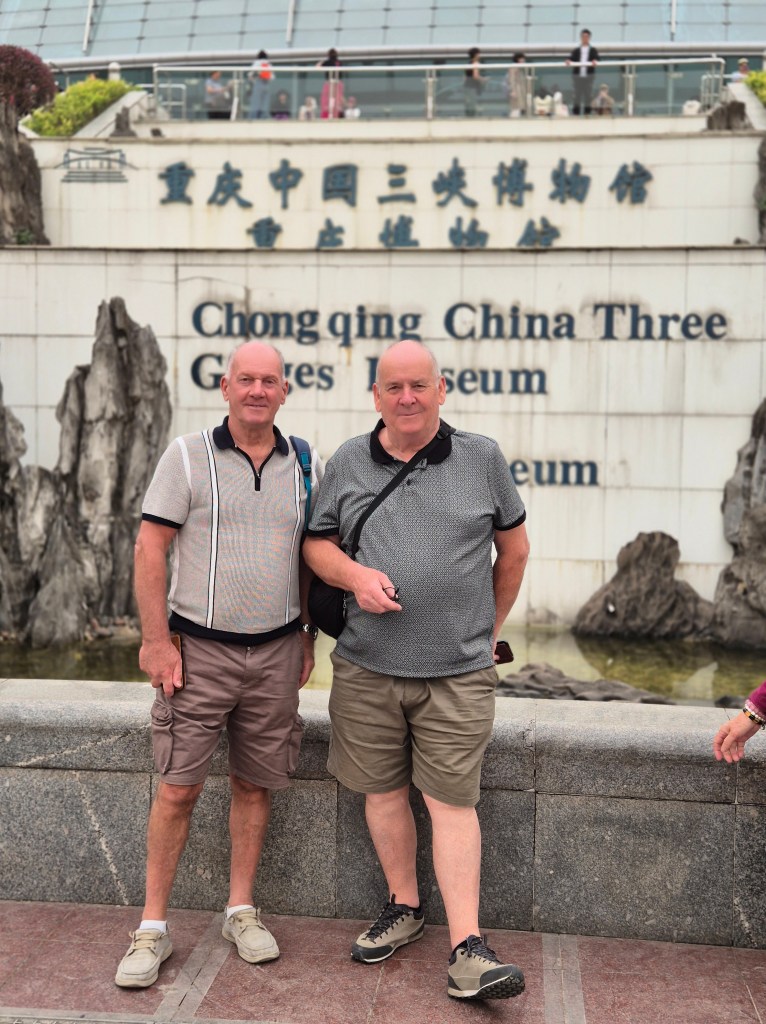
The following day we set off for the Three Gorges Museum.
For those not familiar with the three gorges dam, which is officially known as Yangtze River Three Gorges Water Conservancy Project, this is a hydroelectric gravity dam that spans the Yangtze River near Sandouping in central China, downstream of the Three Gorges.
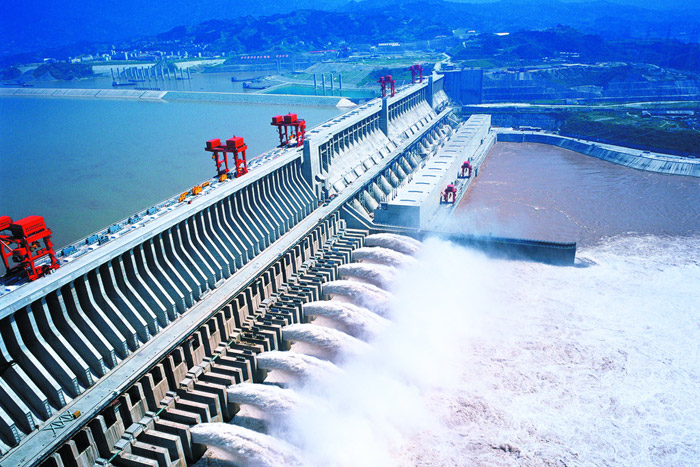
The dam is 2.3km wide and 185m high. It is the world’s largest power station by installed capacity (22,500 MW) and became fully operational in 2012 and construction was fully completed in 2015.

On completion, the reservoir behind the dam flooded a total area of 632 km2 (156,000 acres) of land and over 1million people had to be relocated

Costing approximately $22.5billion the entire cost of the Three Gorges Dam was recovered by December 2020, only 8 years after starting electrical generation, a remarkable achievement.
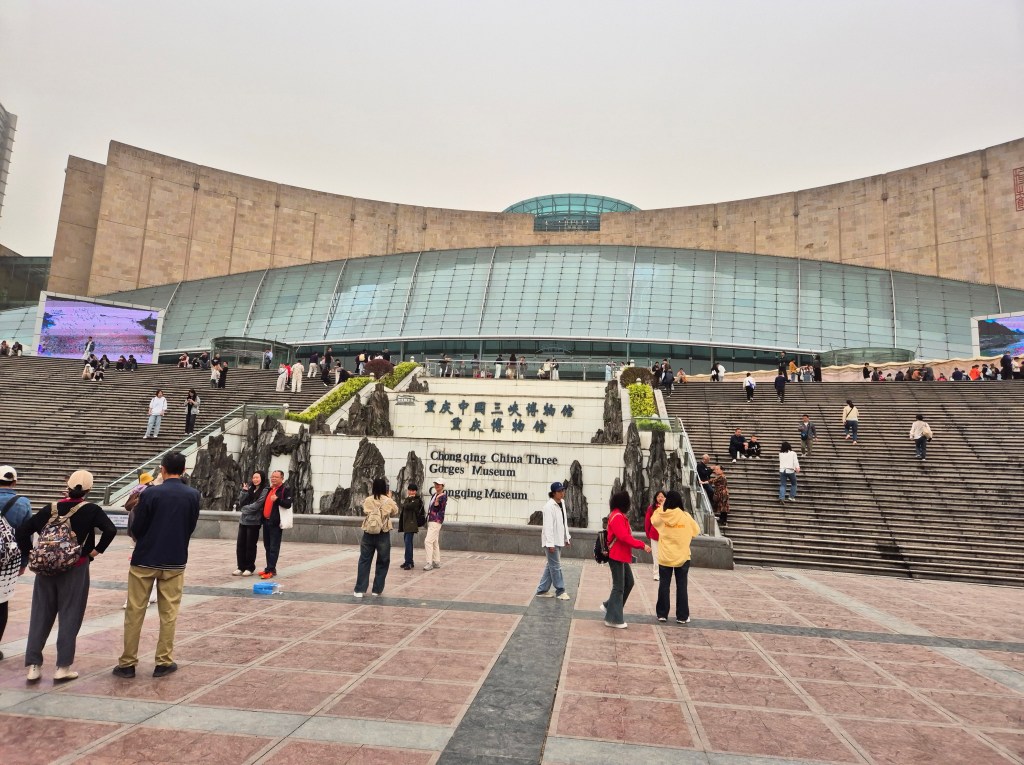
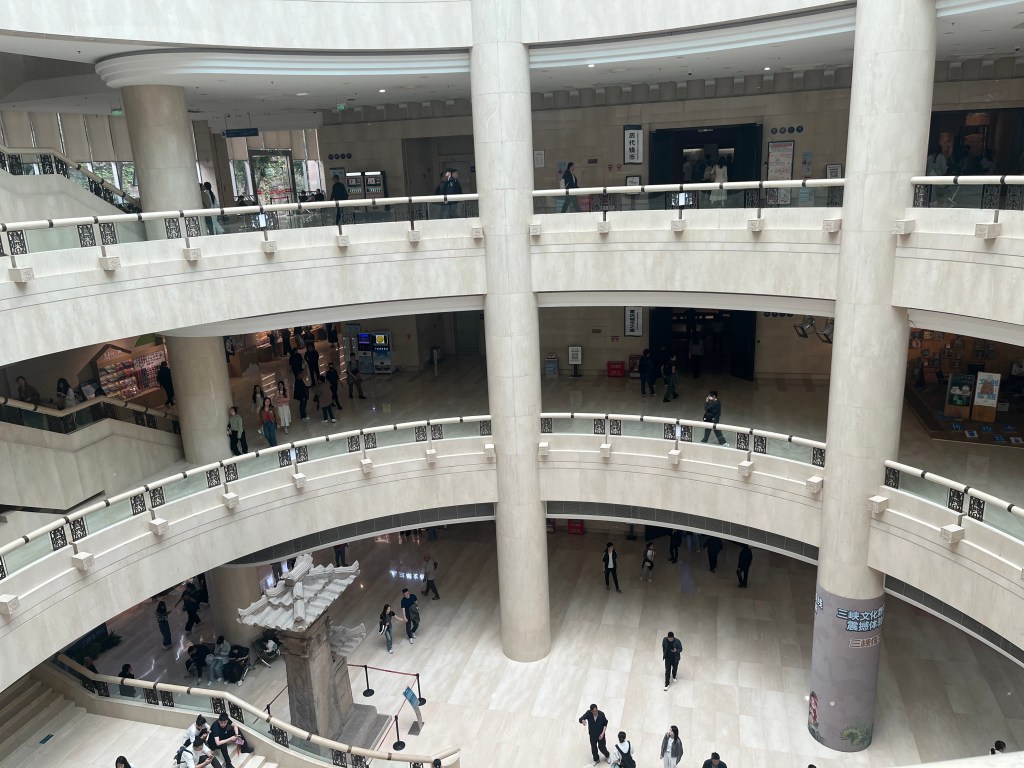
The museum, free to enter for those over 60, as are most public sites in China, tells the story of the area that was flooded to form the reservoir and it’s construction and contains many interesting exhibits.
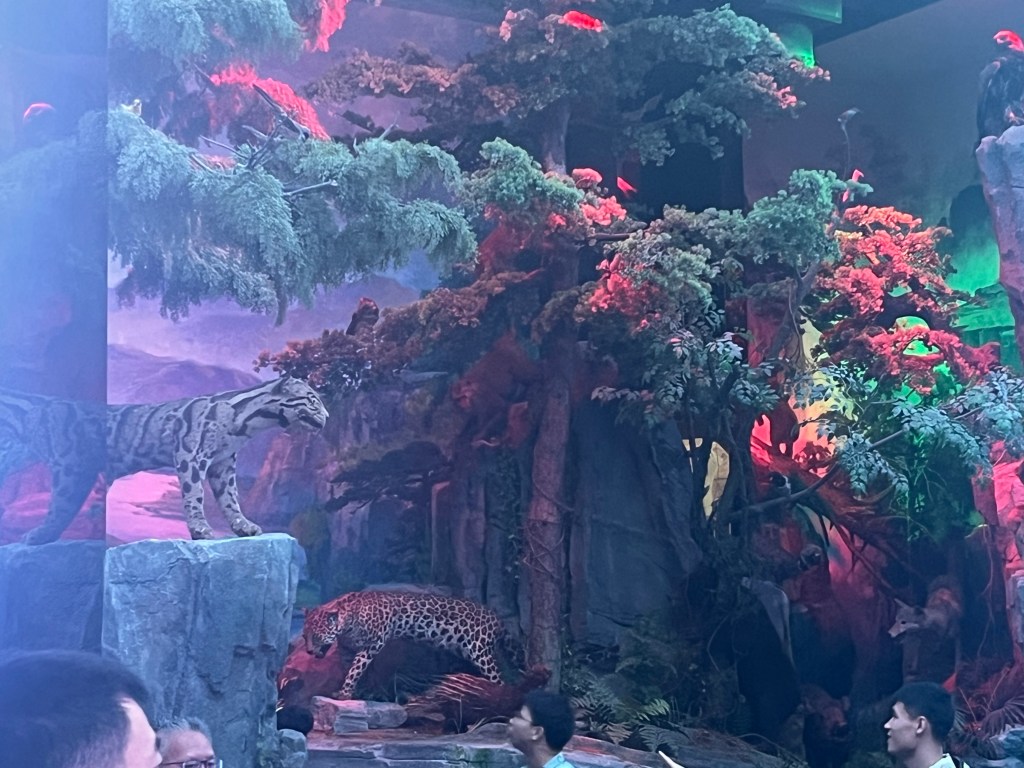
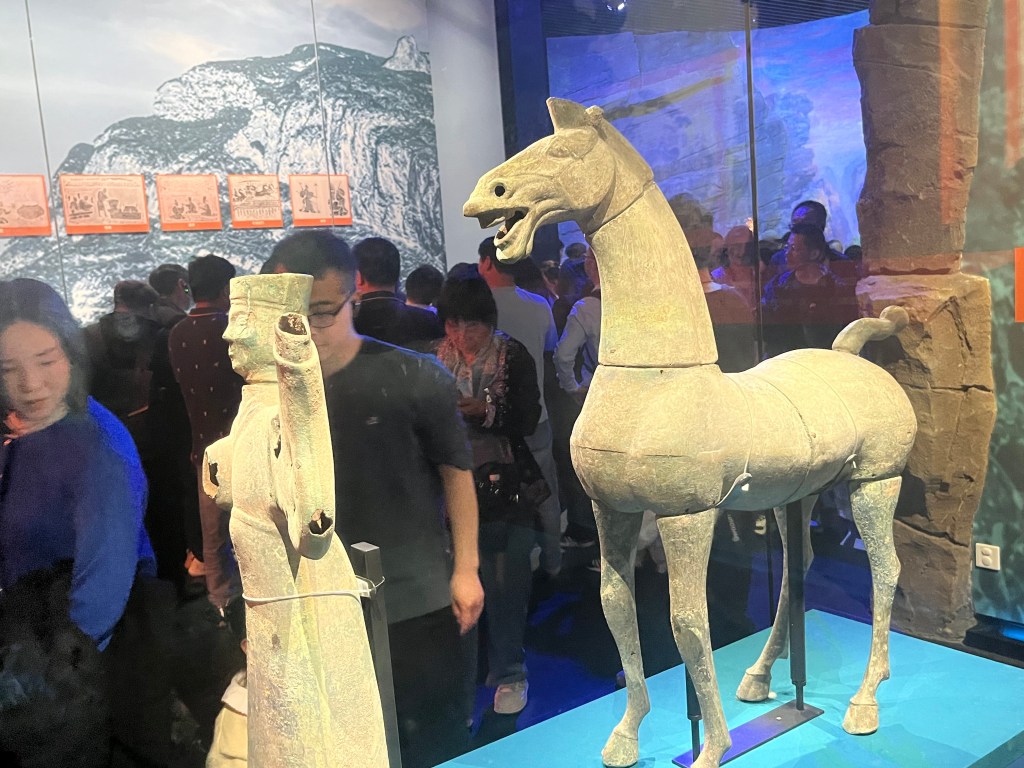
As we left the museum we were once again asked for photos with locals as we were pretty much the only non-Chinese people there.
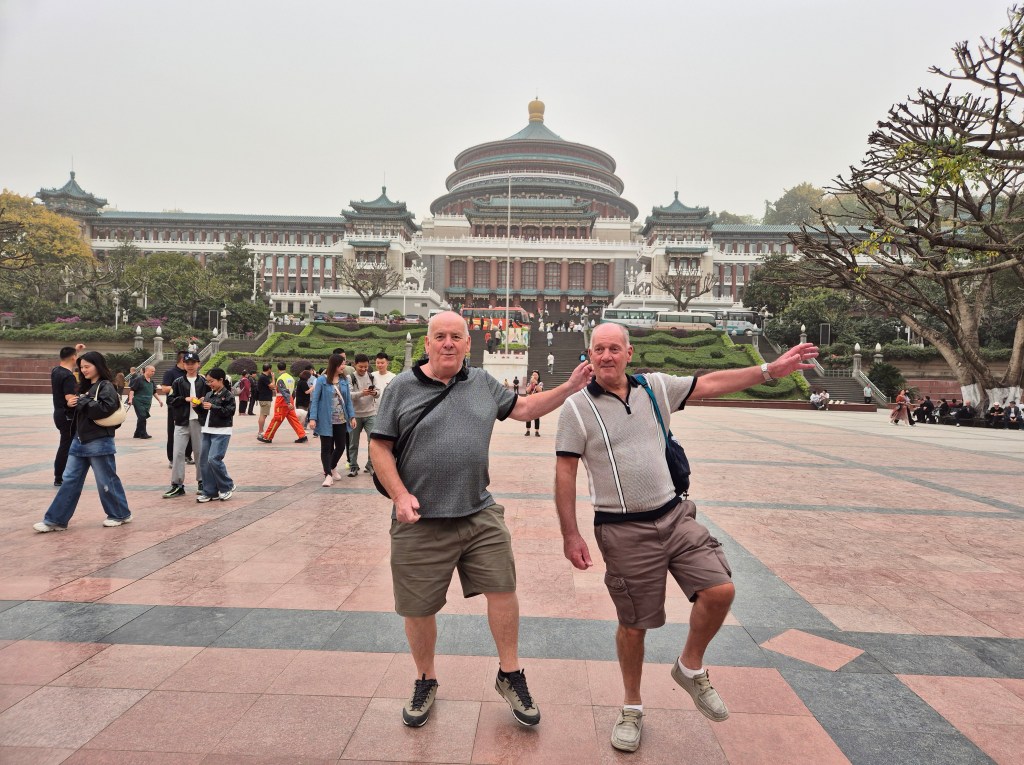
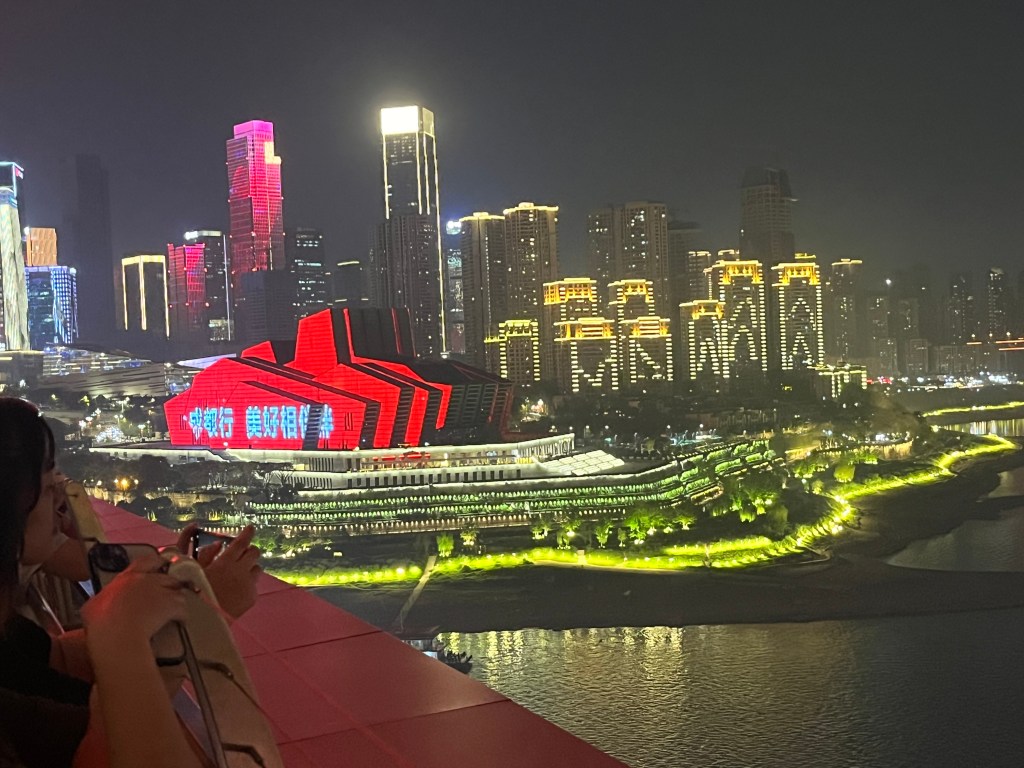
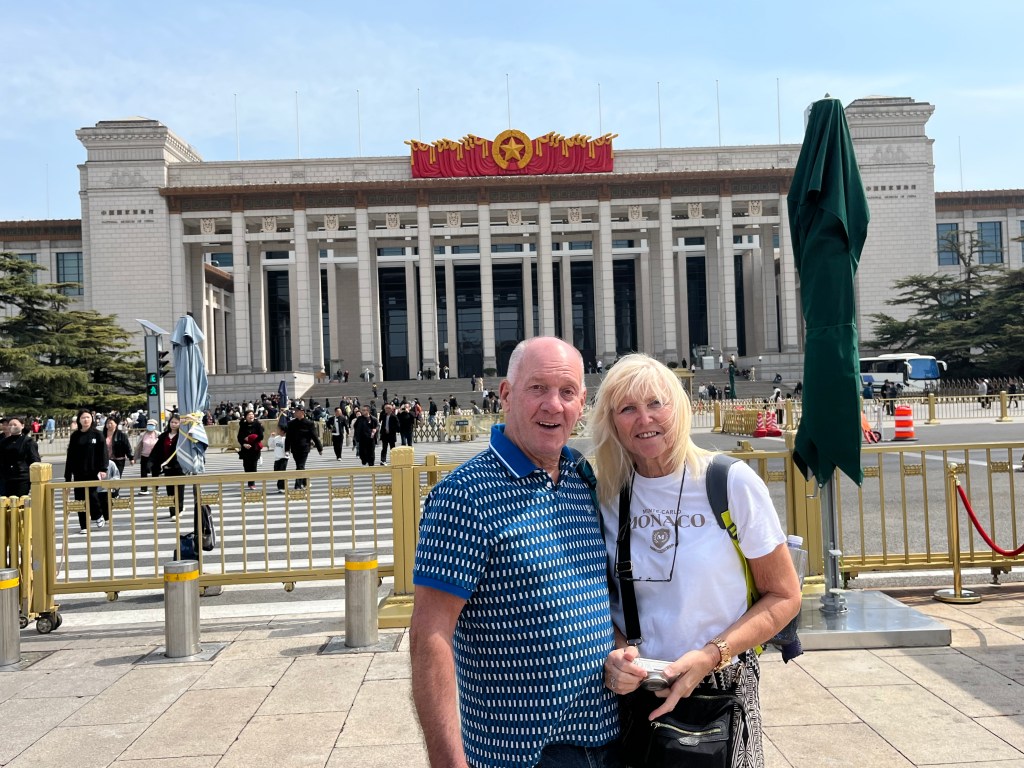
On the opposite side of the square outside the museum stands the “Great Hall of the People”, properly called the “Chongqing People’s Auditorium”. This is a large hall used for meetings of the local communist party and other major public events and resembles the Temple of Heaven in Beijing.
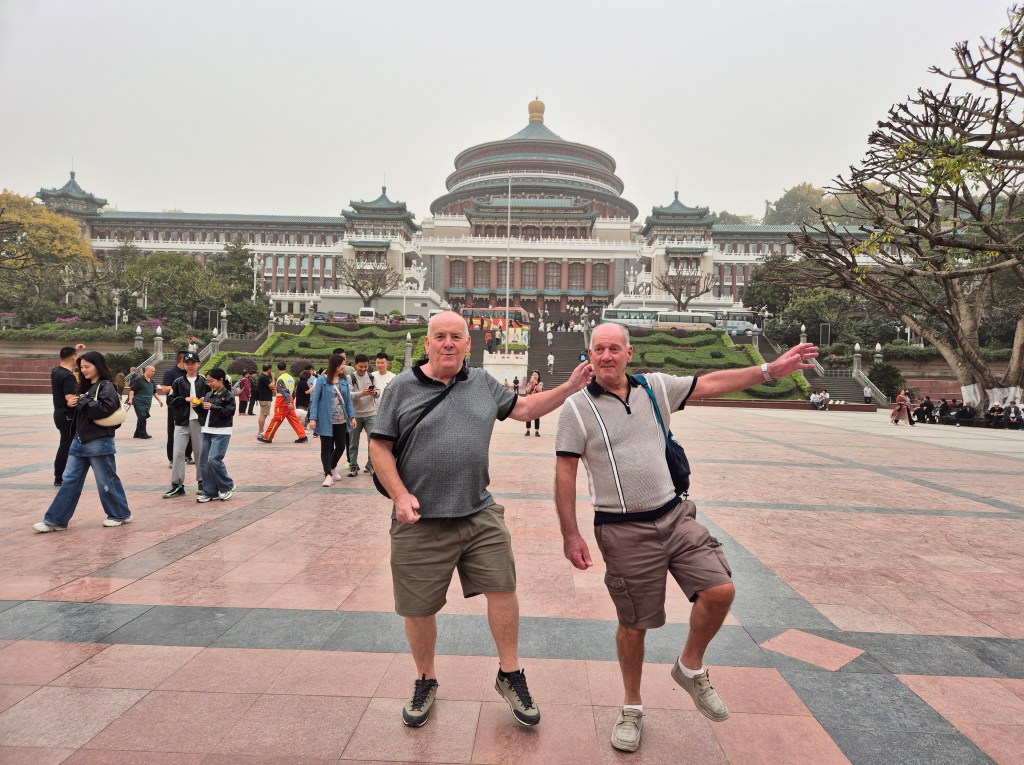
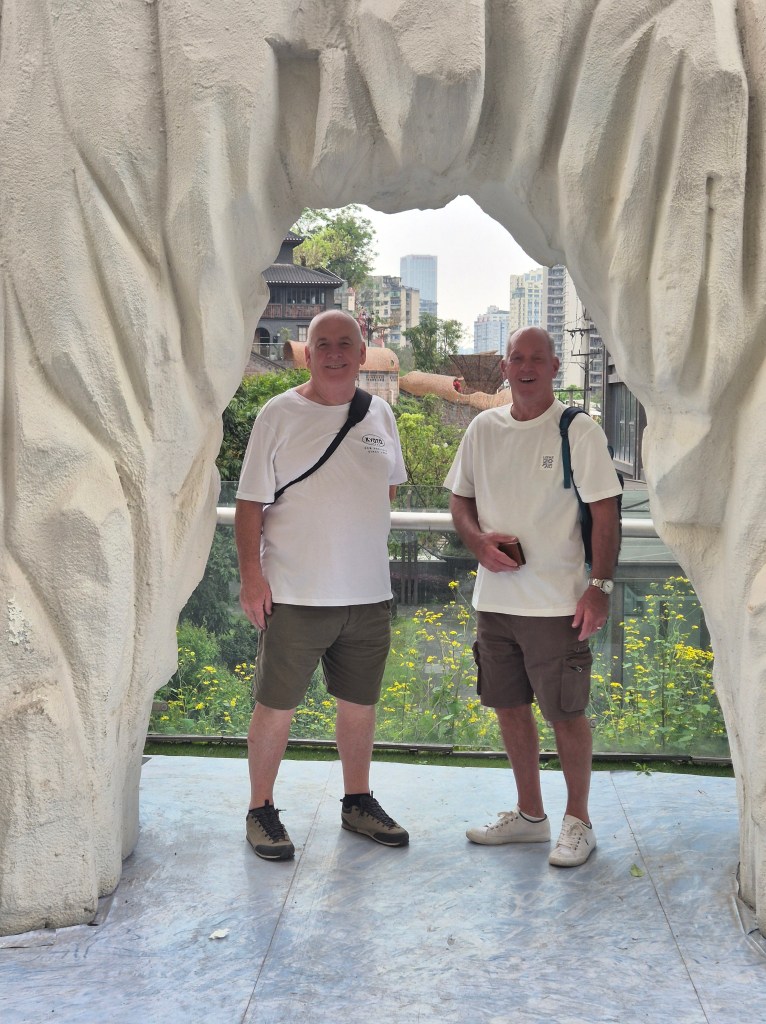
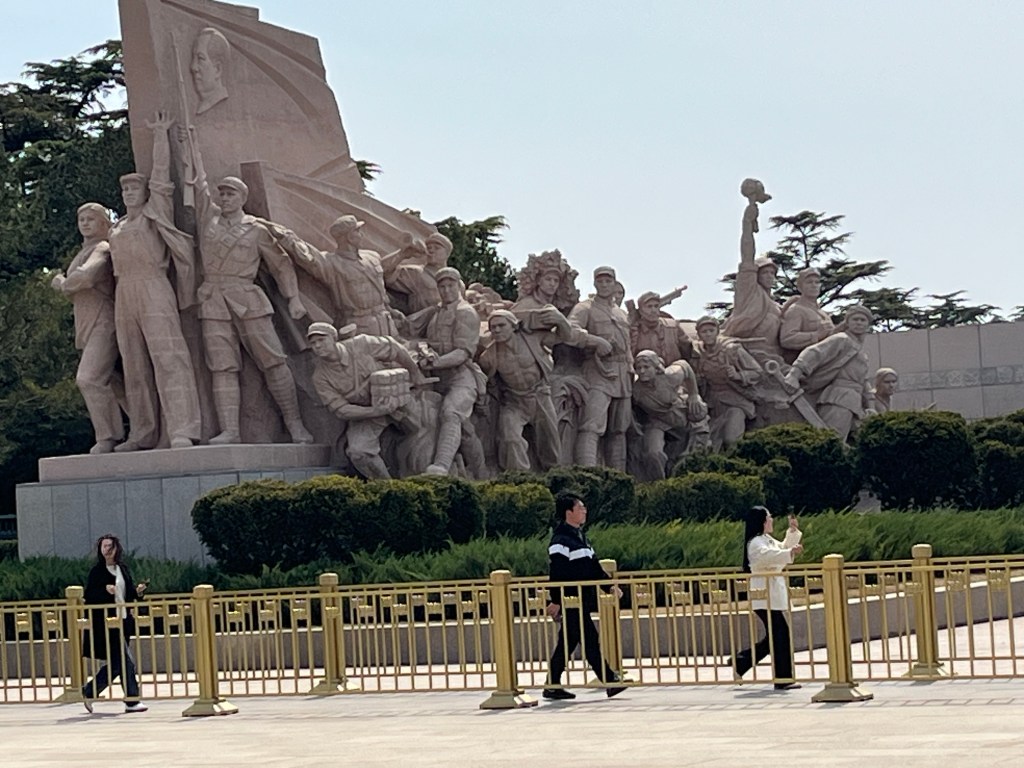
Not sure wht these 2 were up to!

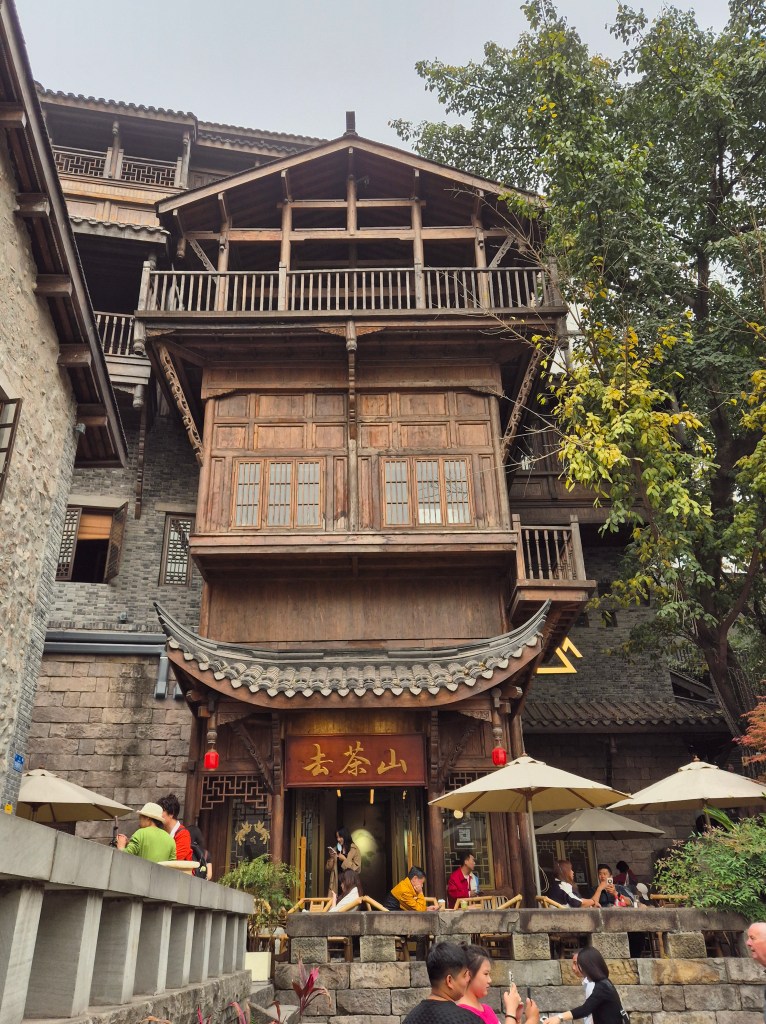
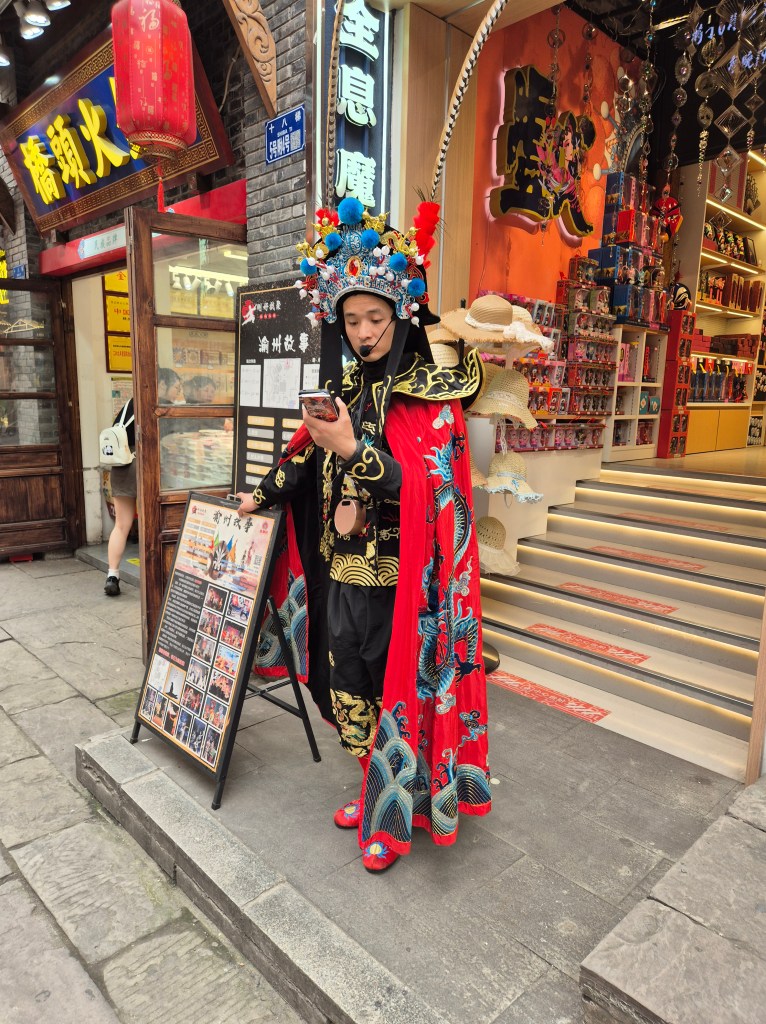
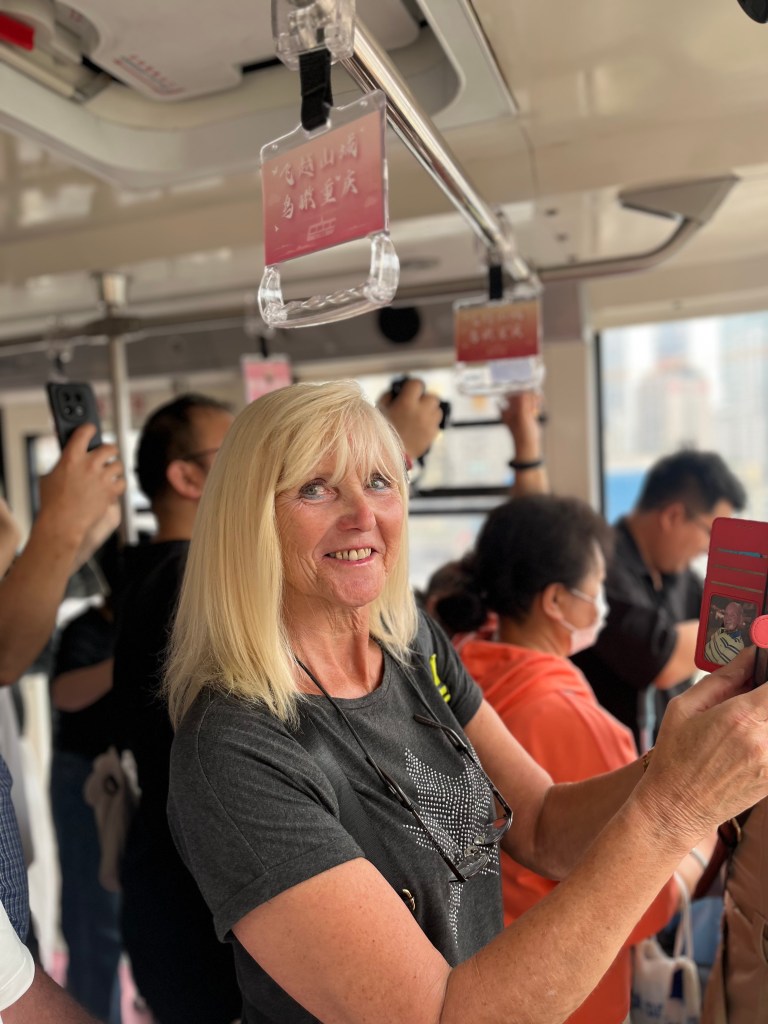
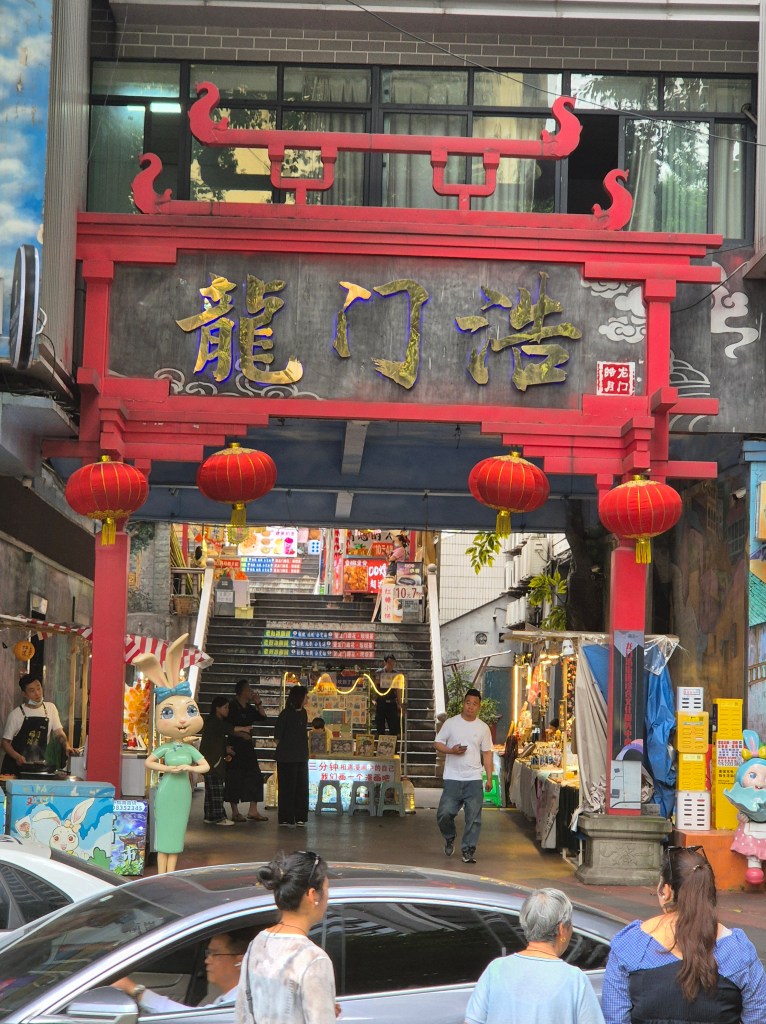
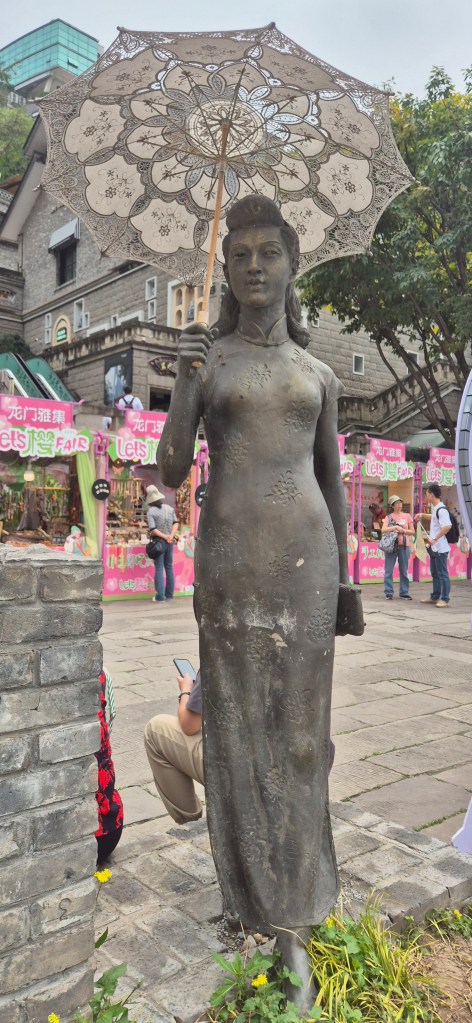
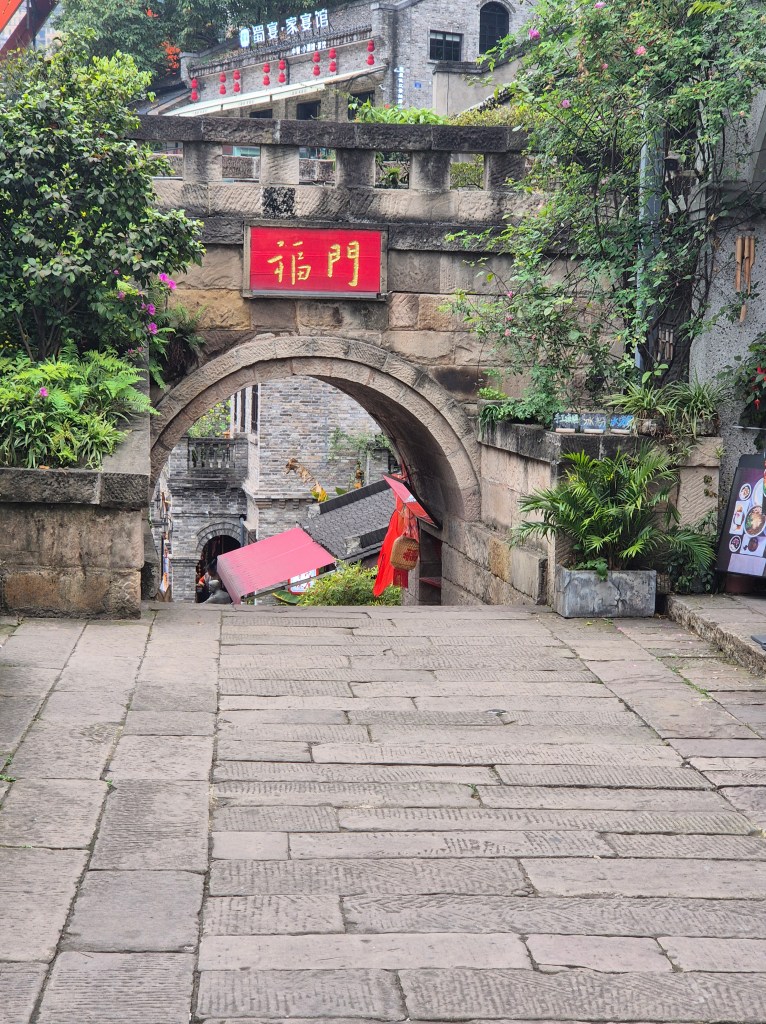
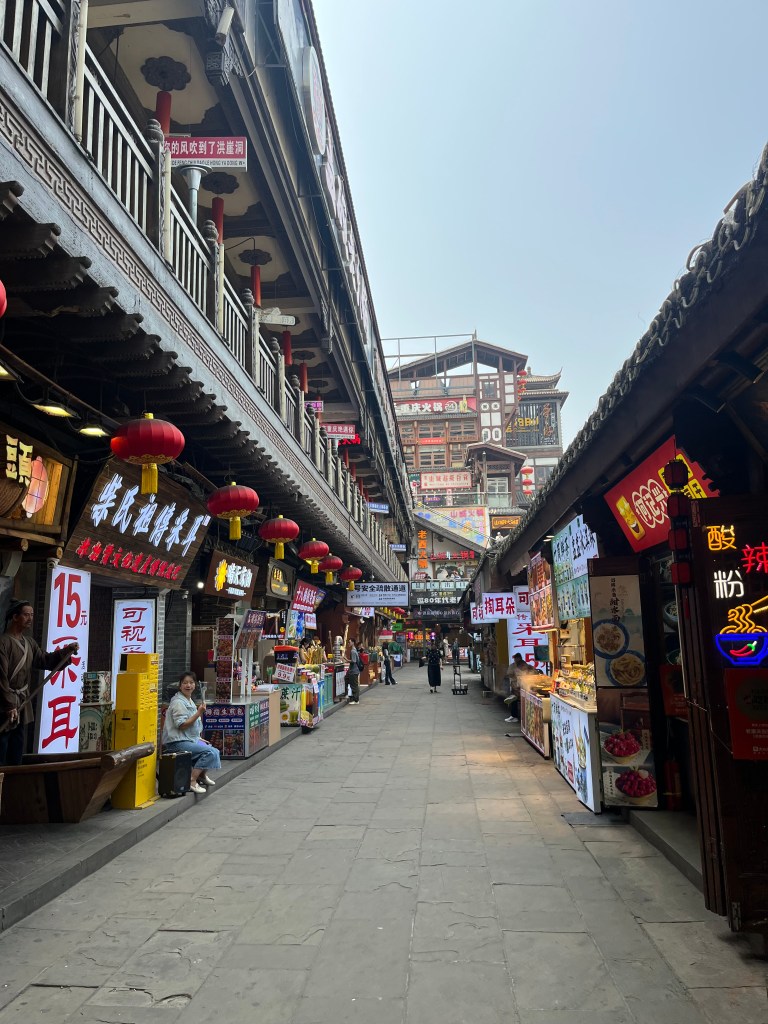
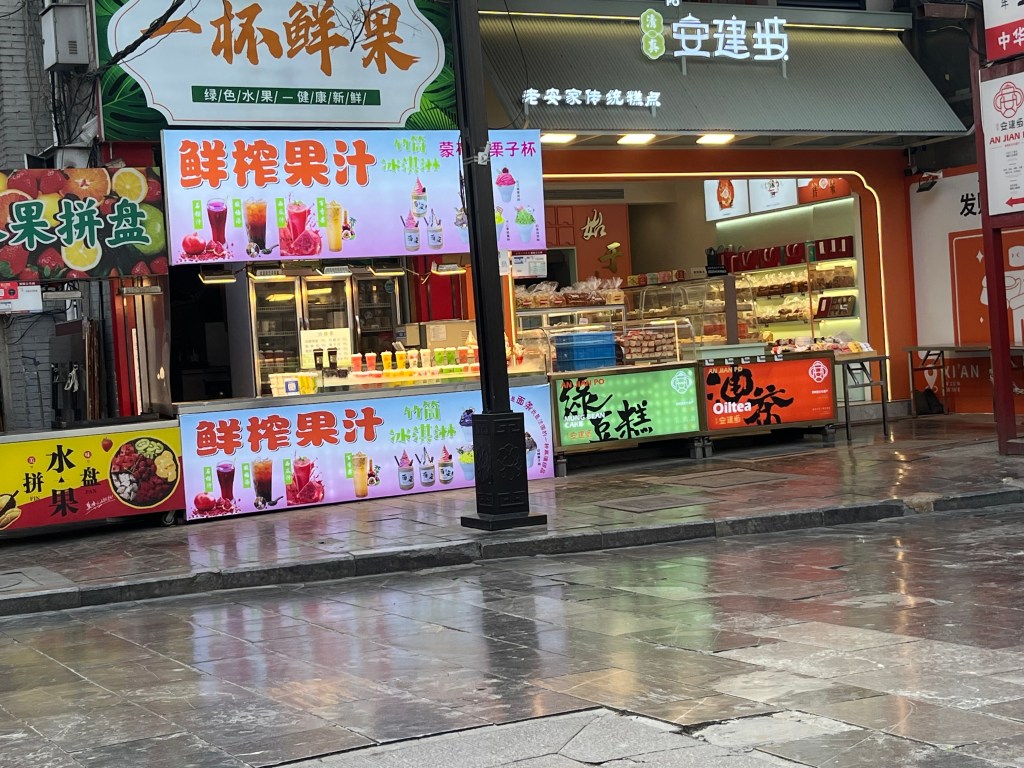
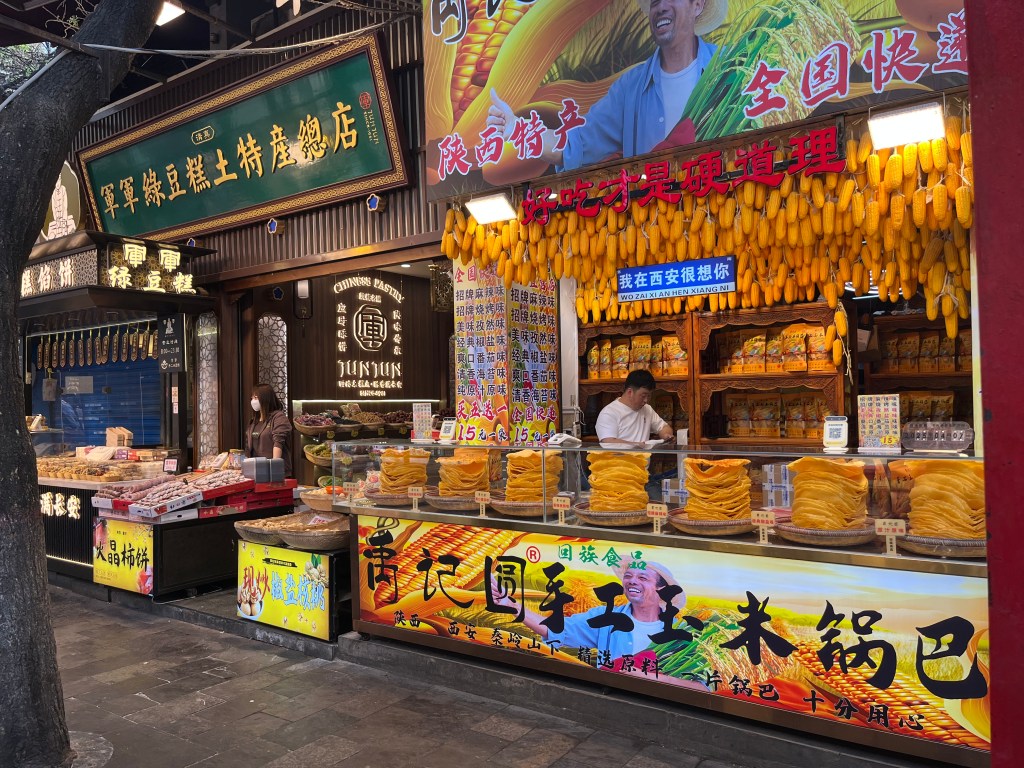
Returning to our hotel on the monorail we came across a local scenic street and decided to take a wander through it as it was downhill.
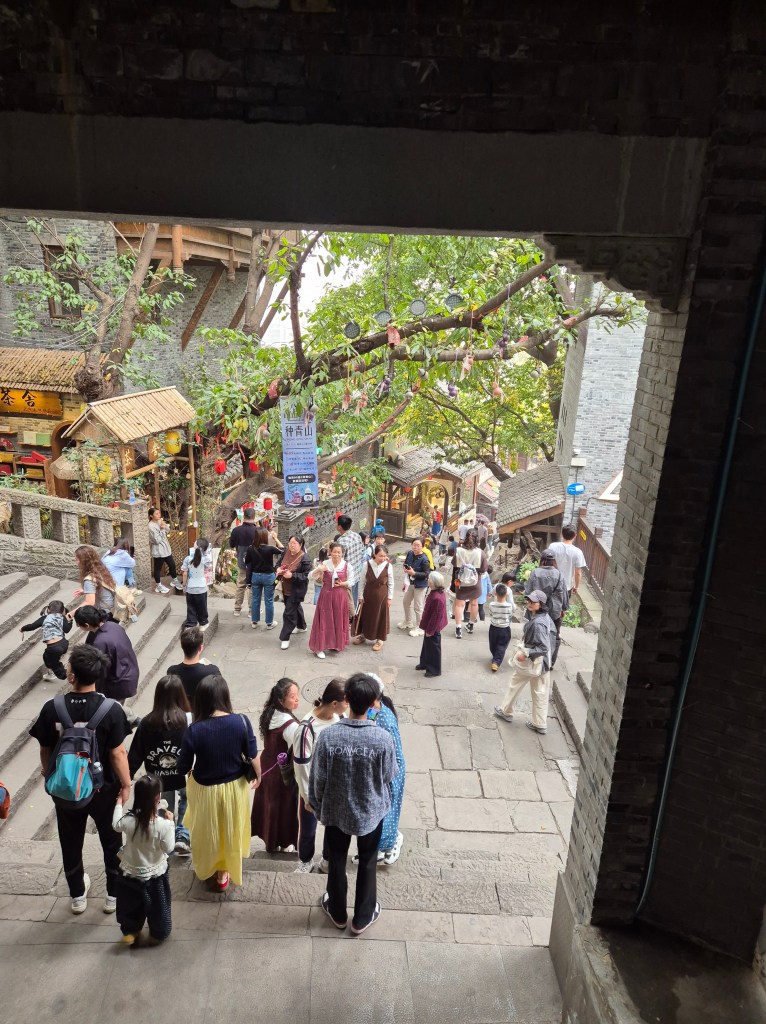
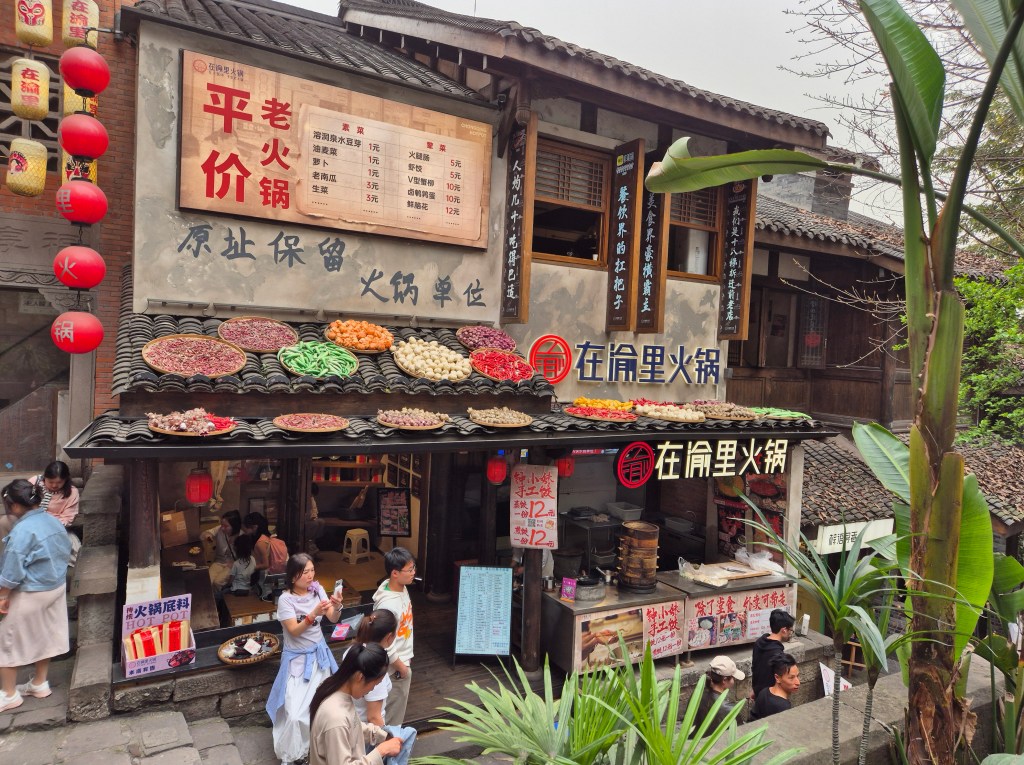
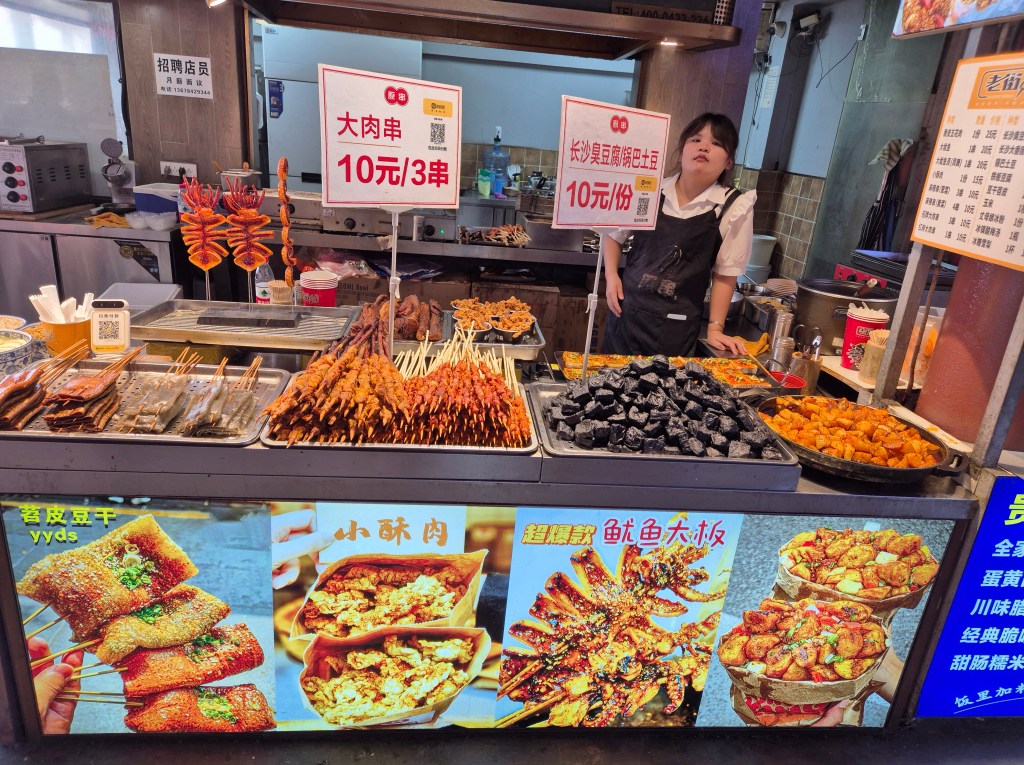
Plenty of cafes, souvenir shops and food stalls.
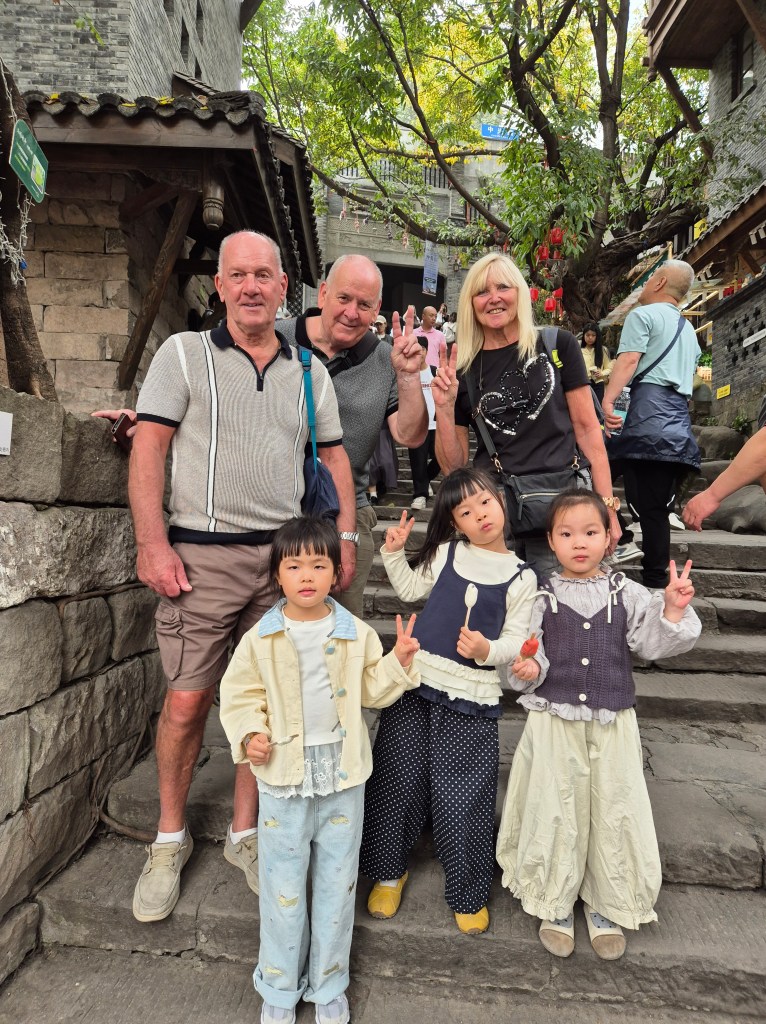
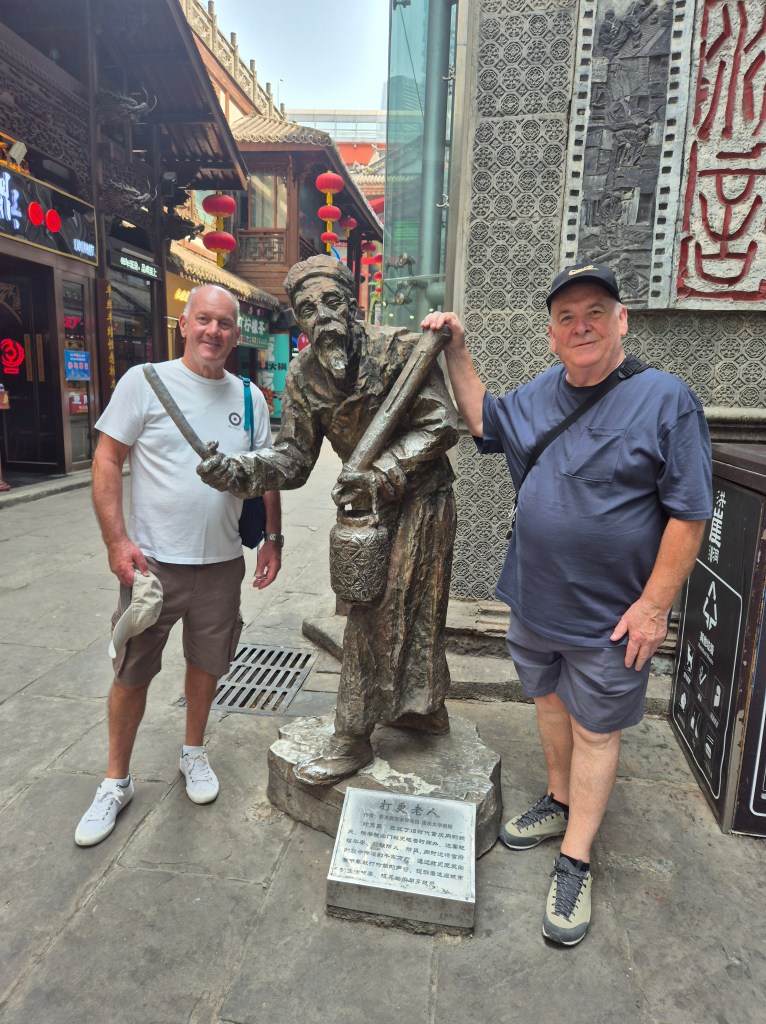
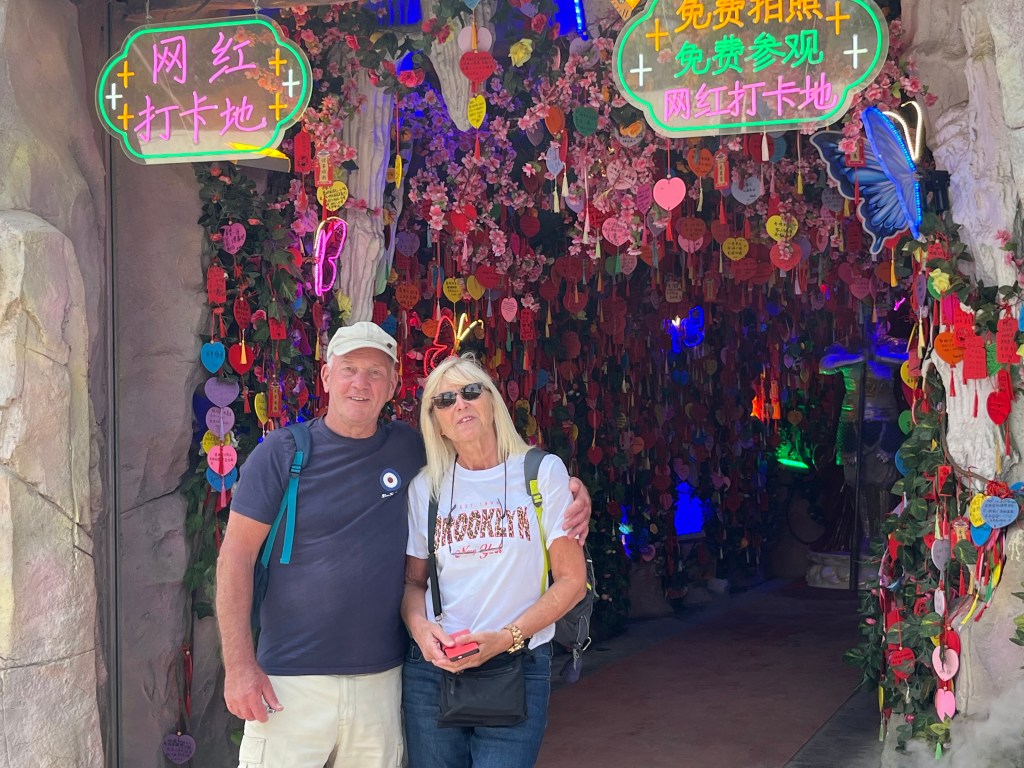
Anfd of course more photos with the locals.

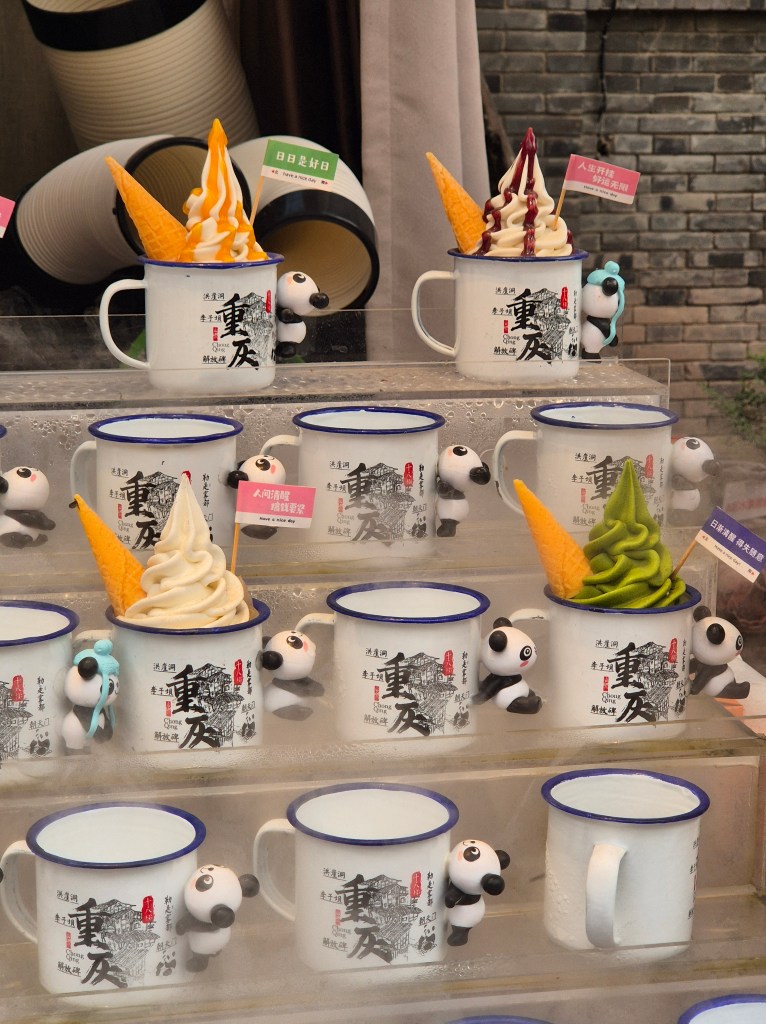
Get your icecream in a souvenir mug to take home.

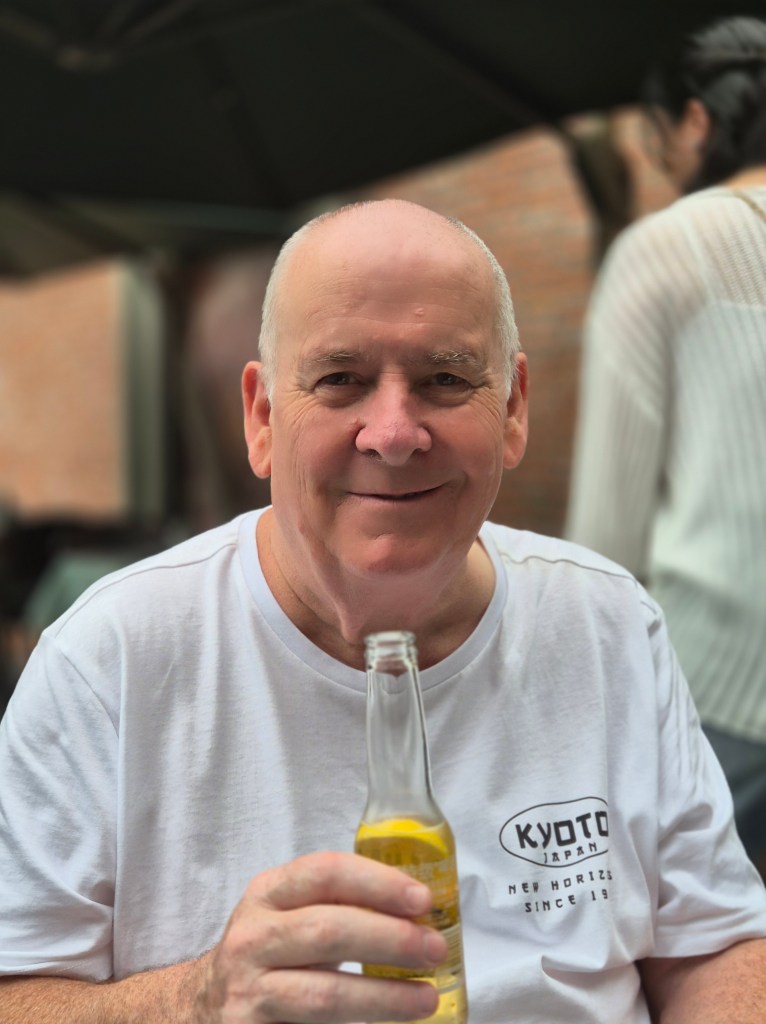
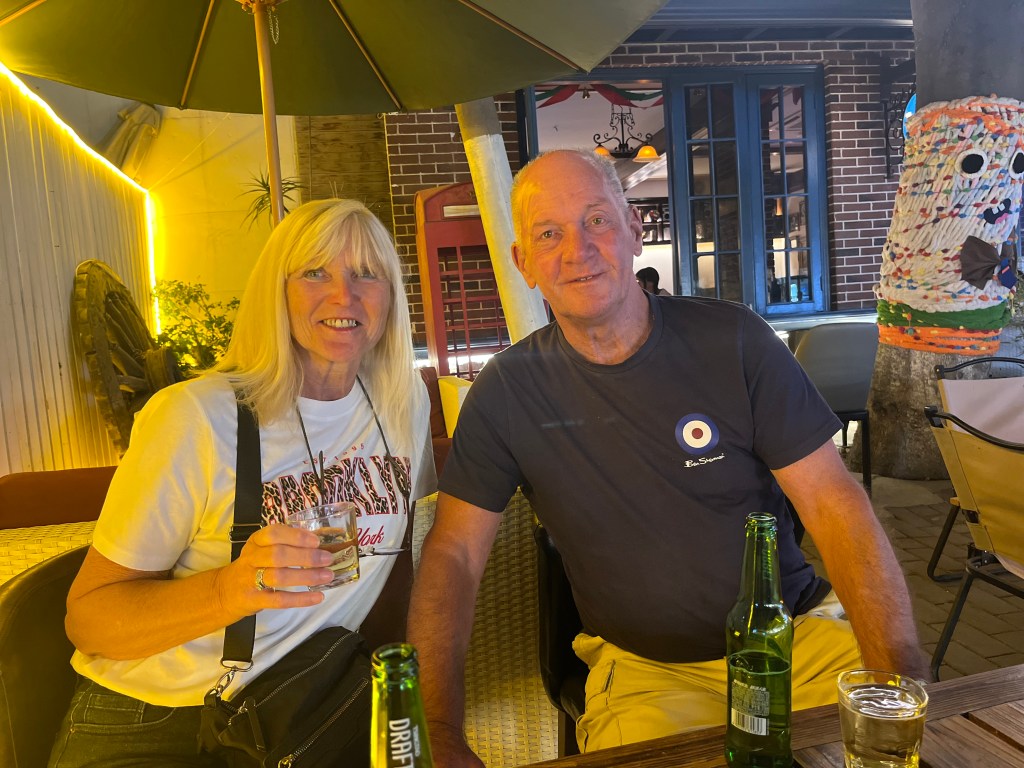
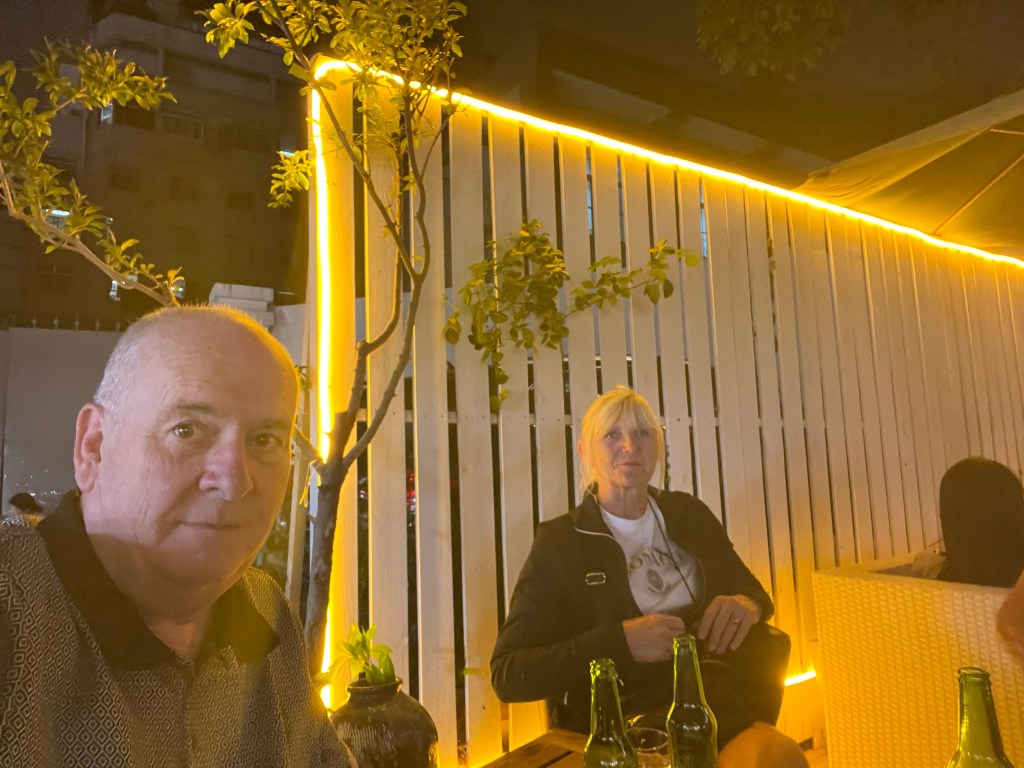
It was quite a warm day so we stopped for some refreshment on the way.

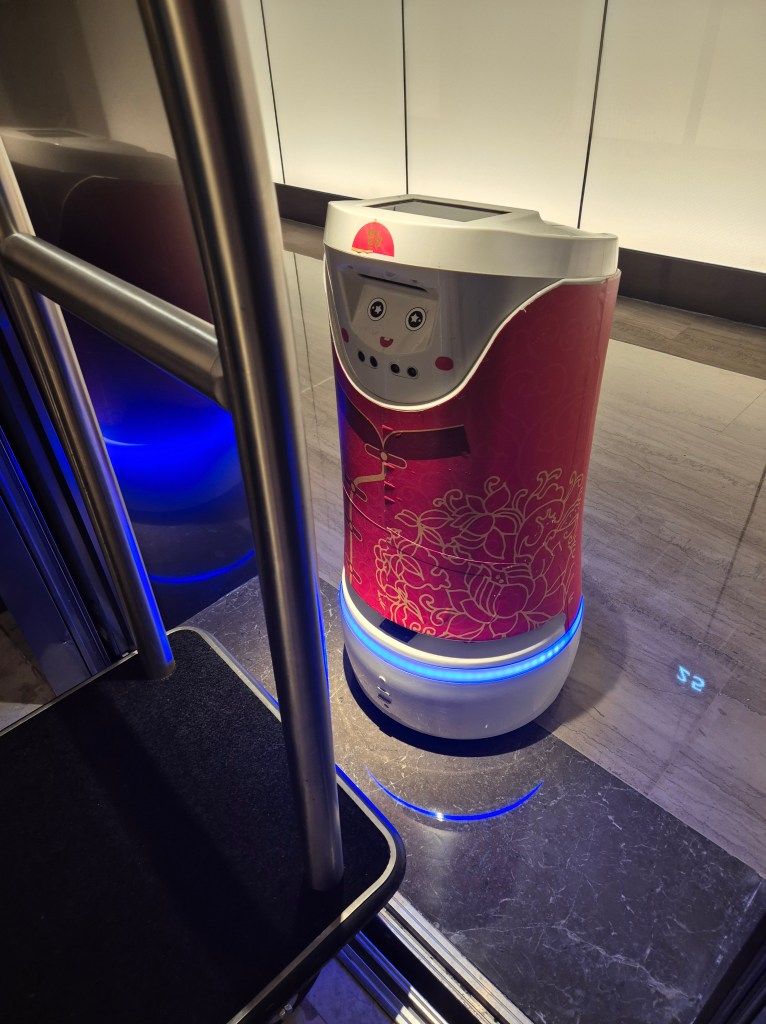
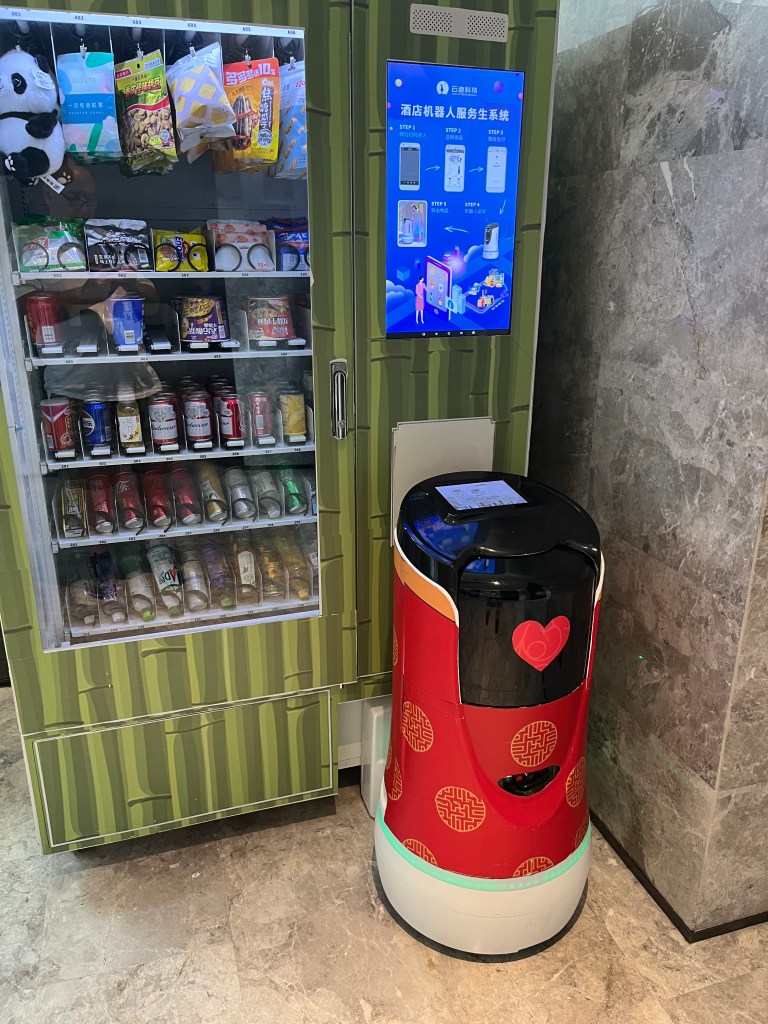
Later that evening back in our apartment I remembered our robot friend on the ground floor, charging himself up by the vending machine.
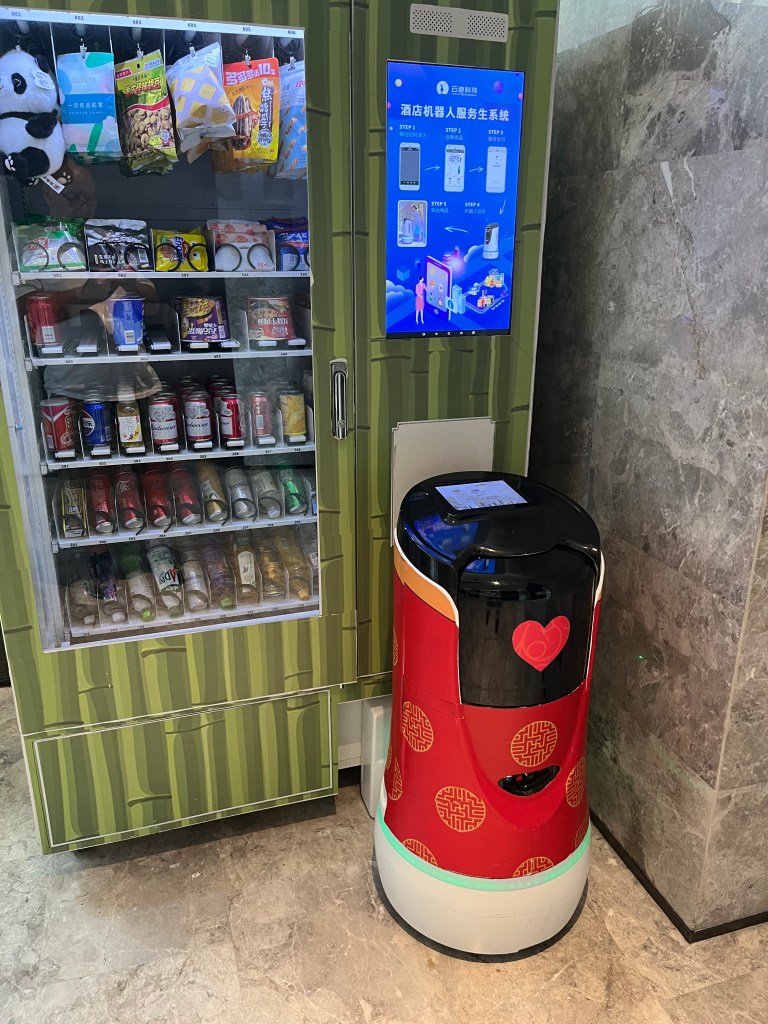
As you may remember I had installed an app called “WeChat” which is used for making payments and hailing taxis. There is also a facility for scanning QR codes and so I scanned the code on the small sign on our coffee table.

A few clicks later and I had ordered some Pringles and we waited with interest!

Five minutes later the doorbell rang and there was “Robbie the Robot” with my delivery, brought by him from the ground floor to our 43rd floor apartment, he can operate the lifts and is very polite when asking you to make room for him in the lift.

This was actually Robbie’s mate, “Miss Robbie”
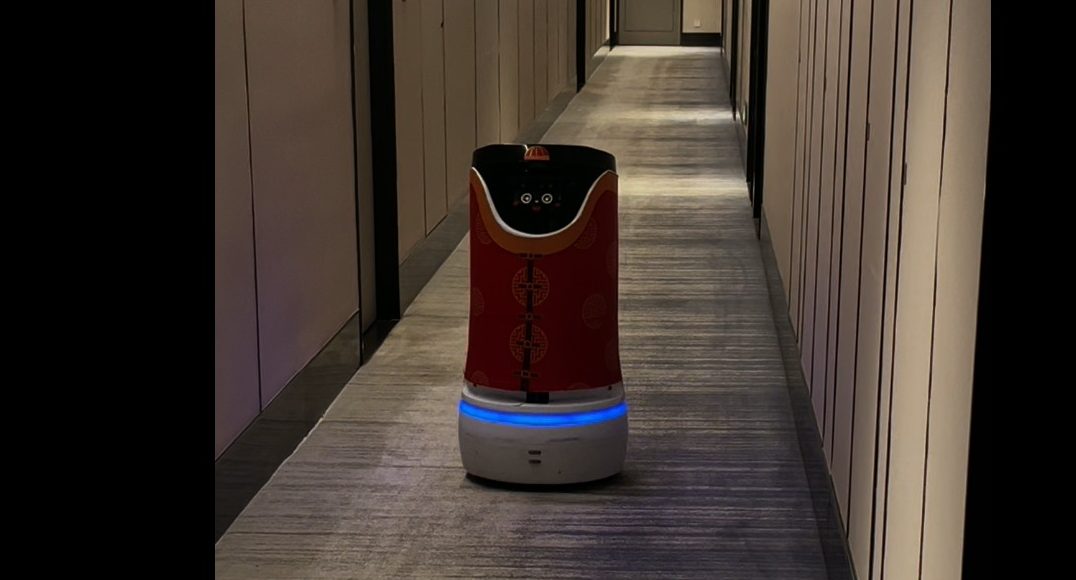
On the way to deliver my Pringles

So ended our time in Chongqing which was an extremely interesting and memorable few days. At times we were very tired after walking around so much but it was totally worth it, if you get a chance to visit there then all 3 of us would totally recommend it.

Another day of travel tomorrow by high speed train to Guilin, I hope to see you all there.

TTFN

Bibbley

Chongqing Part 2

The following morning we set off to visit Liziba station on line 2 of the

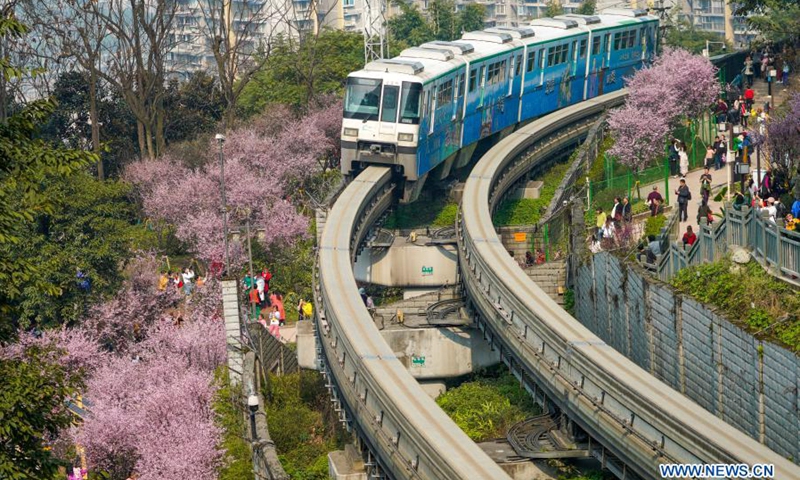
Chongqing Rail Transit System opened in 2005. Line2 together with line 3 are the longest monorail sytem in the world, carrying up to 637,000 passengers per day.

The system utilizes heavy monorail technology, which is capable of navigating steep grades and tight curves, making it suitable for Chongqing’s mountainous terrain.

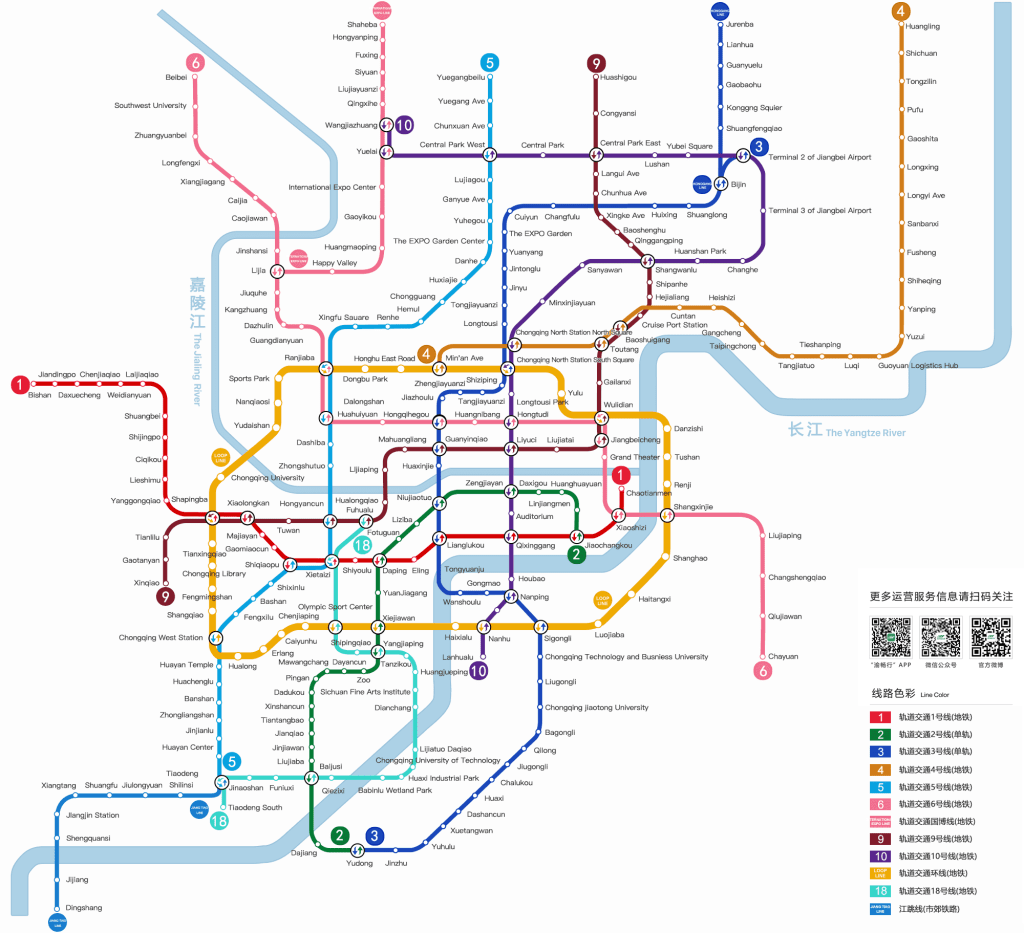
Map of the metro system. Our hotel is at the start of Line 1 near the centre of the map. We changed to Line 2 (green) and rode 6 stops to Liziba.

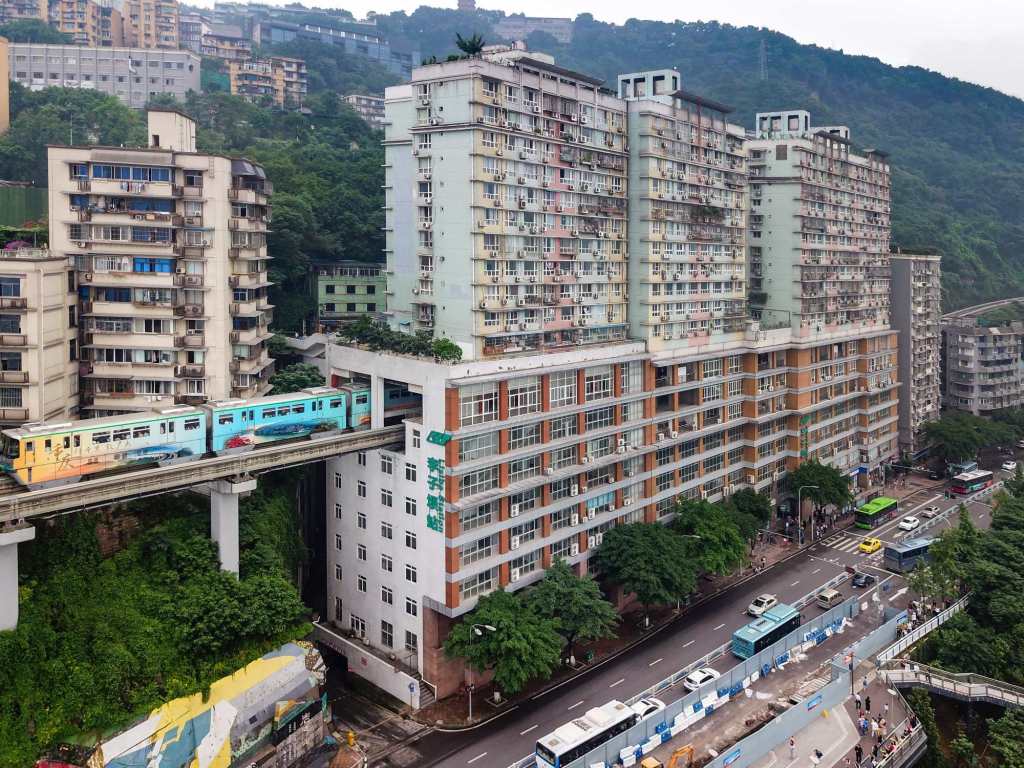
The station is unique in that it is located on the sixth to eighth floors of a 19-story residential building, with the monorail trains going through the middle of the building. It uses specialized noise reduction equipment to isolate station noise from the surrounding residence. 

The station and building were actually constructed together as one whole structure, and the monorail was not retrofitted through the middle of an existing structure as some people think.

Photo courtesy of David290 – Wikipedia

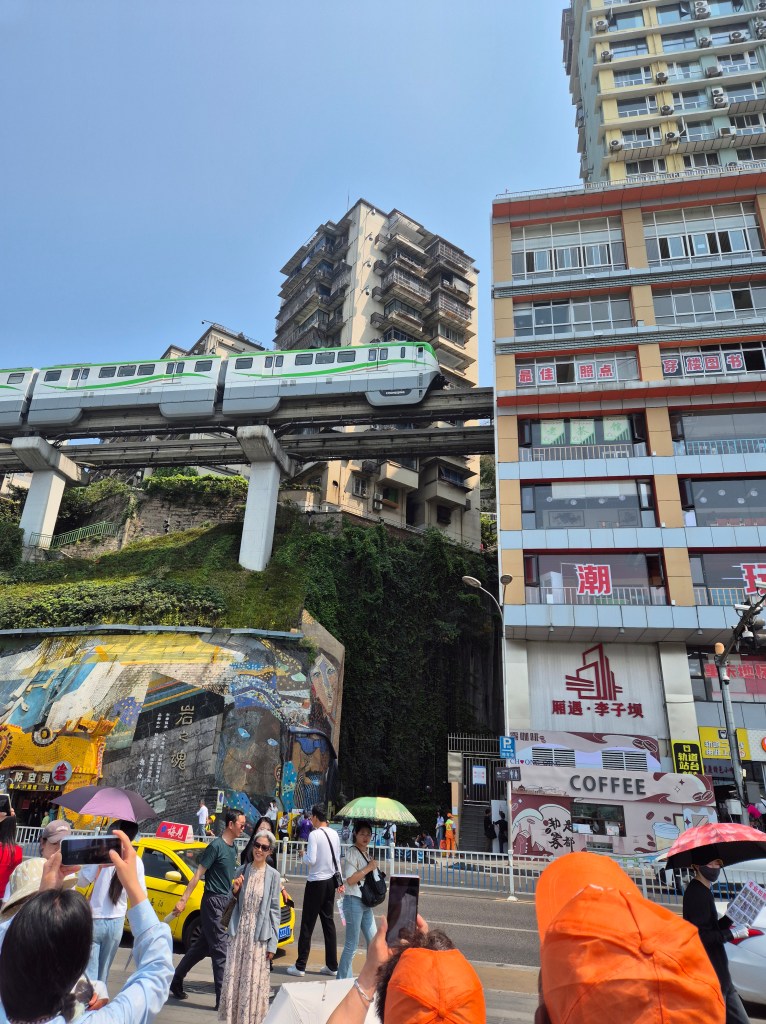
The station is quite famous and the city has built a viewing platform beside the street below to cater for the many thousands of visitors. Plenty of street vendors here selling souvenirs, drinks, fridge magnets, ice creams etc.

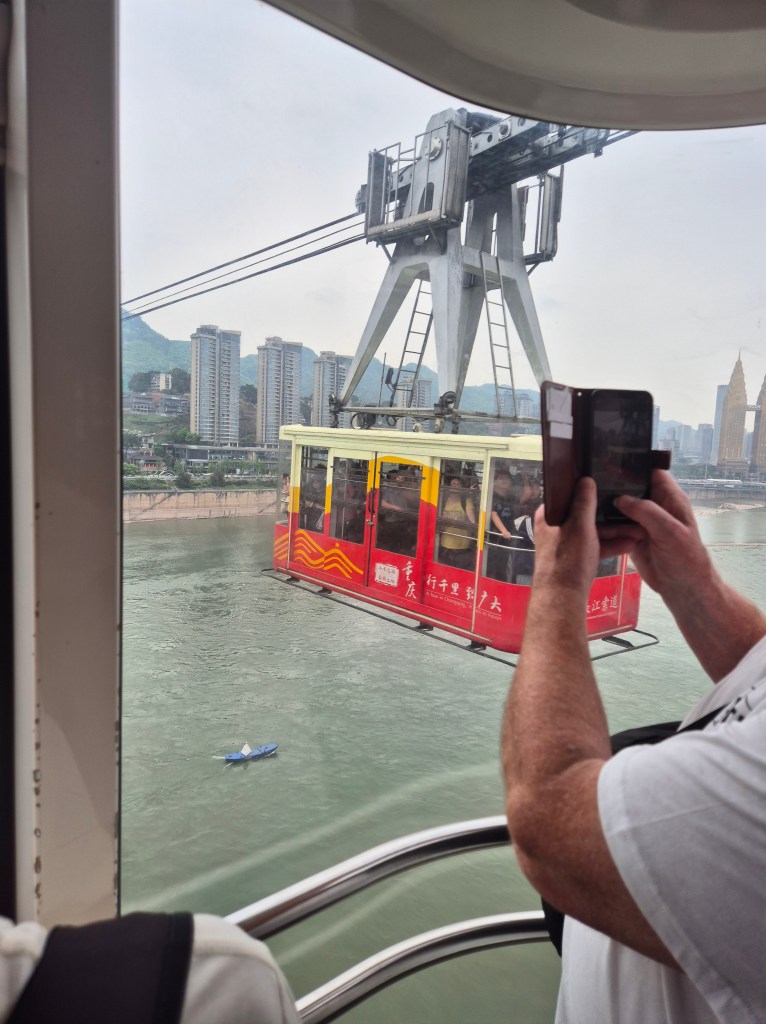
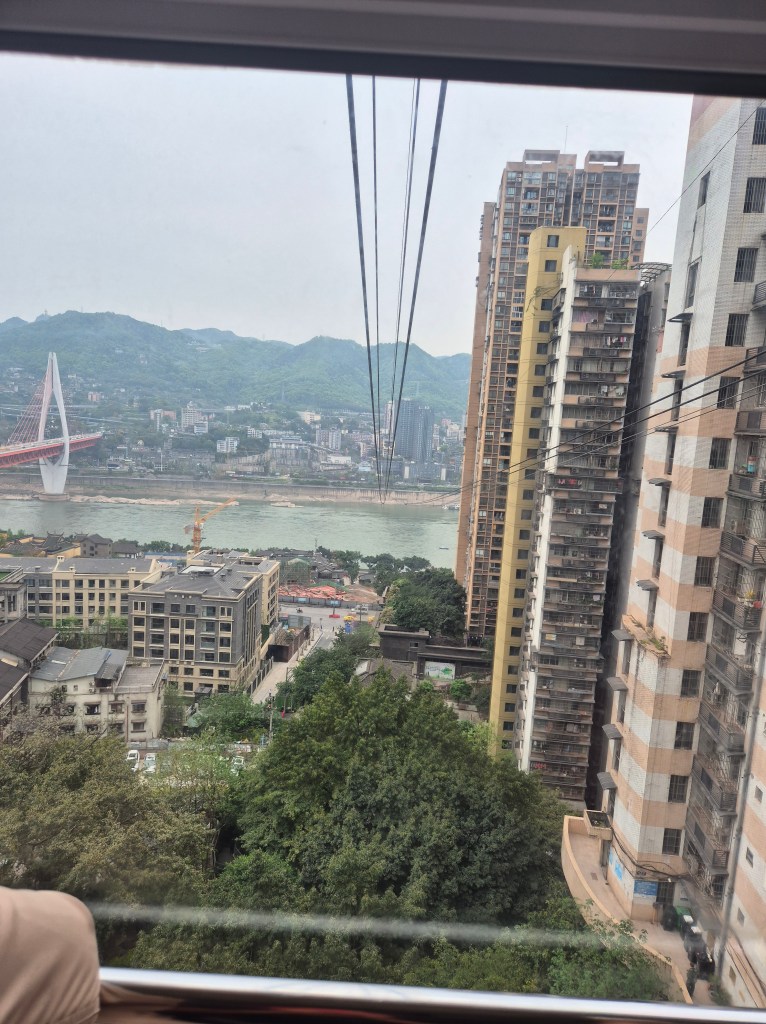
Another of the way to get around the city and cross the river is the Yangtze River cableway.

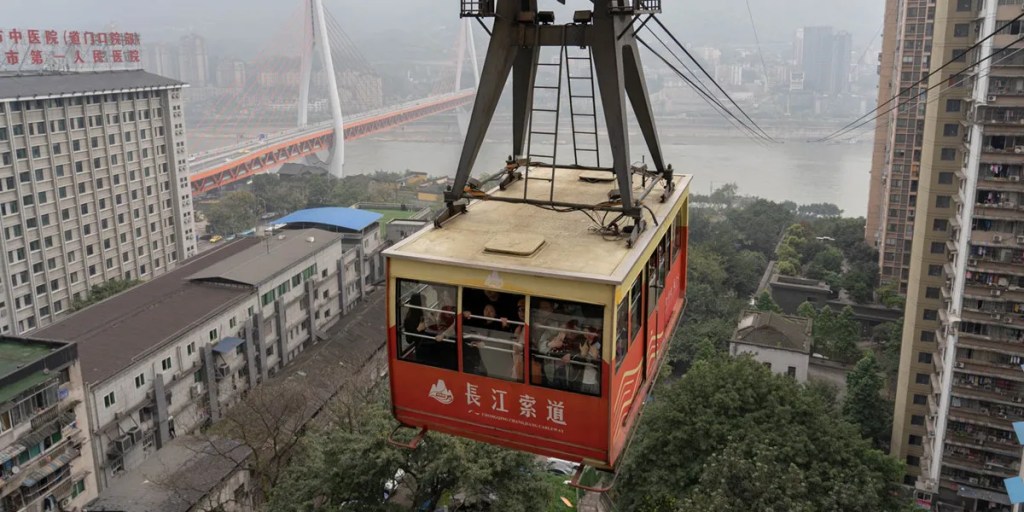
The Yangtze River Cableway, which has been operating since 1984, is the major means of public transportation for people crossing the Yangtze River from Yuzhong district to Nan’an.

Although only half a mile from the hotel is was all uphill and quite a slog!

The Cableway, stretching 1,166m, with a one-way trip taking 5 to 6 minutes, is a tourist spot rather than public transportation nowadays. 

The ticket office looking great in the spring sunshine.

With Gary at the cableway station on the far bank.

The usual shopping street with plenty of food choice.

Down by the river was an area of restaurants and souvenir shops, our hotel in the background.

It was soon time to cool off.

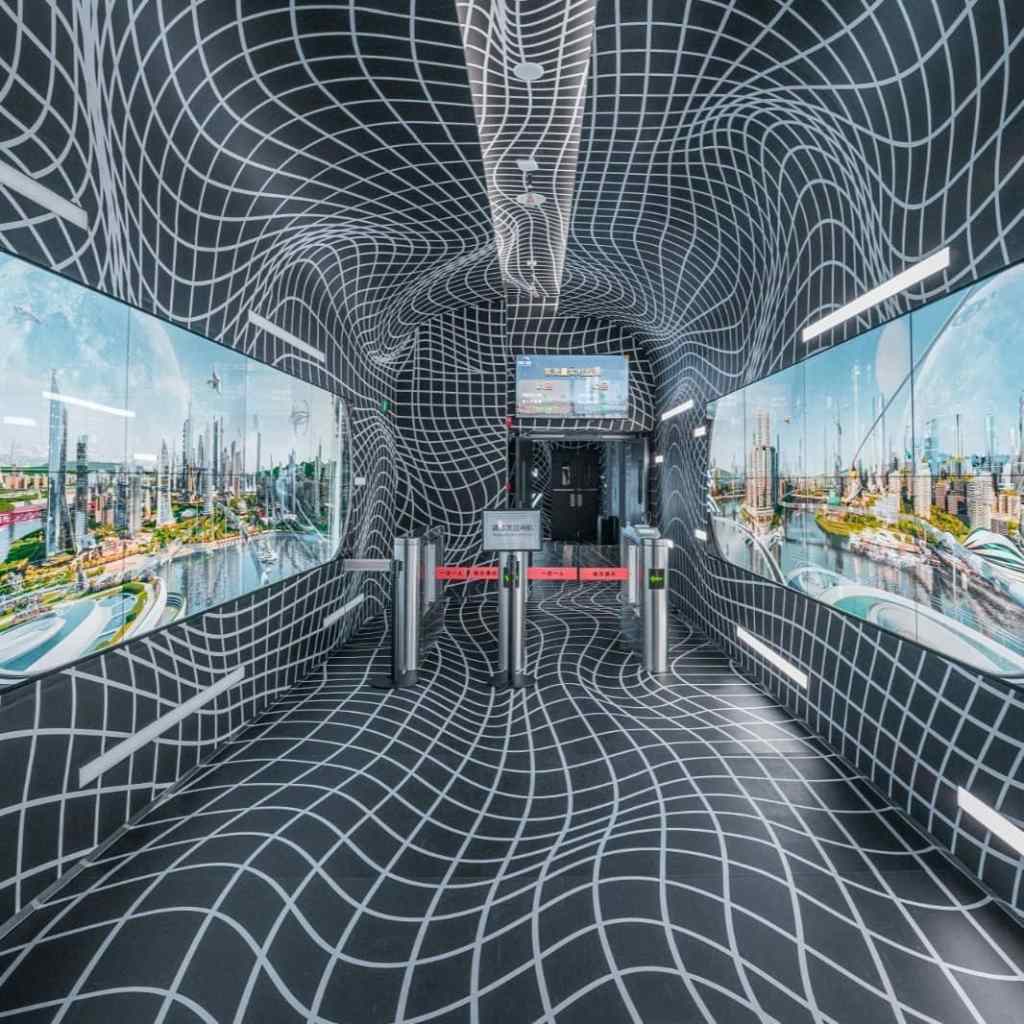
After relaxing for a while we headed back to our hotel and decided to go up to the 53rd floor, which is reached by a lift from the basement floor of the shopping mall beneath the hotel.

I was feeling quite giddy at the entrance, let alone on the 53rd floor!

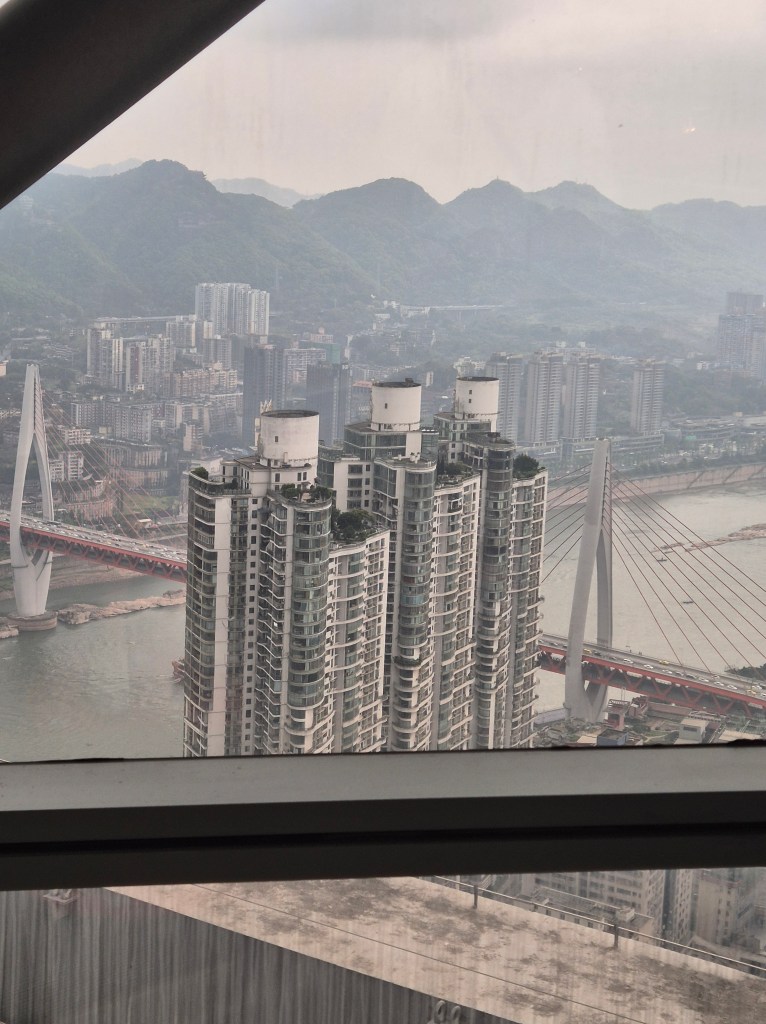
Great views from up there, this is looking back to where we had just come from on the other side of the Yangtze river.

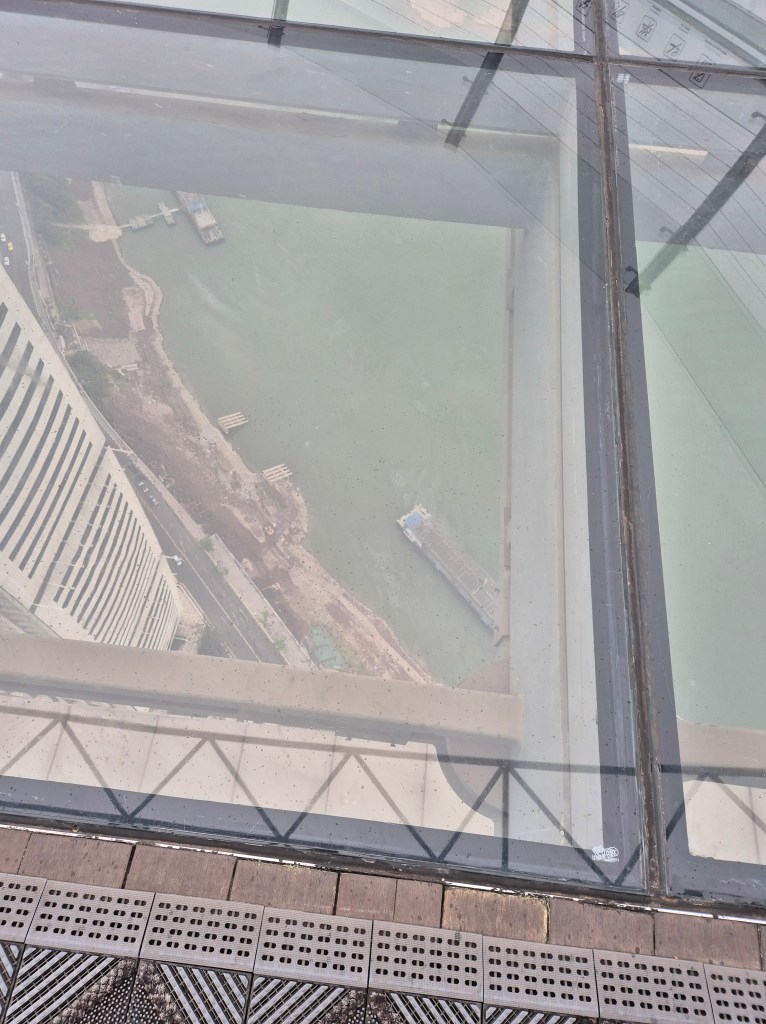
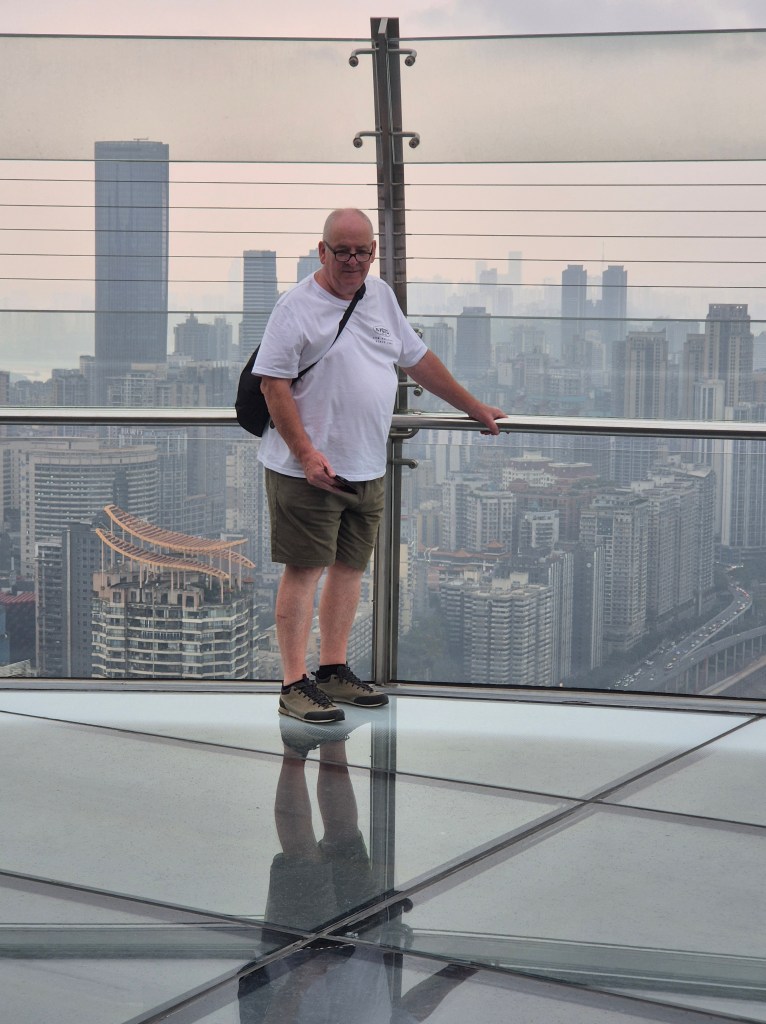
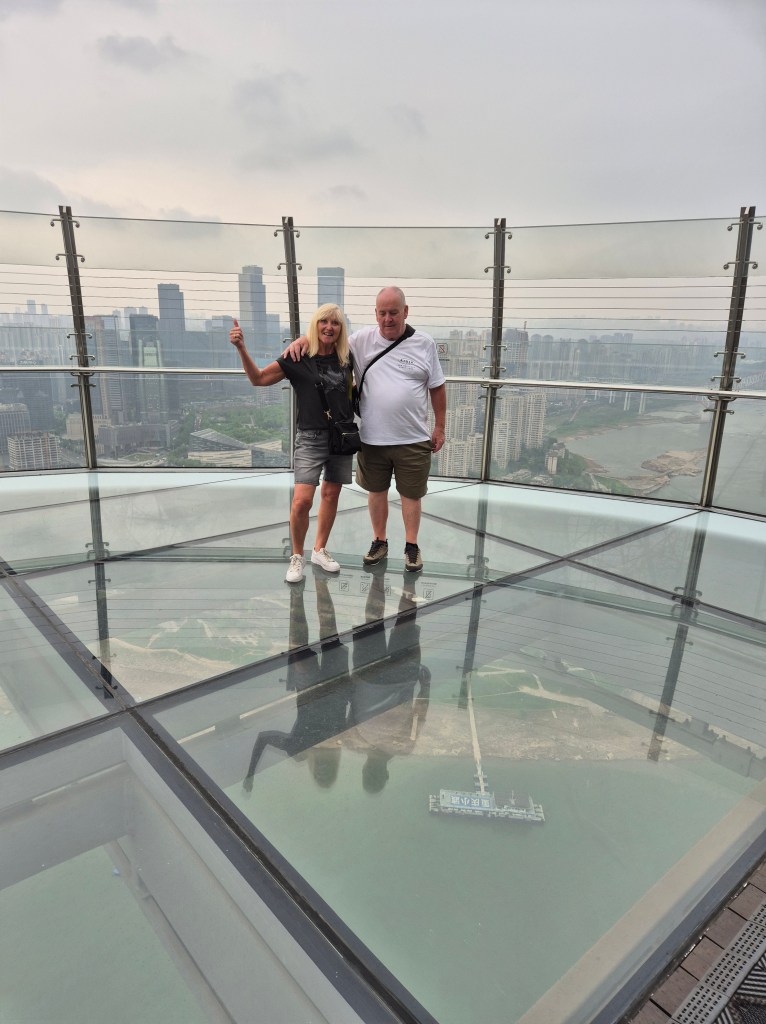
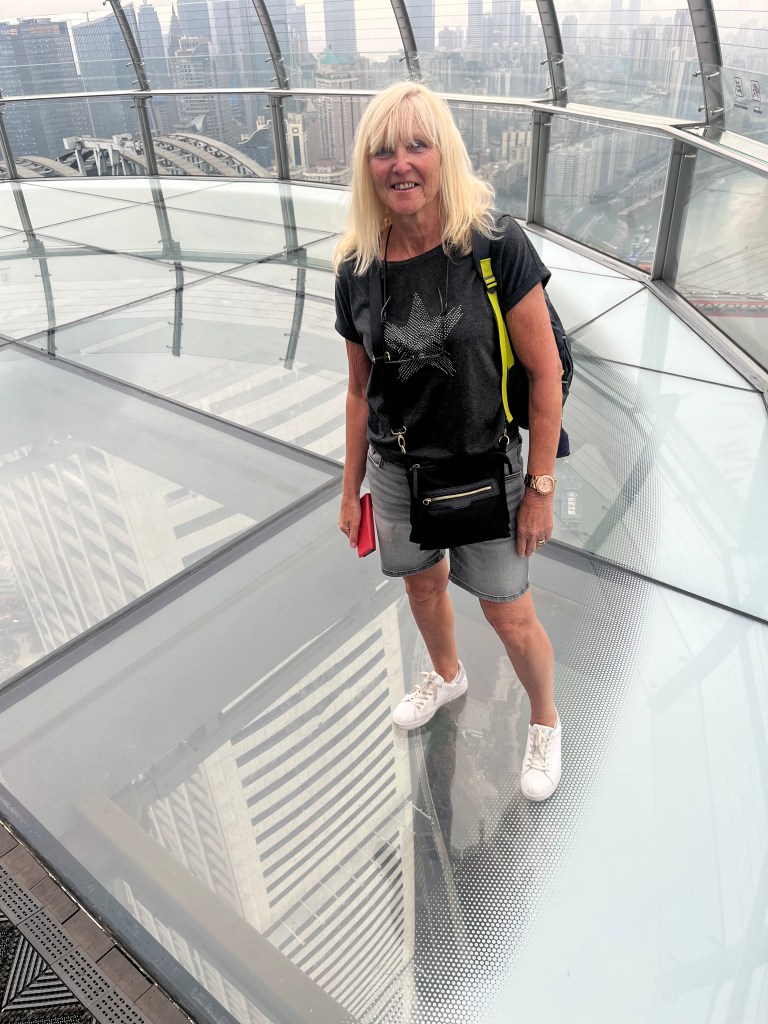
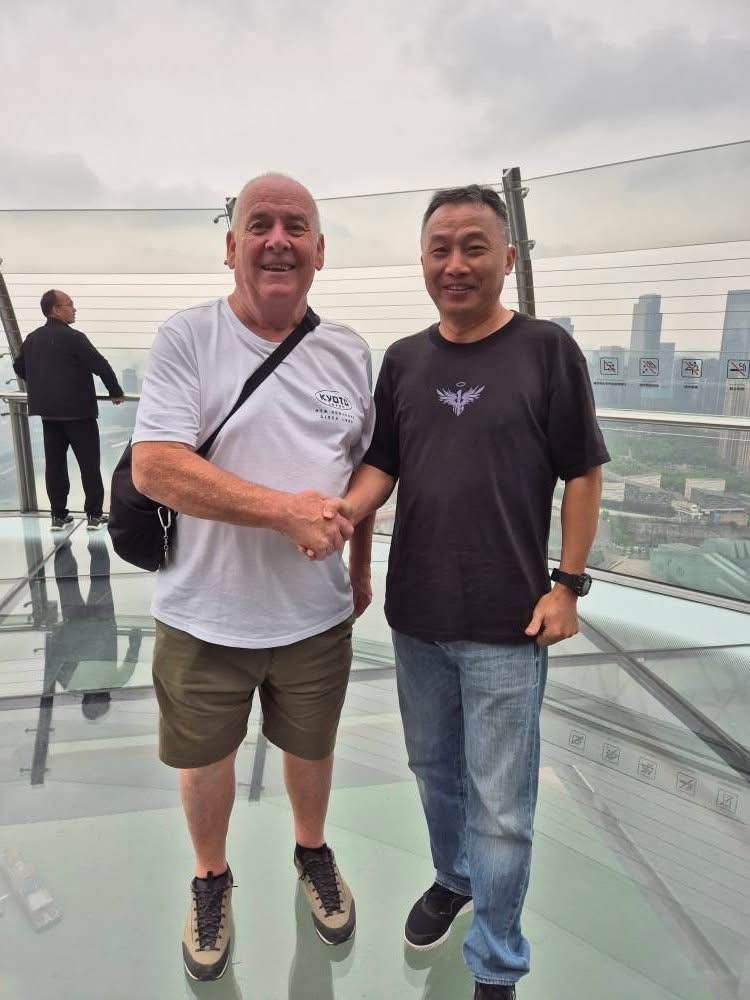
Standing on the edge and looking through the glass floor it looked a long way down!

Holding my breath and not looking down seemed the best option and I was soon on the far side of the glass floor, holdng on tightly to the hand rail.

Diane soon joined me, as did Gary.

I was feeling quite brave and there was a Chinese guy too frightened to walk on the glass floor but I led him forward and he finally made it and was very grateful to me for helping him.

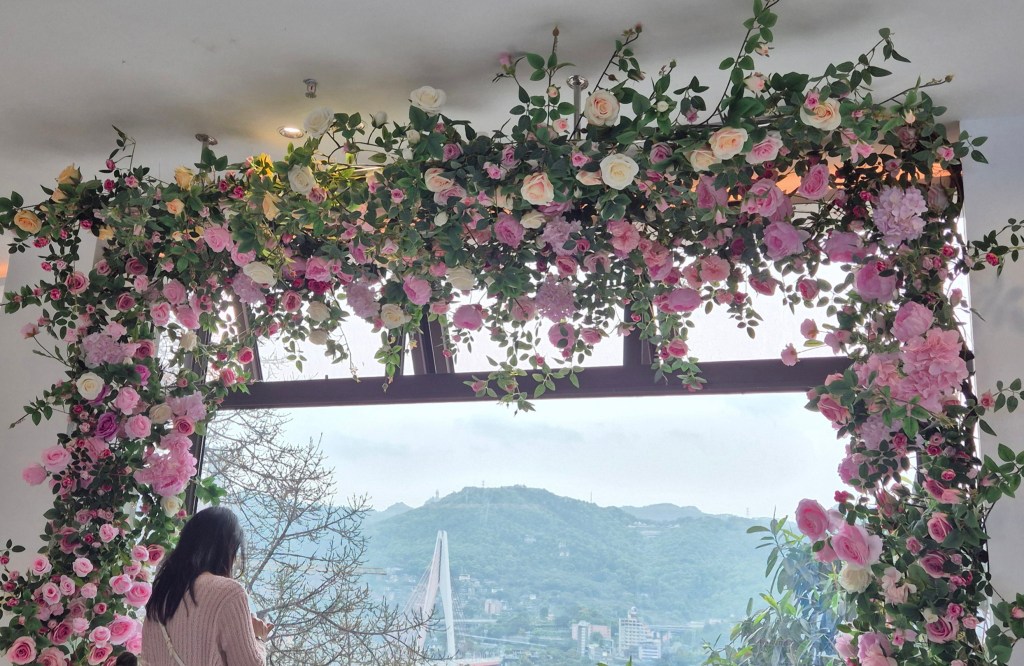
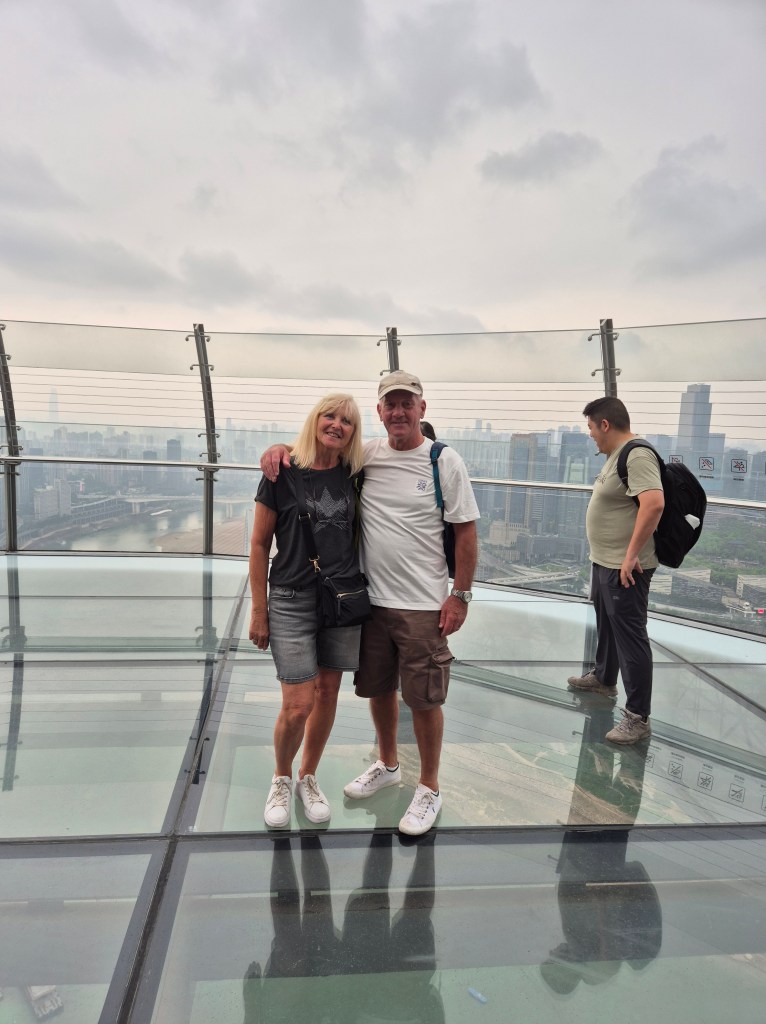
Some nice photo spots up there.

Photos by Sadie Architects who designed the Raffles City Complex.

There is also a swing but fortunately this was closed for maintenance!

Walking along the roof is also an option but we all felt it was a bit too windy up there for us.

We looked around and found a simulator ride with VR headsets but the operator said we were too old, had to be younger that 60! Bloomin cheek!

Part 3 of Chongqing will come later and I hope you enjoyed today’s post.

TTFN

Bibbley
Chongqing Part 1

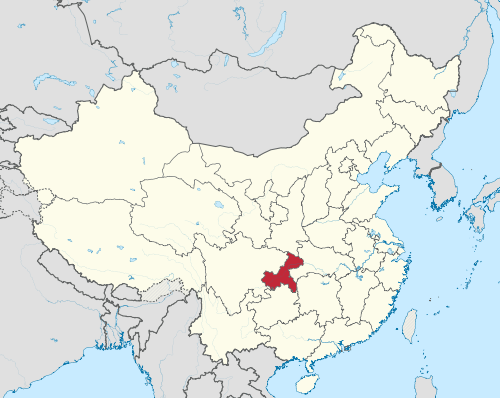
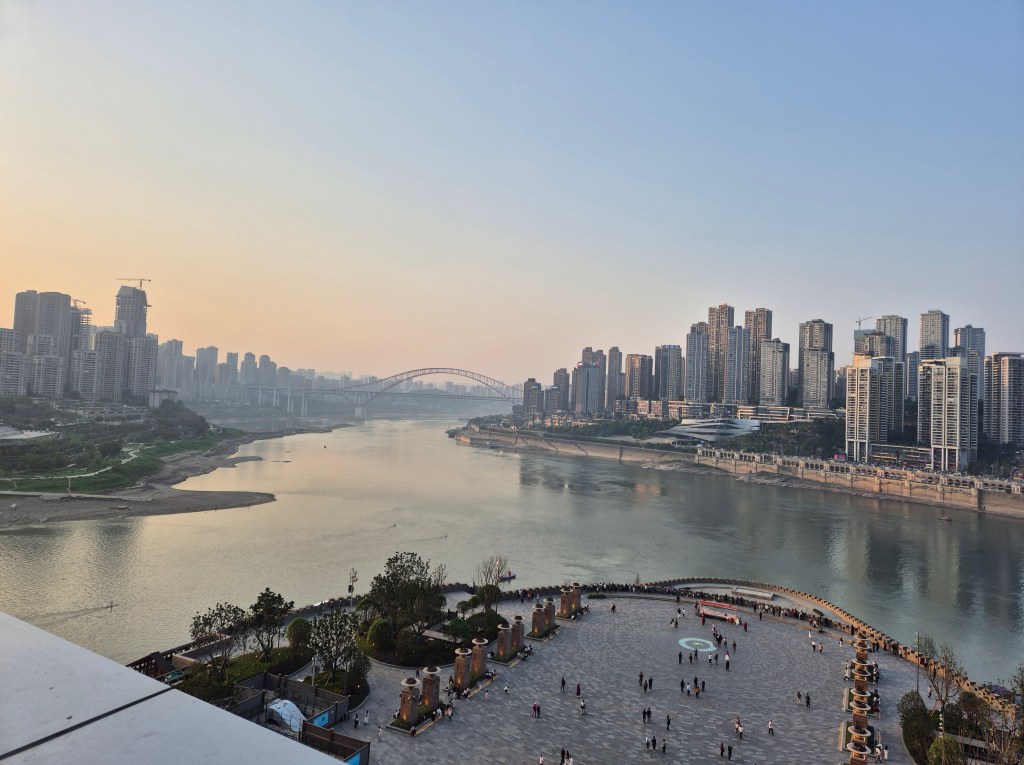
After another very fast and very smooth 1,000 km train ride we arrived in the mega city of Chongqing which sits at the confluence of the Yangtze and Jialing rivers in central China.

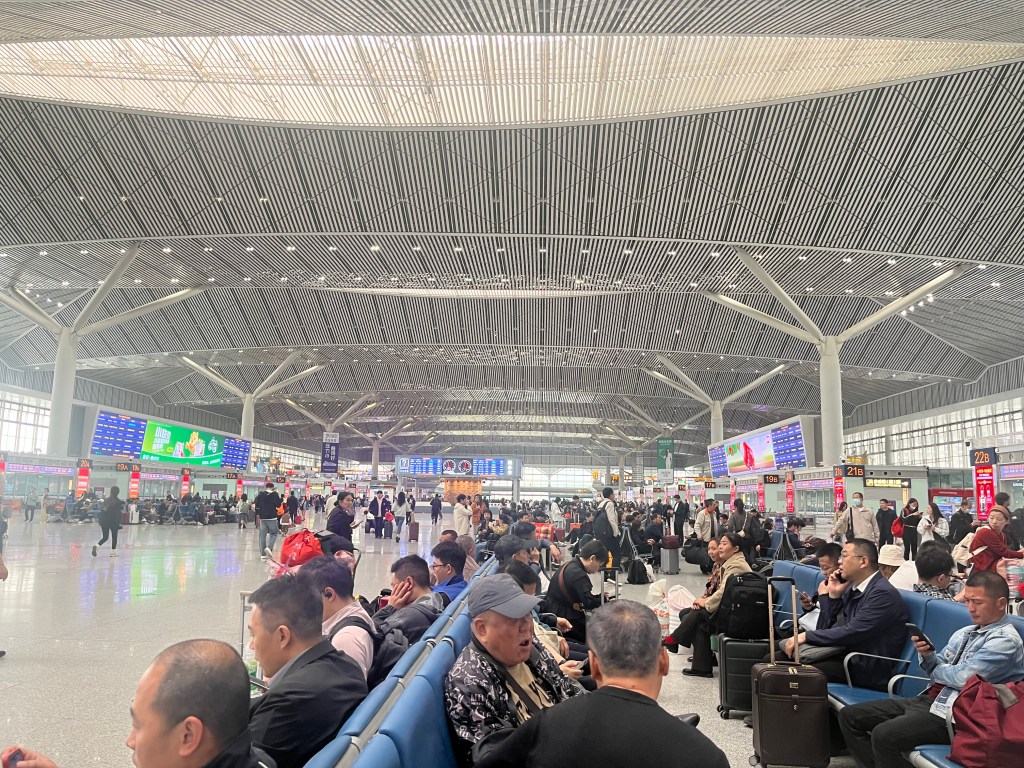
Although small in comparison with the railway stations in Beijing and Shanghai, Xi’An North station is still quite impressive, with plenty of shops and seating areas.

With a population of over 32,000,000 Chongqing is said to be the most populated city in the world.

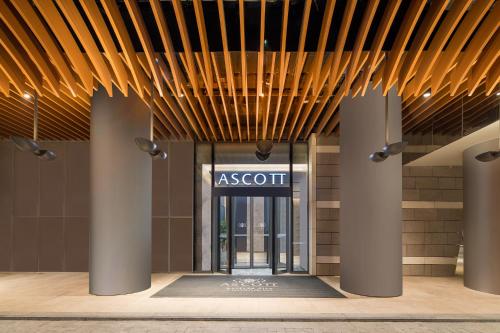
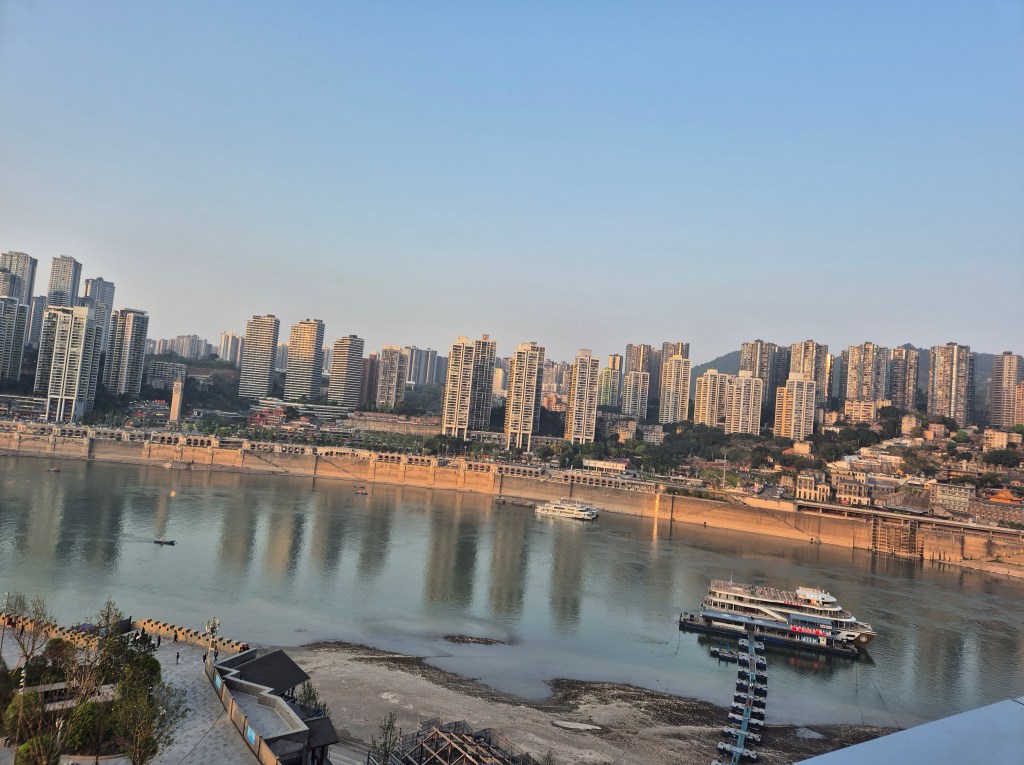
A hair raising 30 minute taxi ride from the station to our hotel with a driver who must have been a stunt driver in “Fast and Furious”, weaving in and out of all 4 lanes of the motorway into the city centre we were soon at our hotel, The Ascott Raffles City in downtown Chongqing, right where the 2 rivers converge.

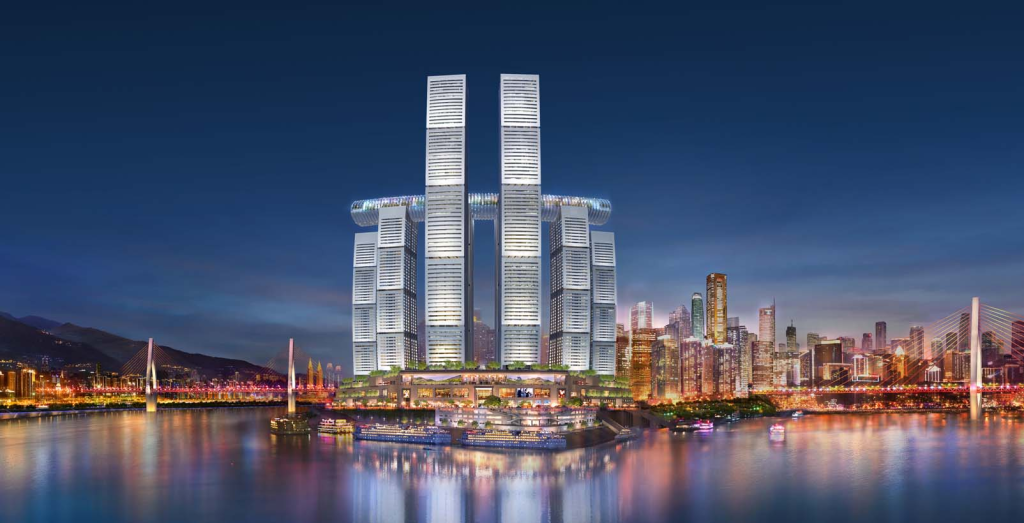
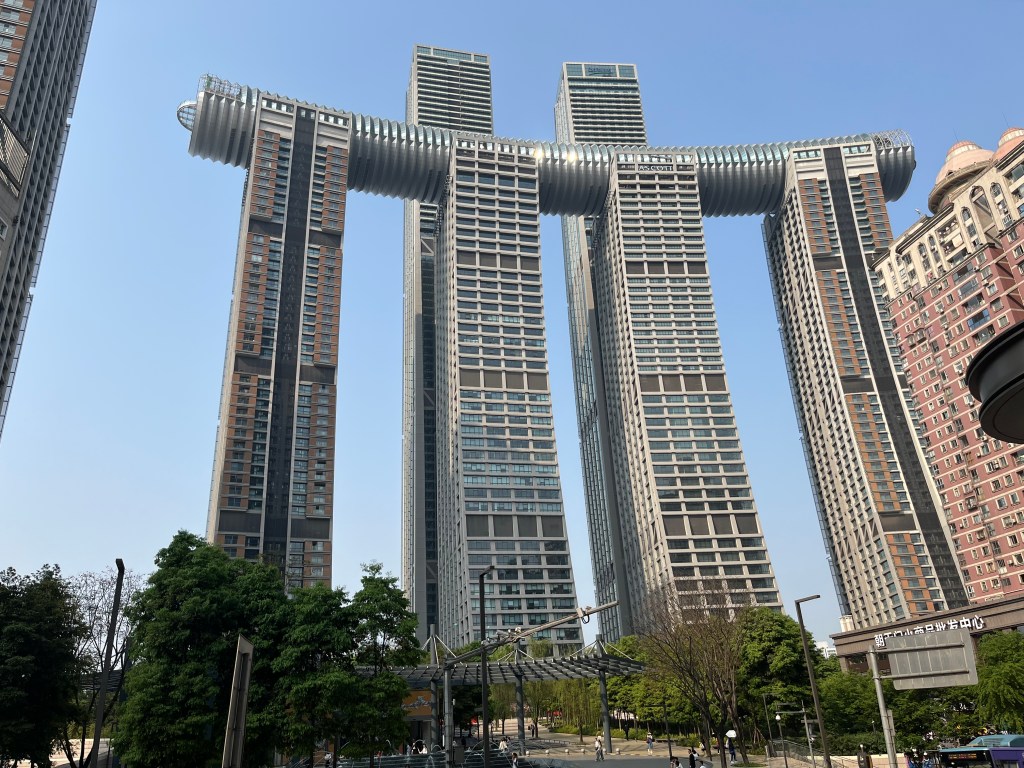
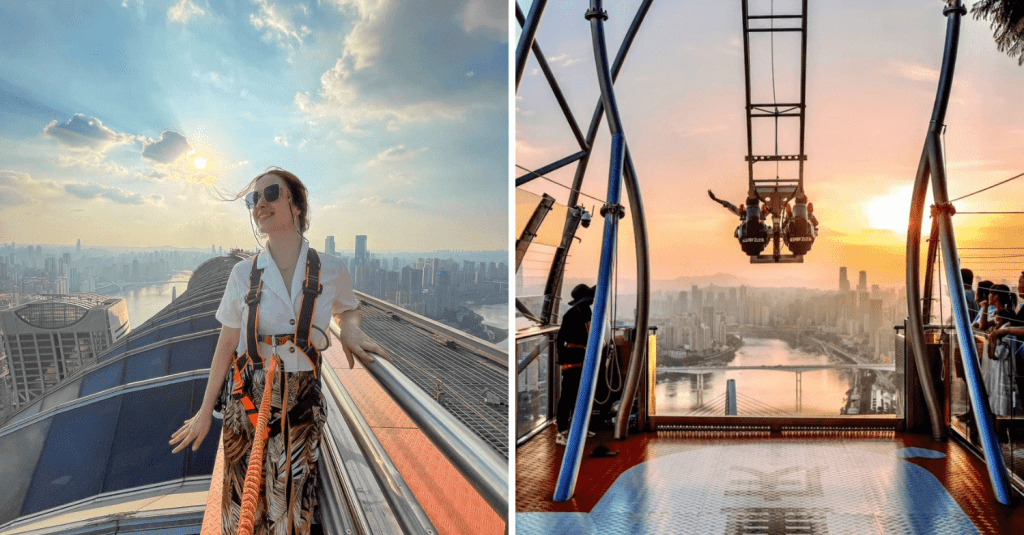
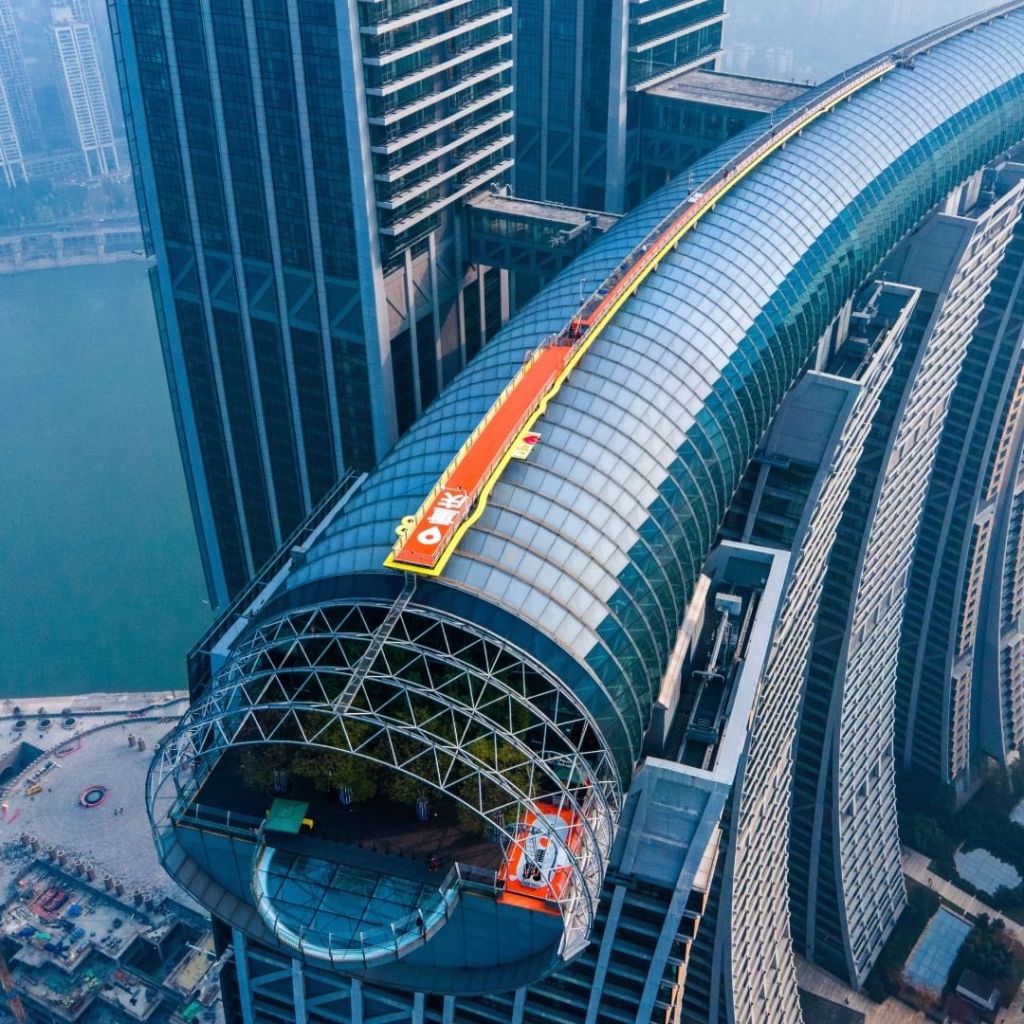
Raffles City Chongqing consists of eight skyscrapers situated on a site covering 9.2 hectares Atop four of the 250-metre-tall towers is an enclosed skyway, called the Crystal, with a swimming pool, bar and restaurant and a glass floor outdoor space which you can see in the photo below, but more on that later.

The two 350-metre-tall towers connect to the other 4, via a cantilever bridge. Two other 250-metre-tall towers are adjacent to these six.

The Raffles City complex has 1.12 million square metres of space, including 150,000m2 of offices and 1,400 apartments, a hotel, and a 235,000m2 5 floor underground shopping mall, railway station and cruise ship terminal, all very impressive indeed.

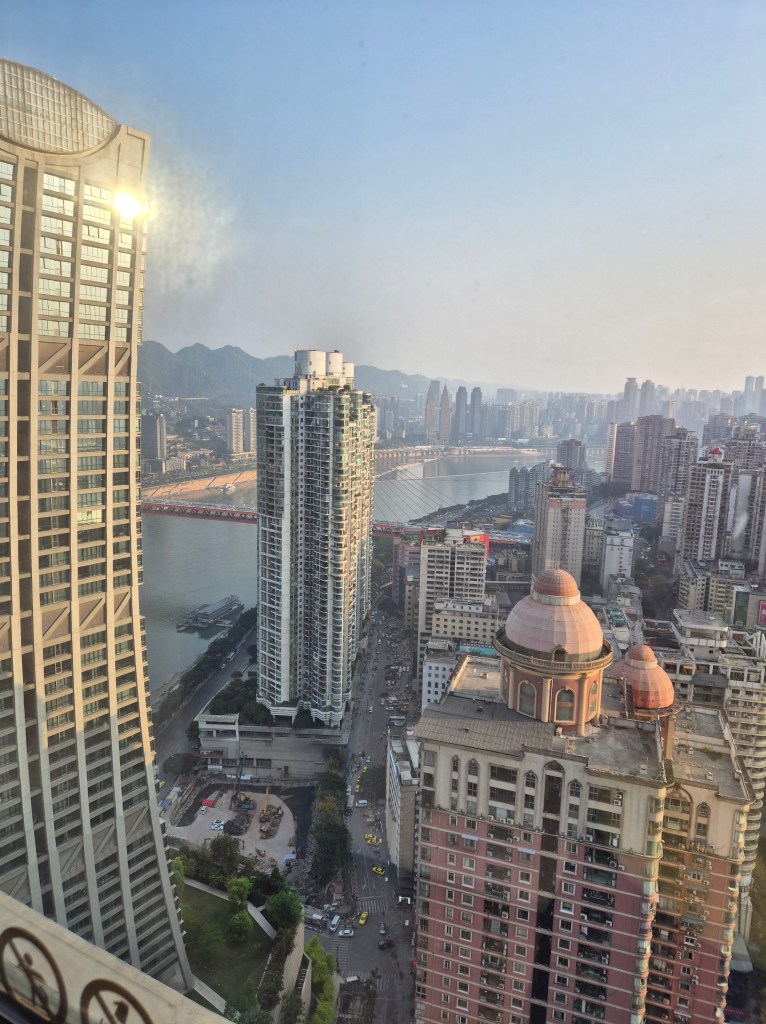
Our 43rd floor apartment gave us great views over the rivers and the city.

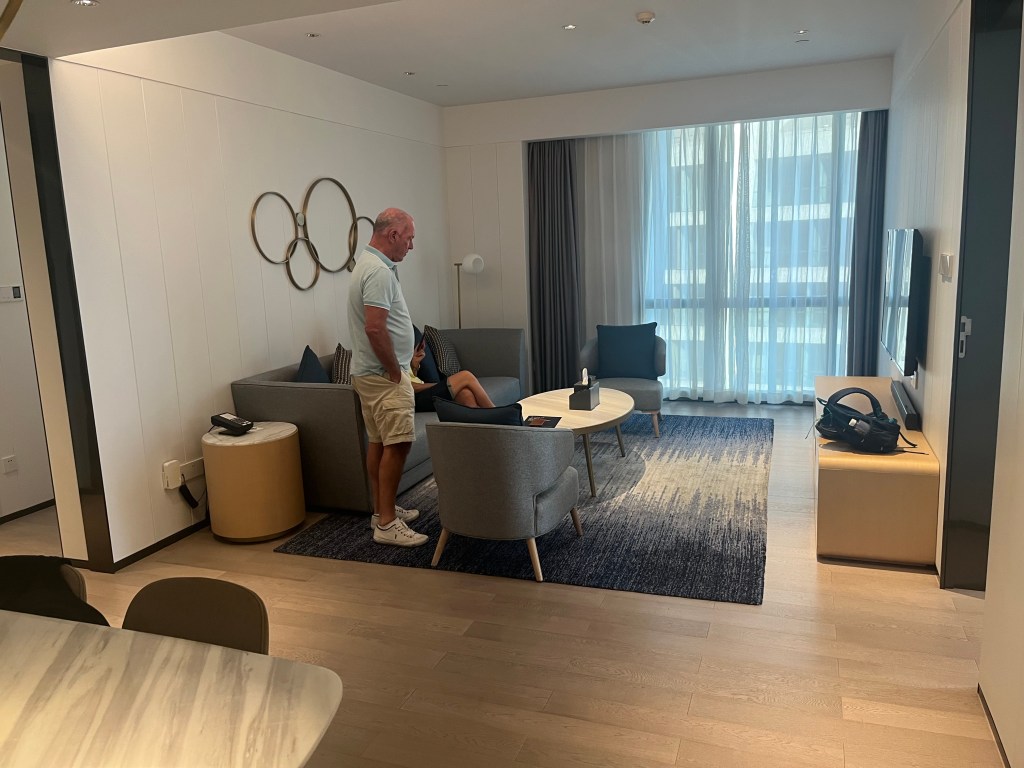
We stayed in a 2 bedroom apartment with a comfy lounge / dining area, a spacious kitchen and separate laundry room where we took advantage of the washing machine to freshen up some of our clothes at this midpoint of our holiday.

Thwe following morning on our way out for the day we spotted this little chap by the vending machine in the reception area, but more of him later.

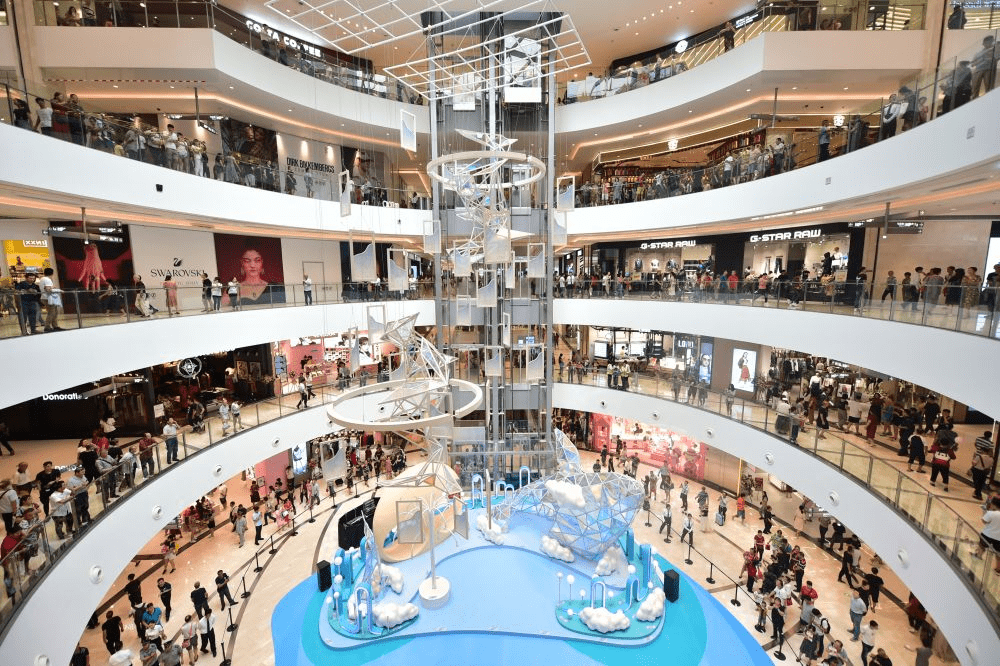
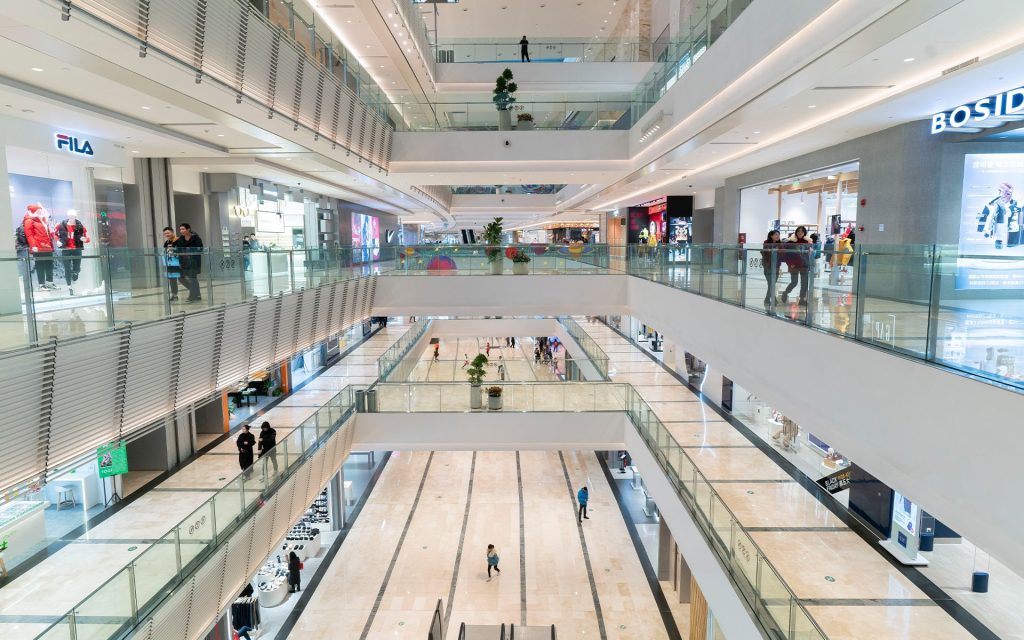
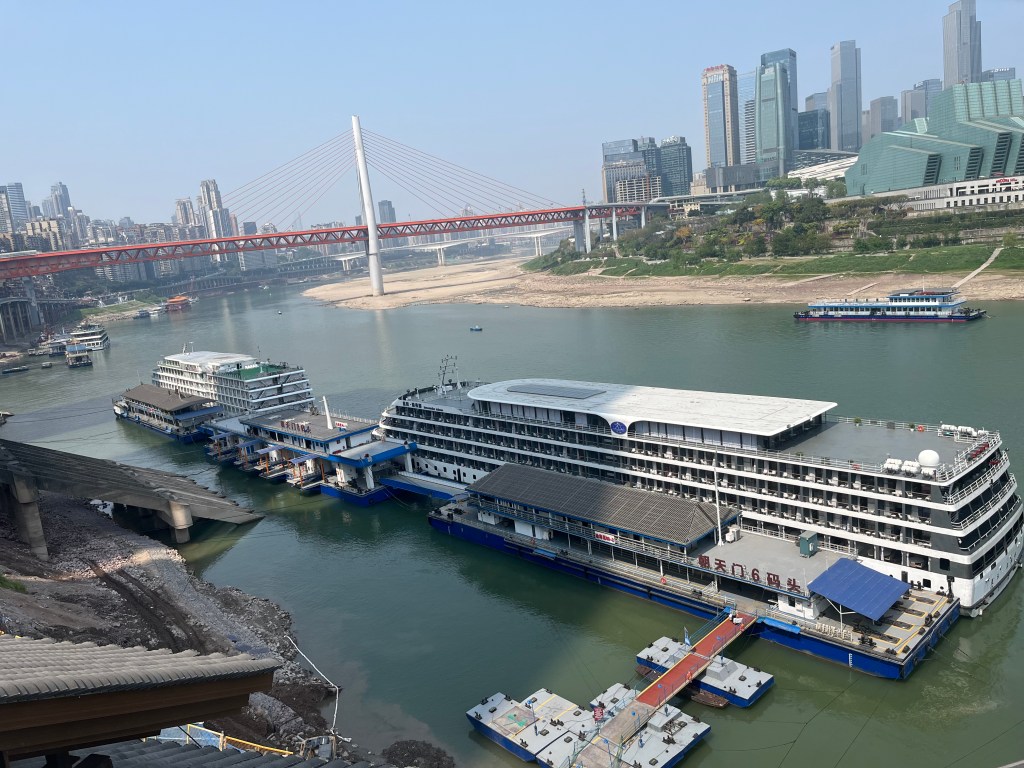
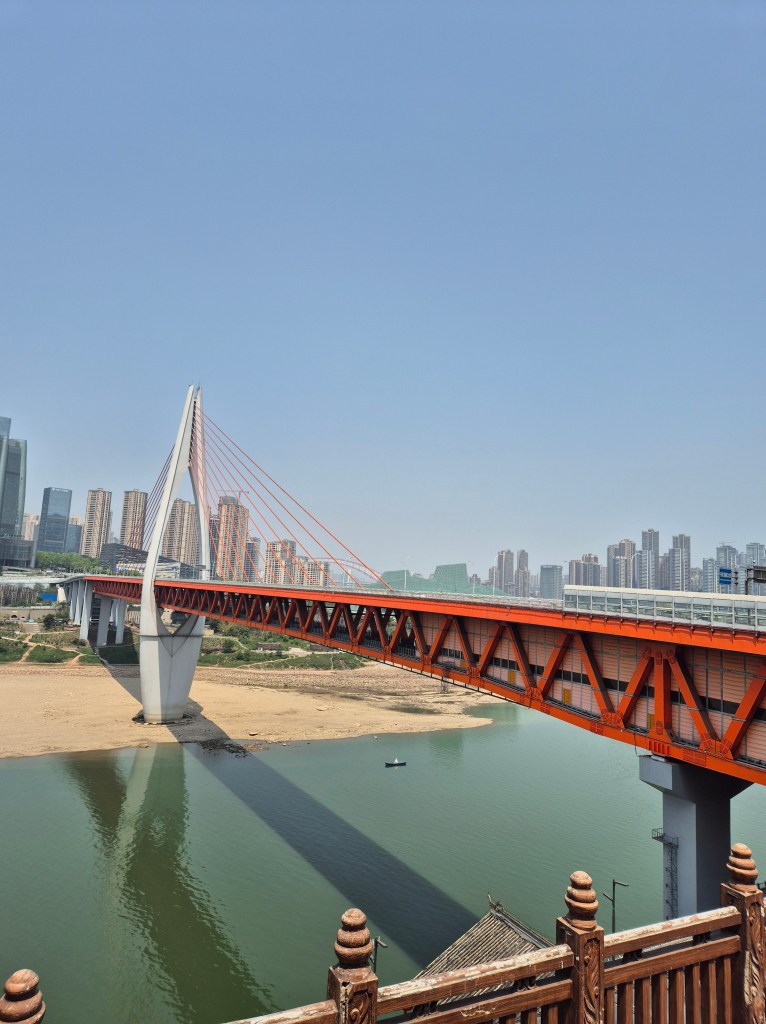
We walked down through the huge and very impressive shopping mall to Chaotianmen Square near the cruise terminal where ships leave for the 3 day trip up the Yangtze River to the 3 gorges dam.

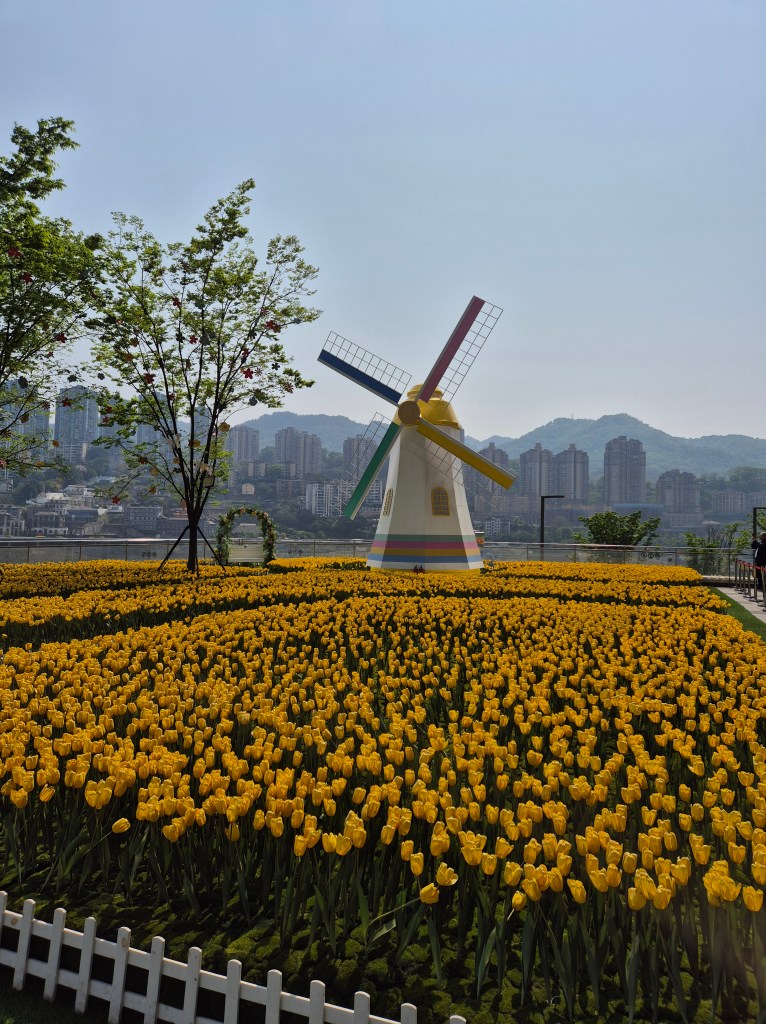
Once outside there was something we didn’t expect, a field of tulips and a windmill.

Chaotianmen dock with the river cruise ships.

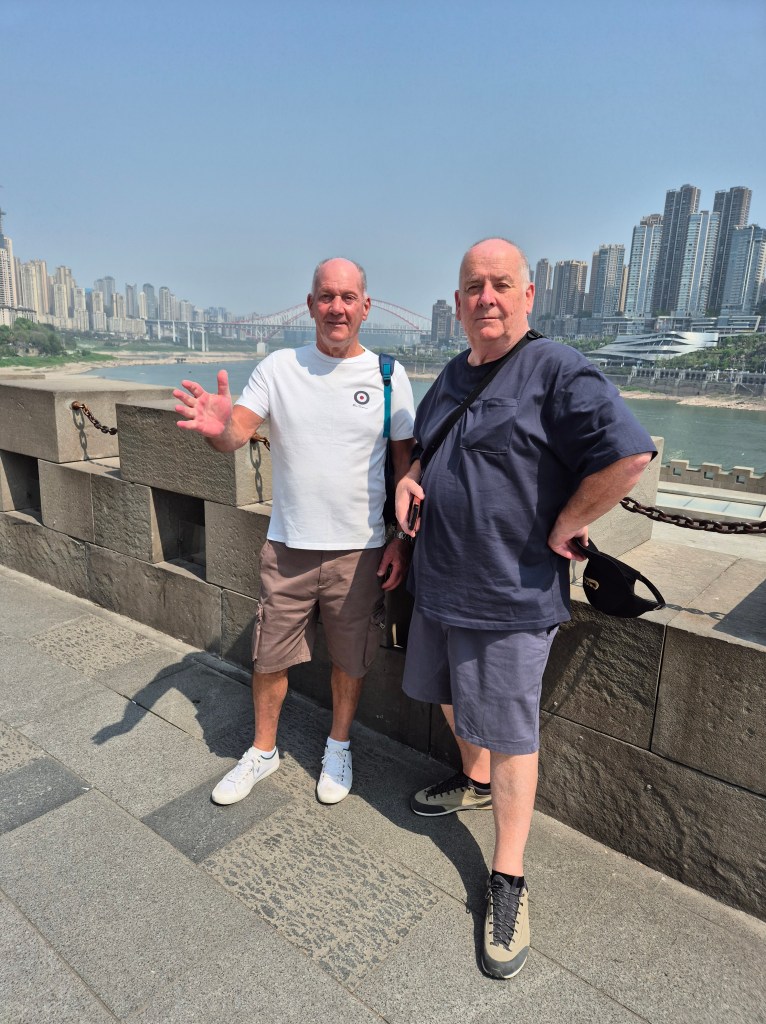
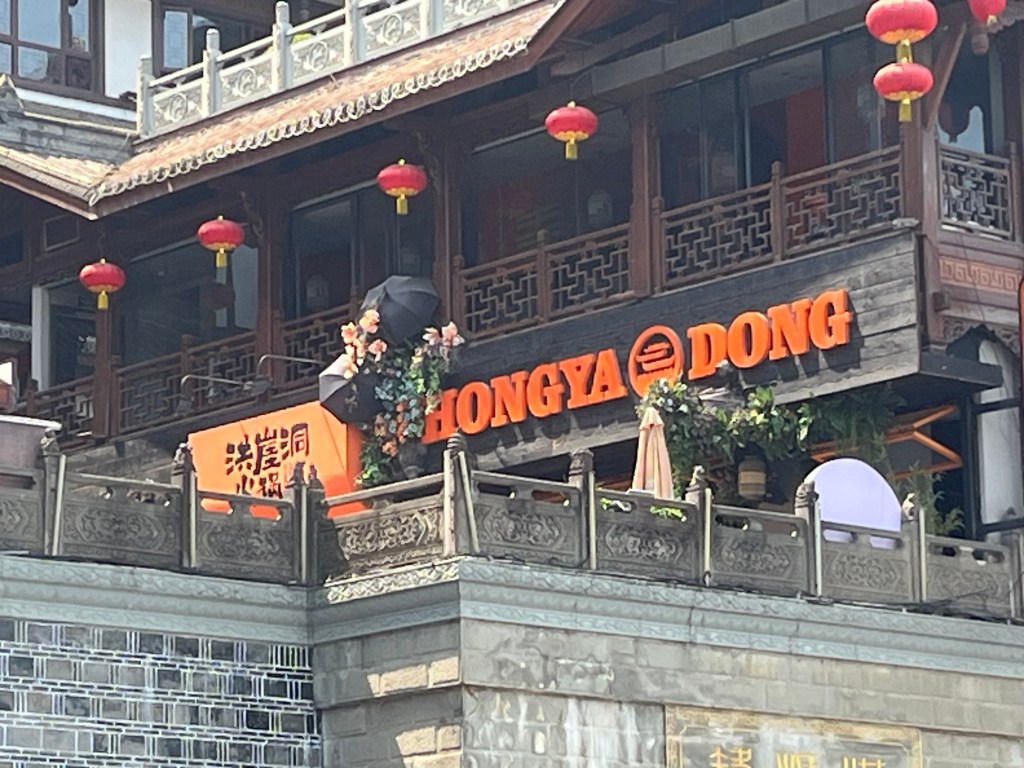
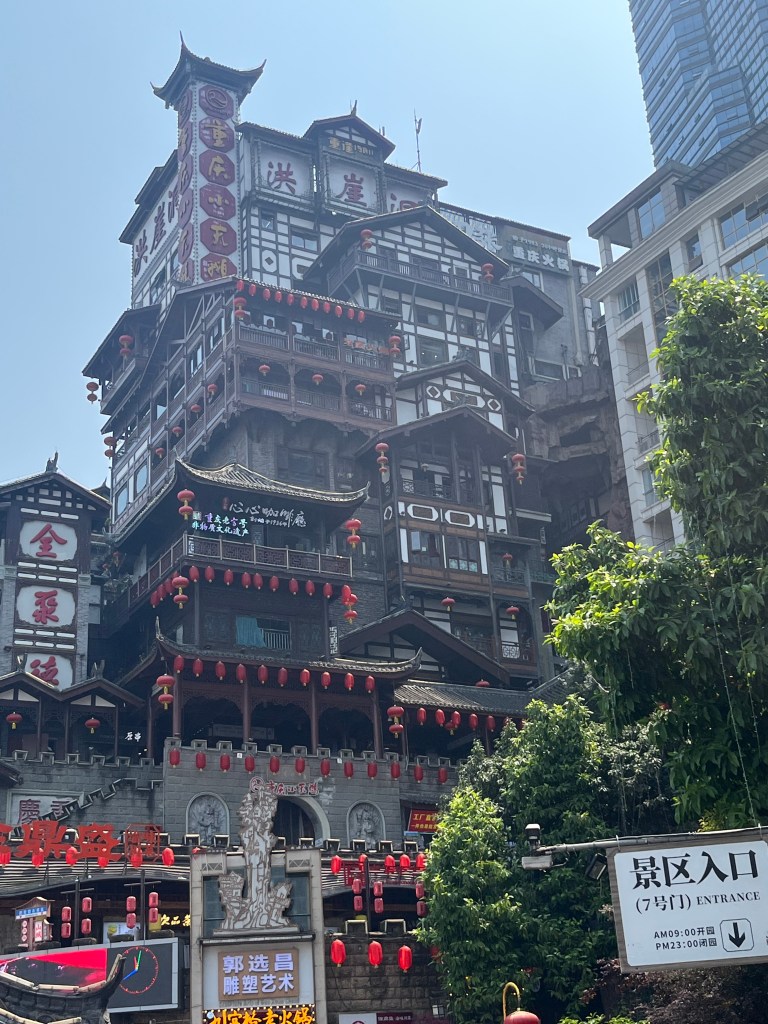
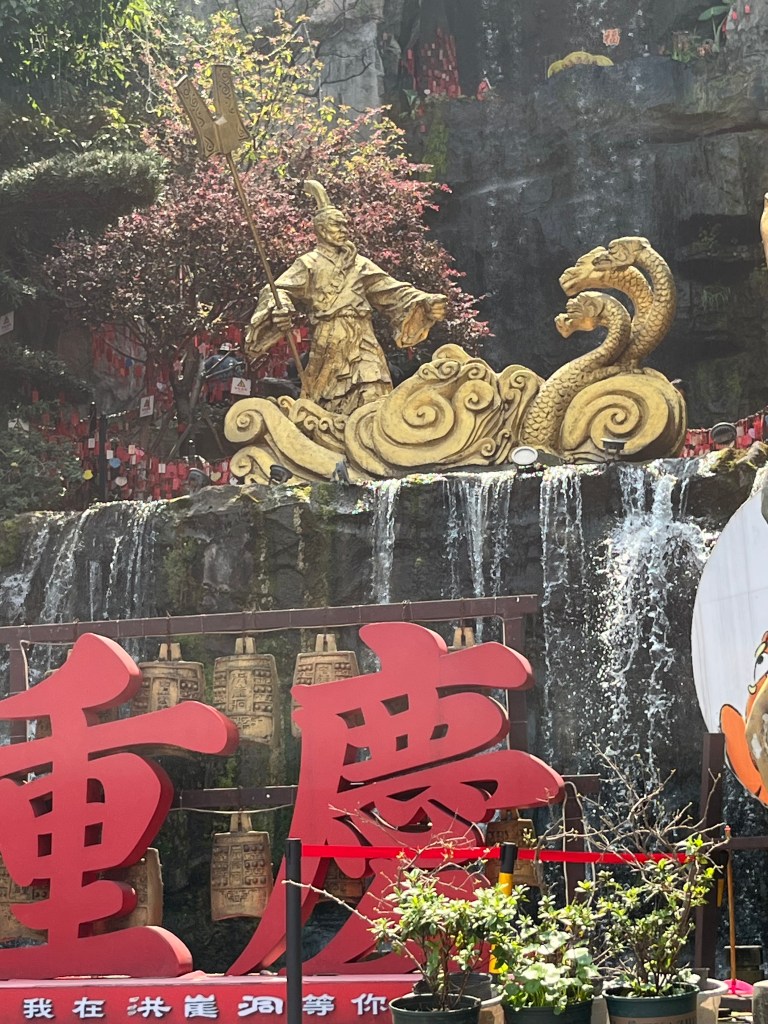
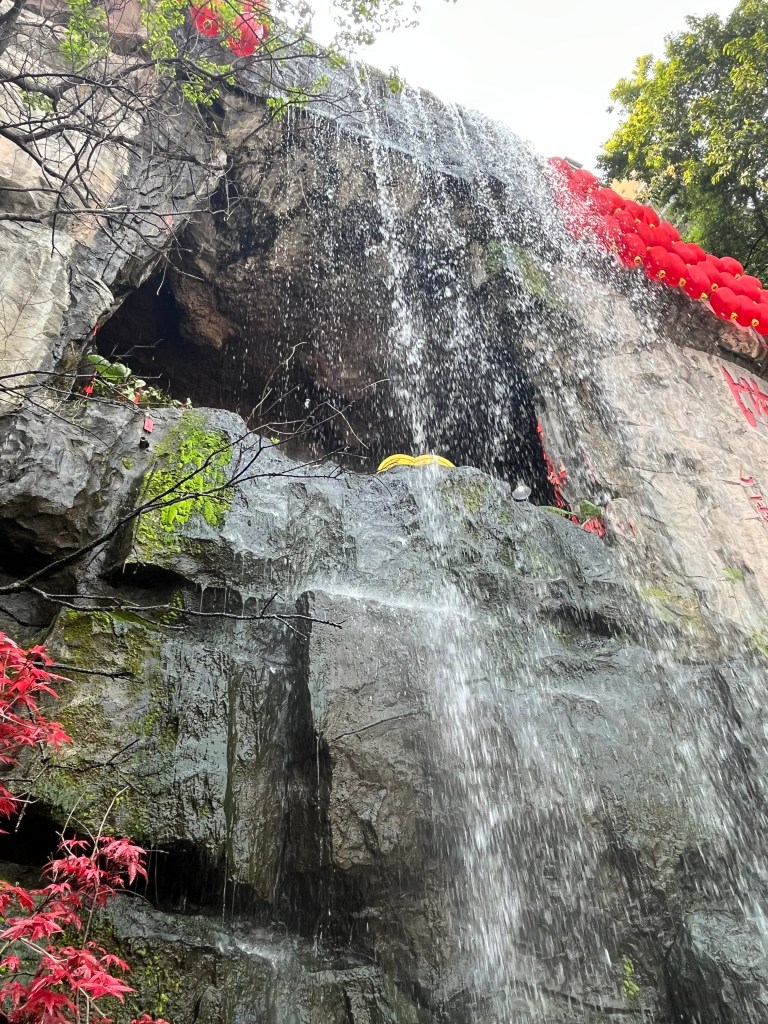
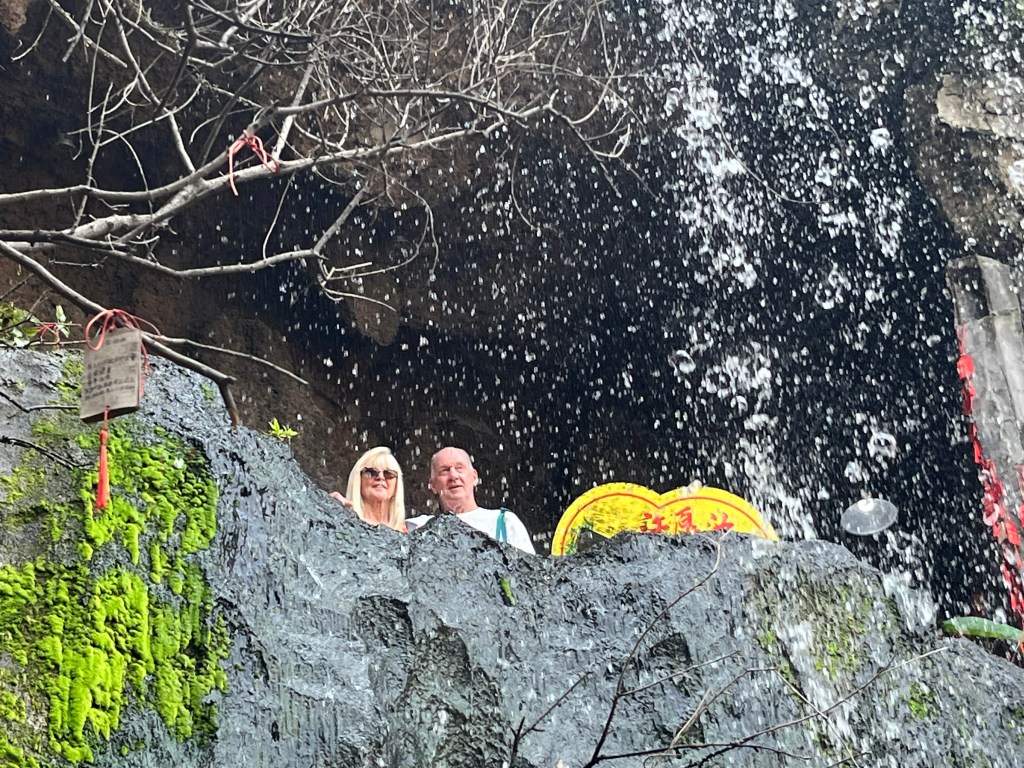
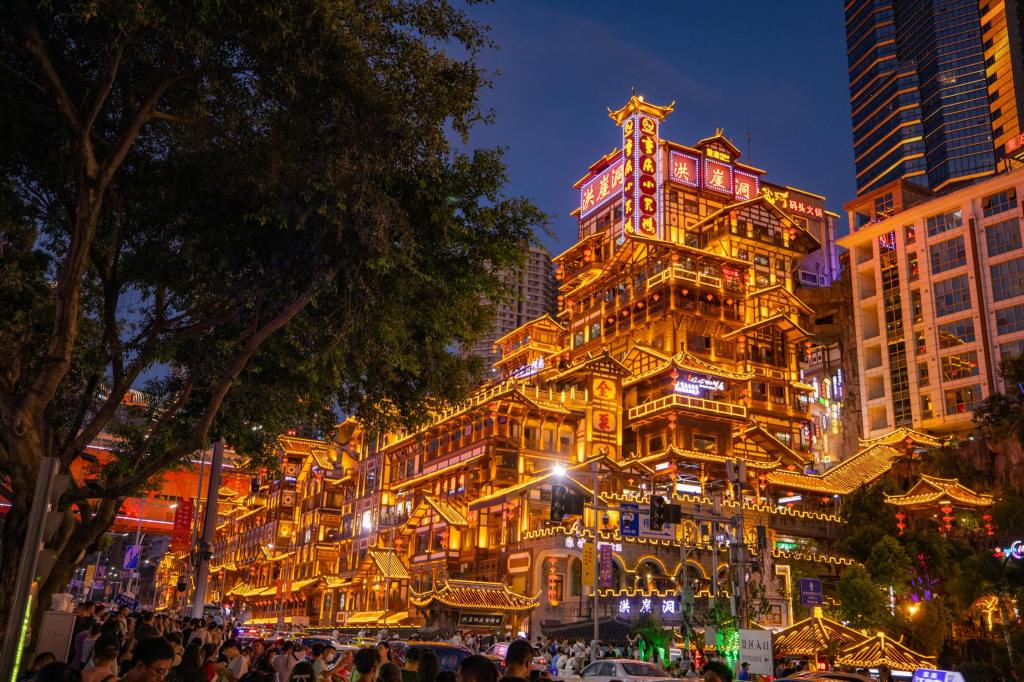
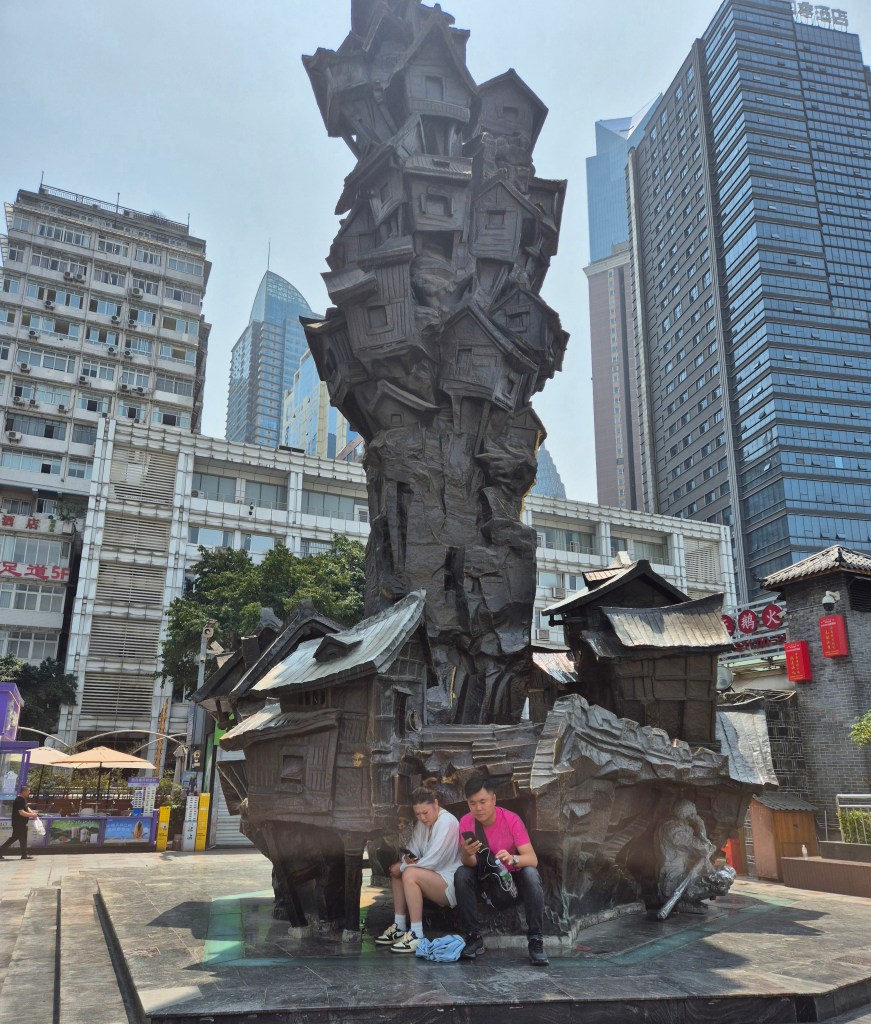
A pleasant half hour walk along the riverbank brought us to Hongya Cave, also known as Hongya Dong, an 11-story stilt-building structure built into the hillside along the southern bank of the Jialing river and one of the most popular tourist attractions in the city.

The complex is believed to have functioned as a fortress from  1046 BC and Its history can be traced back to the Hongyang Gate, dated from the 14th century during the early Ming dynasty. Stilt houses (diaojiaolou) were built along the river bank and were populated until 1949. As the shipping industry declined and the diaojiaolou were left in disrepair before starting to be torn down in 2005, newer buildings in the style of the diaojiaolou were built in place. Construction of the new complex alongside preservation began in 2006.

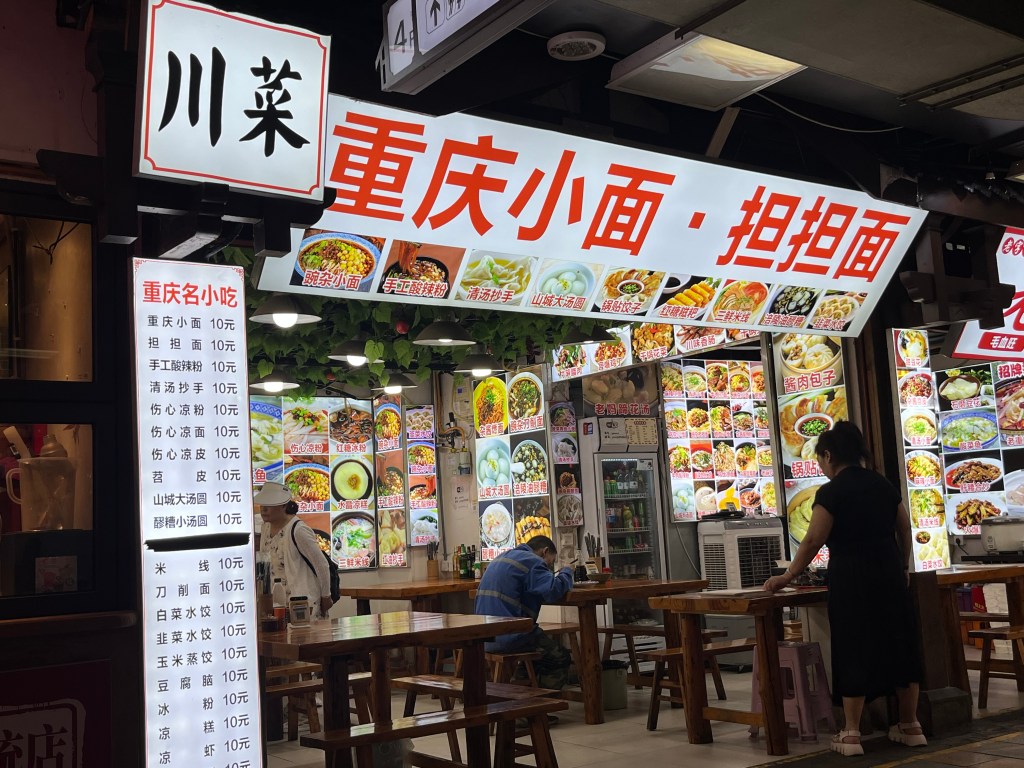
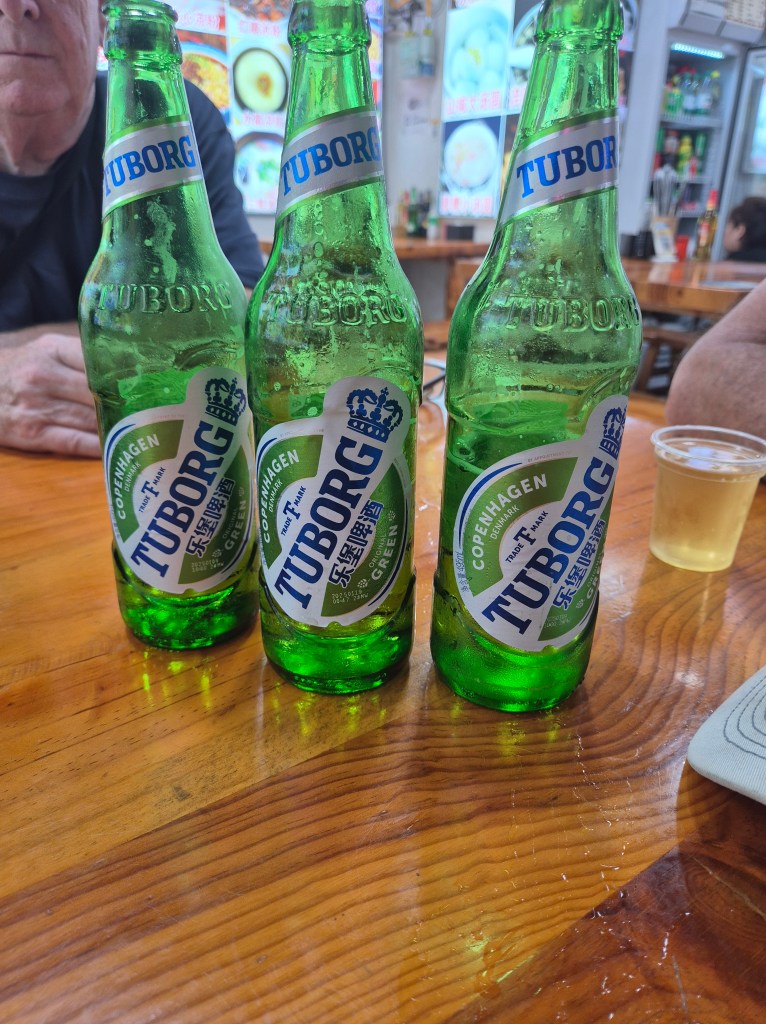
Plenty of places to stop for a bite to eat or a drink, all the noodle and rice dishes here were 10Yuan, about £1, as were the bottles of cold beer, very welcome on a warm day!

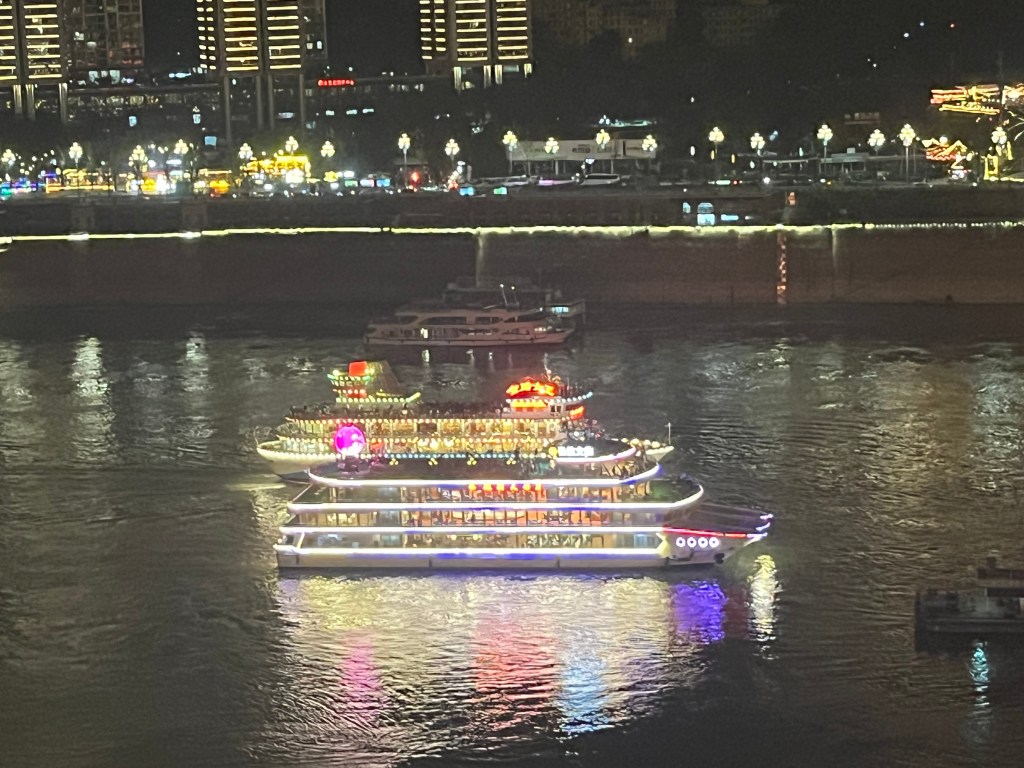
This place really comes to life after dark when all the lights are turned on.

The view across the river.

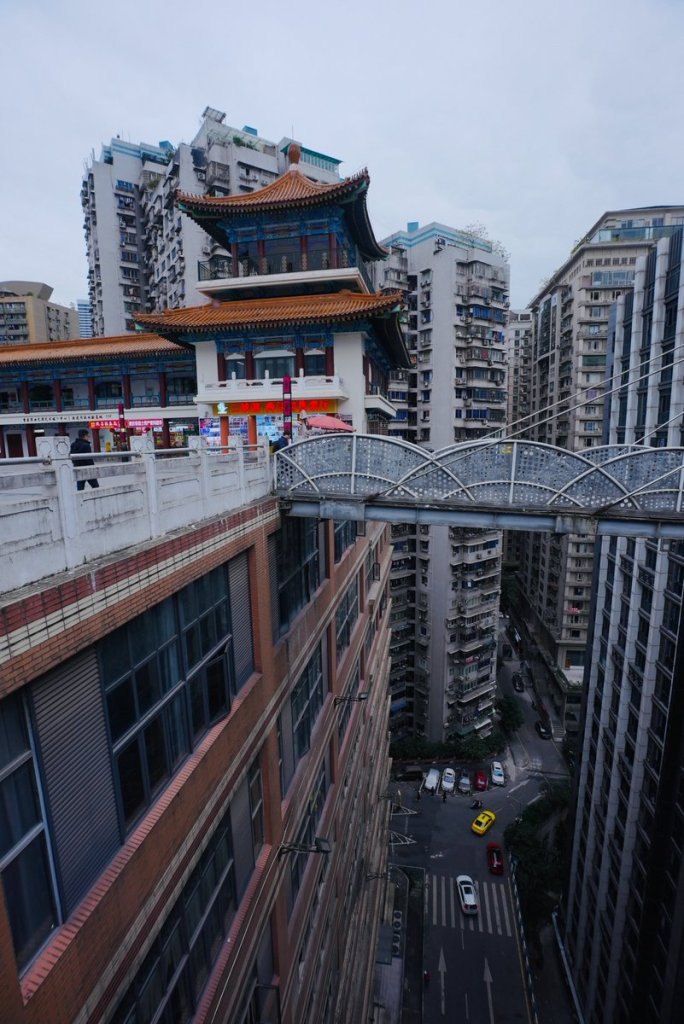
Luckily there are lifts and escalators built into this 11 floor building and so it was easy to get to the top, Which strangely enough was also the ground floor as the whole of Chongqing is built into the side of a mountain.

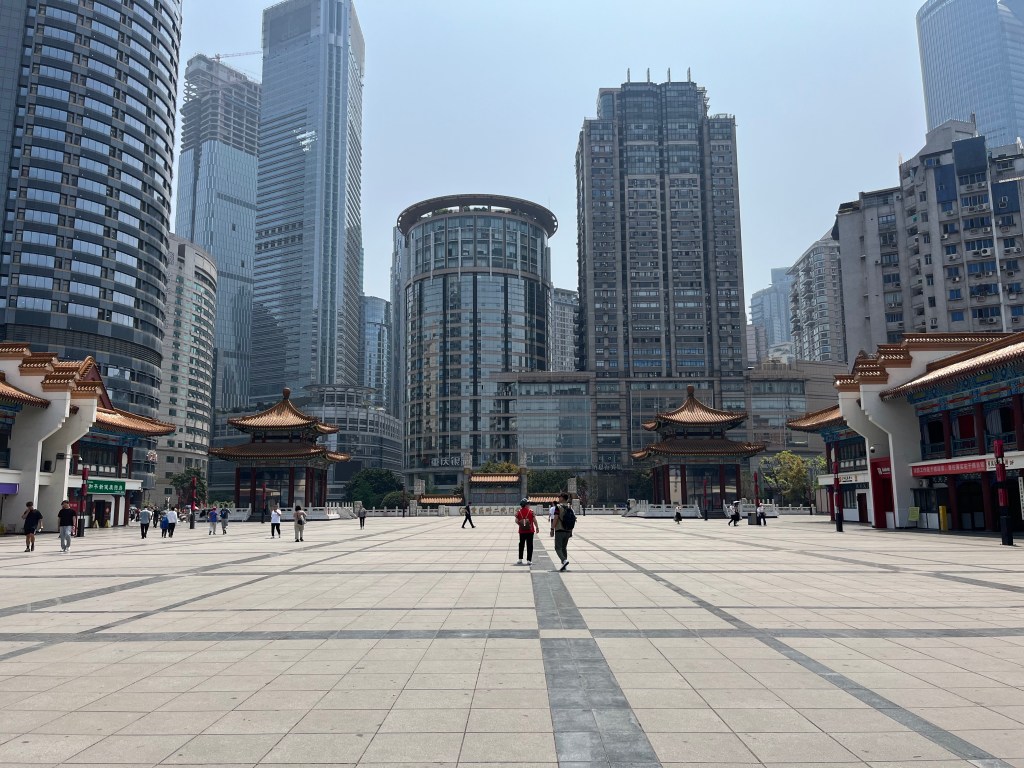
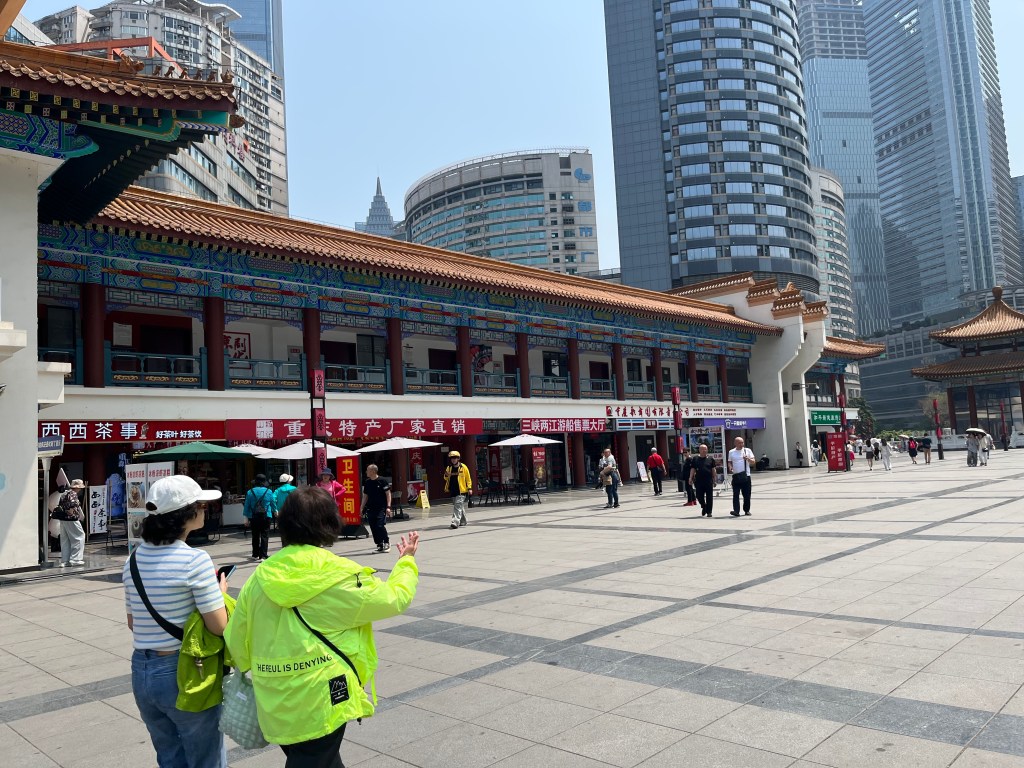
We strolled a bit further into the city going uphill and were soon at a large square with many shops around the edge on the second floor, remember this is Chongqing and is not what it seems at first glance!

Walking over to the far side and looking down from what is the 2nd floor on the opposite side of the square is also the 22nd floor on this side!

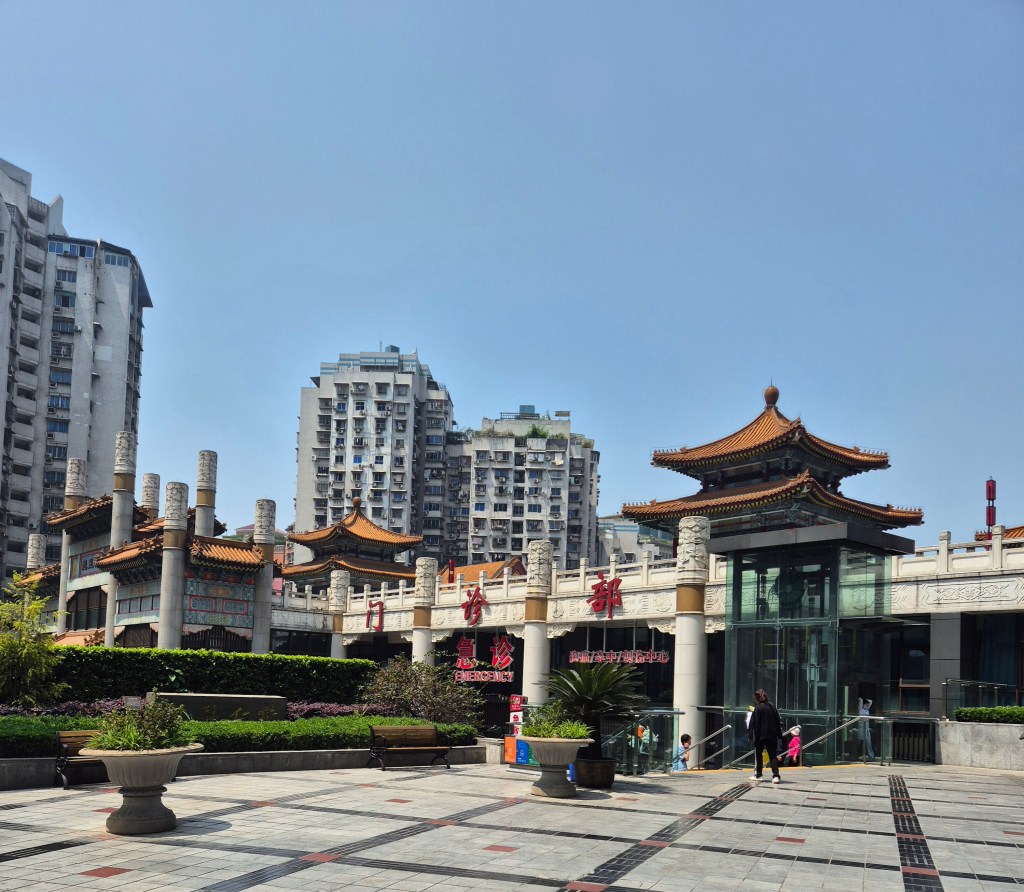
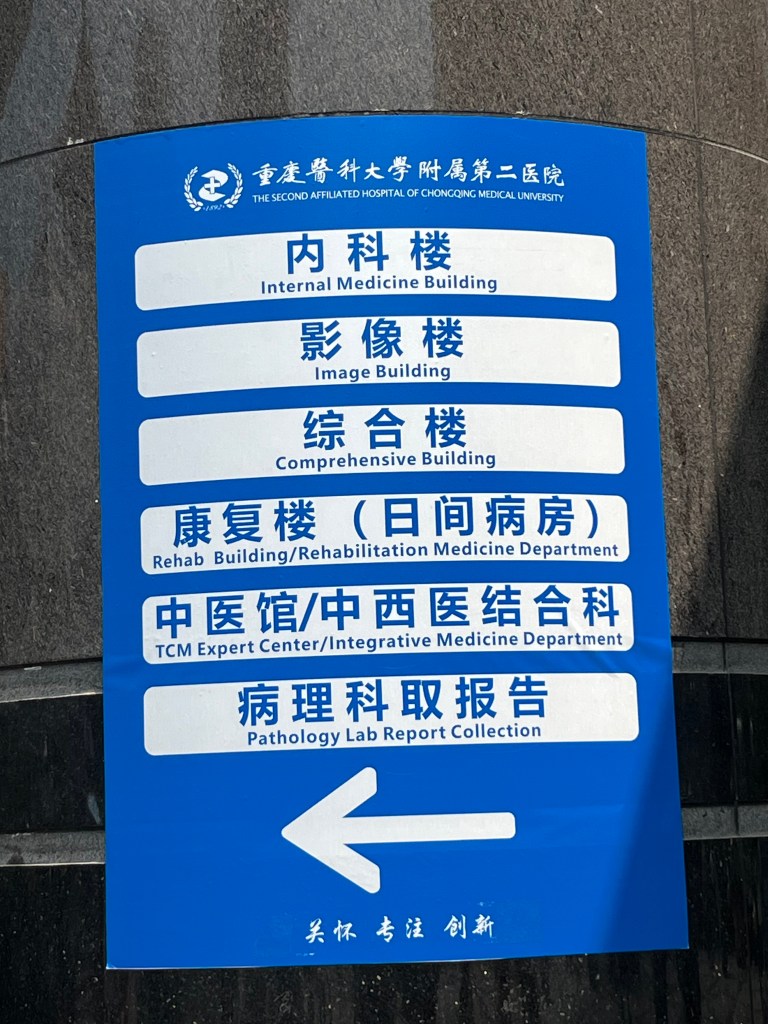
This open square with its many shops is actually the roof of a hospital.

After that we decided we were very tired and thirsty after wandering around this hilly city and so found ourselves a nice noodle bar and a couple of beers.

Part 2 of our time in the fascinating city of Chongqing to follow later.

TTFN

Bibbley

The Terracotta Warriors

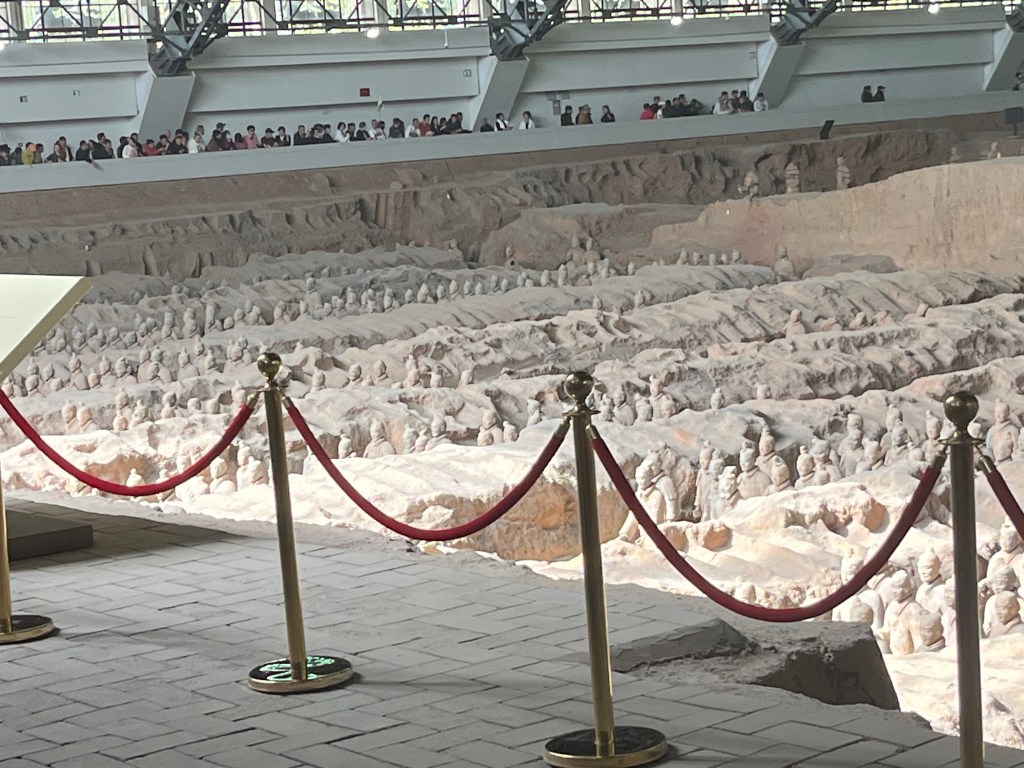
We took a taxi for the 45 minute ride to the site of the Terracotta Warriors and were happy to discover it was not too busy. Many videos on YouTube show huge crowds which luckily did not appear during our visit, however it was still fairly busy but easy enough to see everything in comfort.

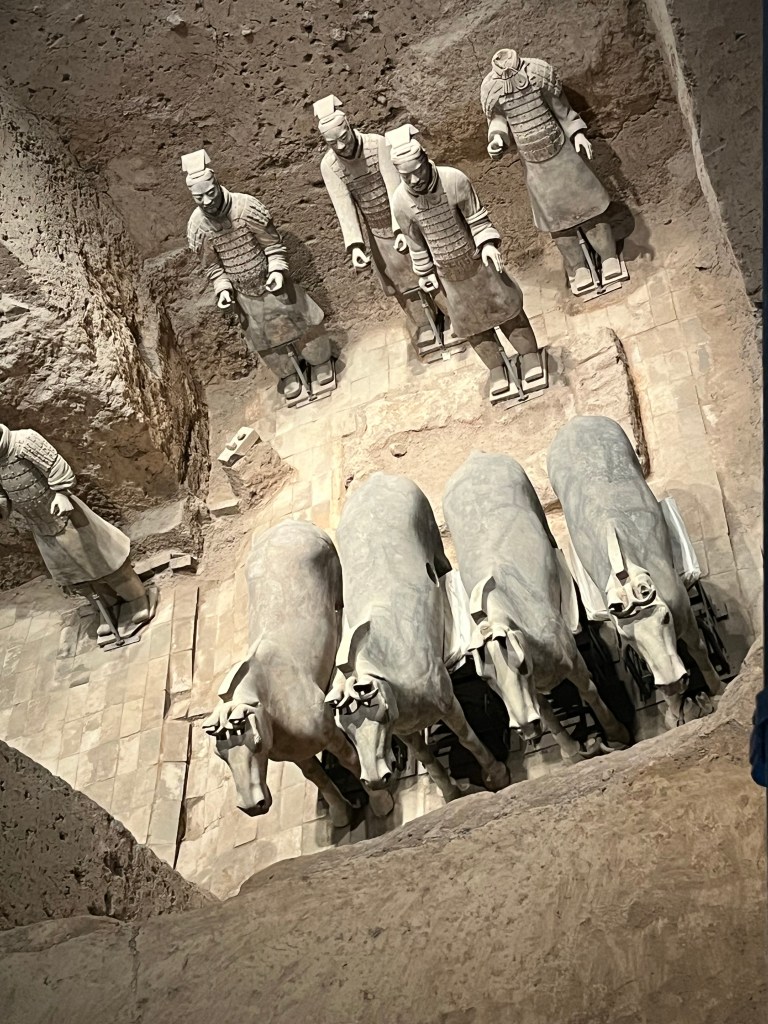
The Terracotta Warriors is a collection of over 8,000 life-sized clay soldiers and horses created by the firsat emporer of China, Qin Shi Huang, to protect him in the afterlife.

Entrance tickets cost £12 for an adult but as usual seniors get in free, all you need to do is show your passport.

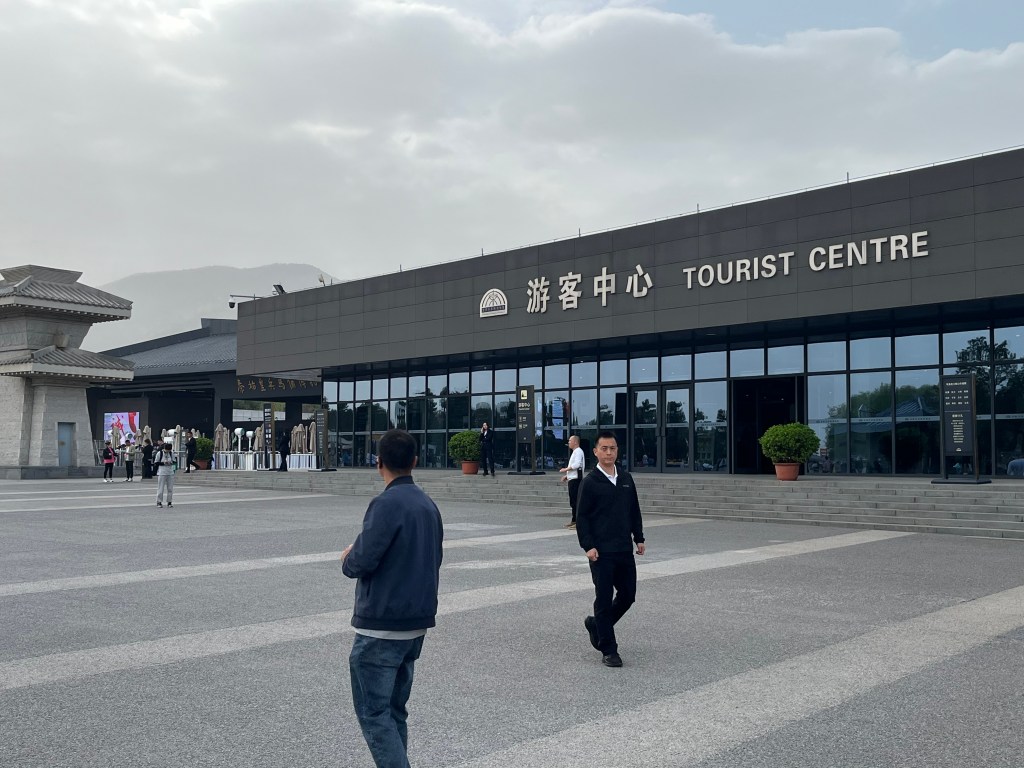
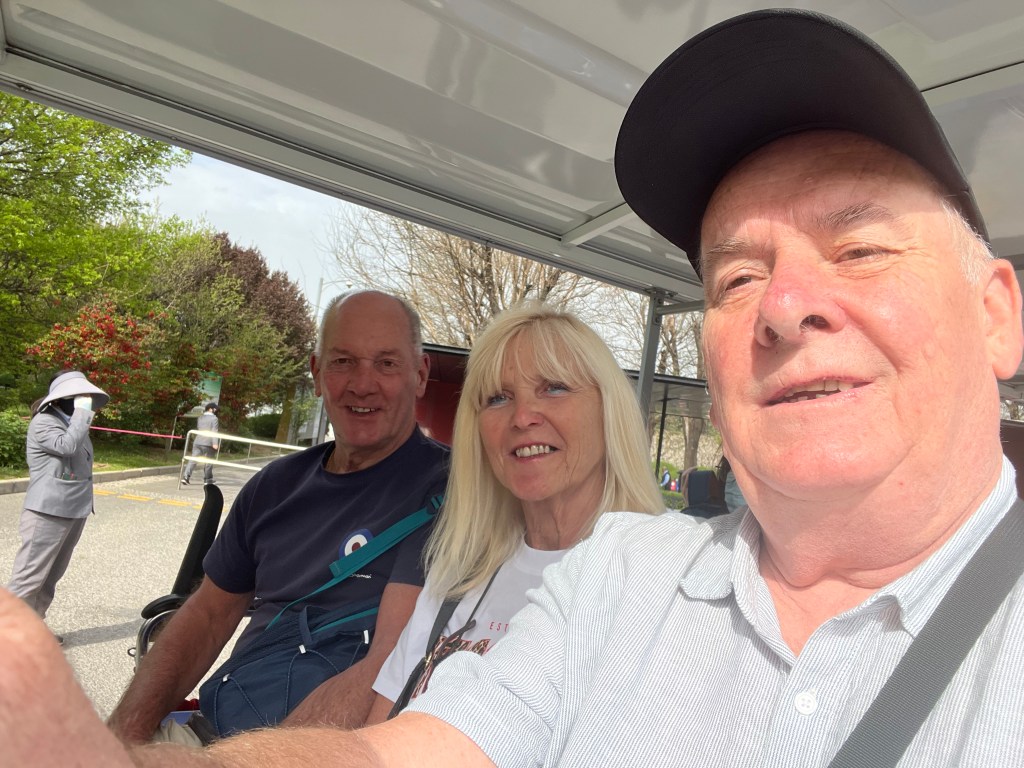
Arriving at the tourist centre we were quickly through the usual security checks and onto the electric buggy, (50p each extra for the ticket), for the half mile journey to the main site.

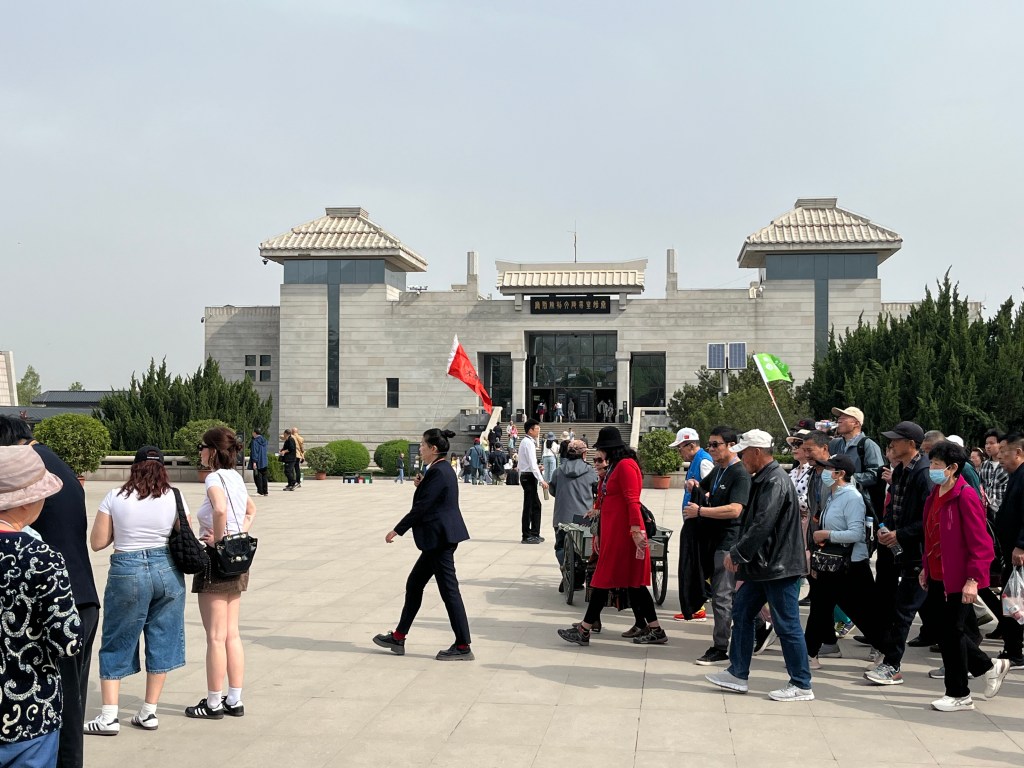
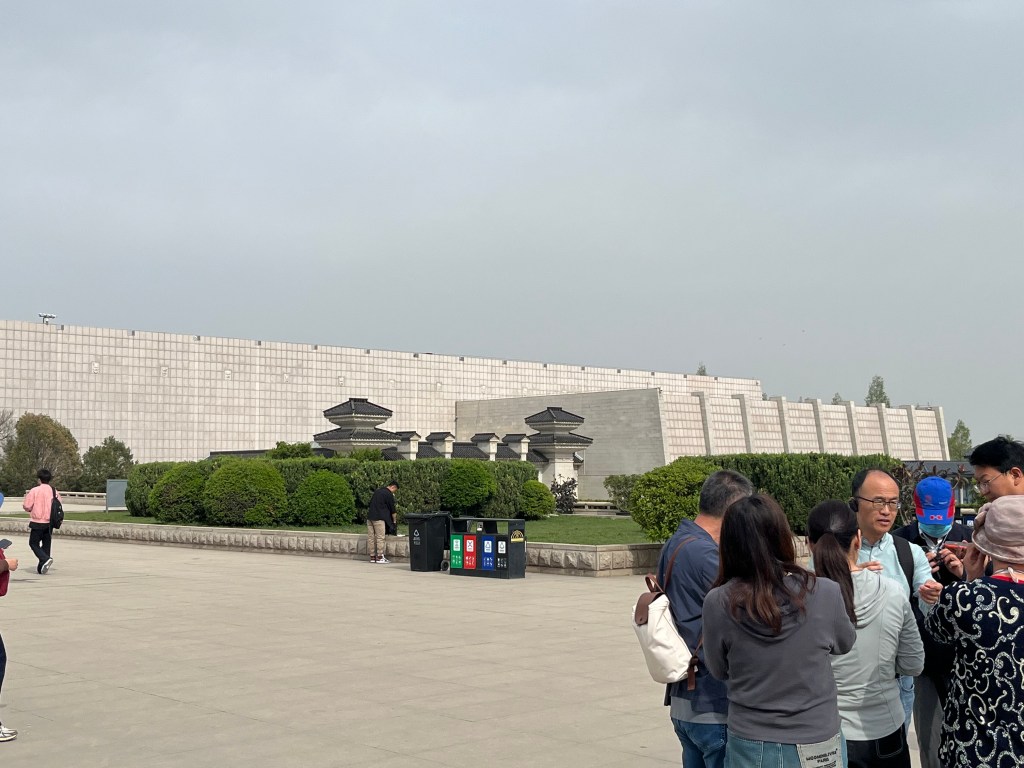
The whole site is quite new and very impressive.

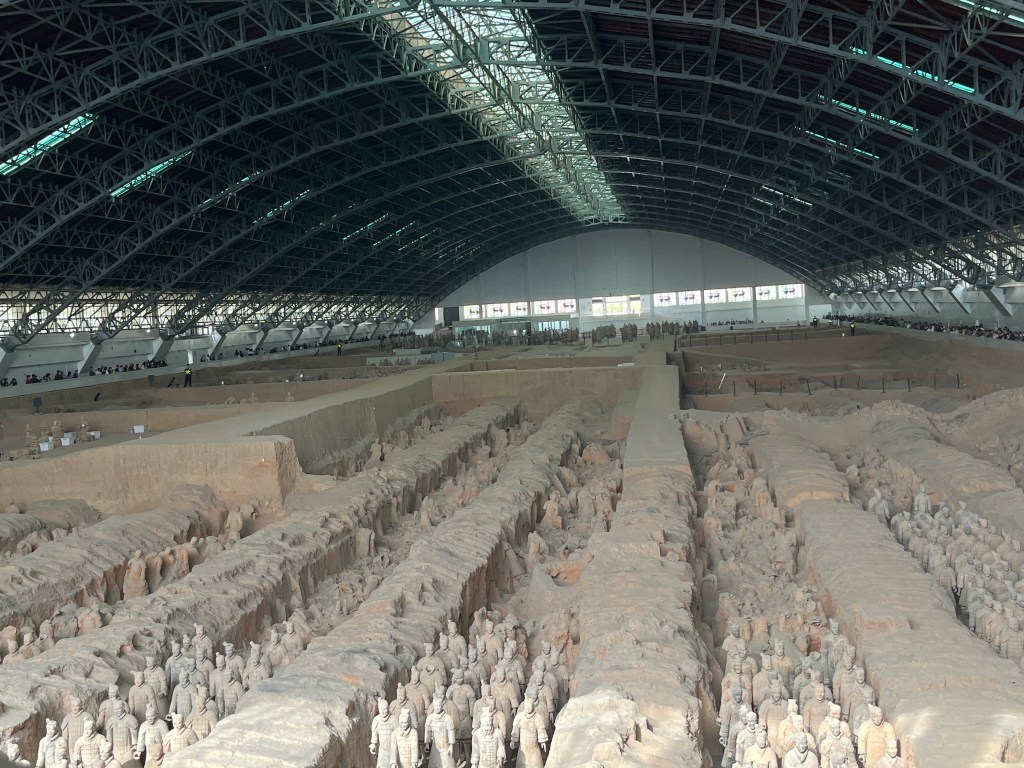
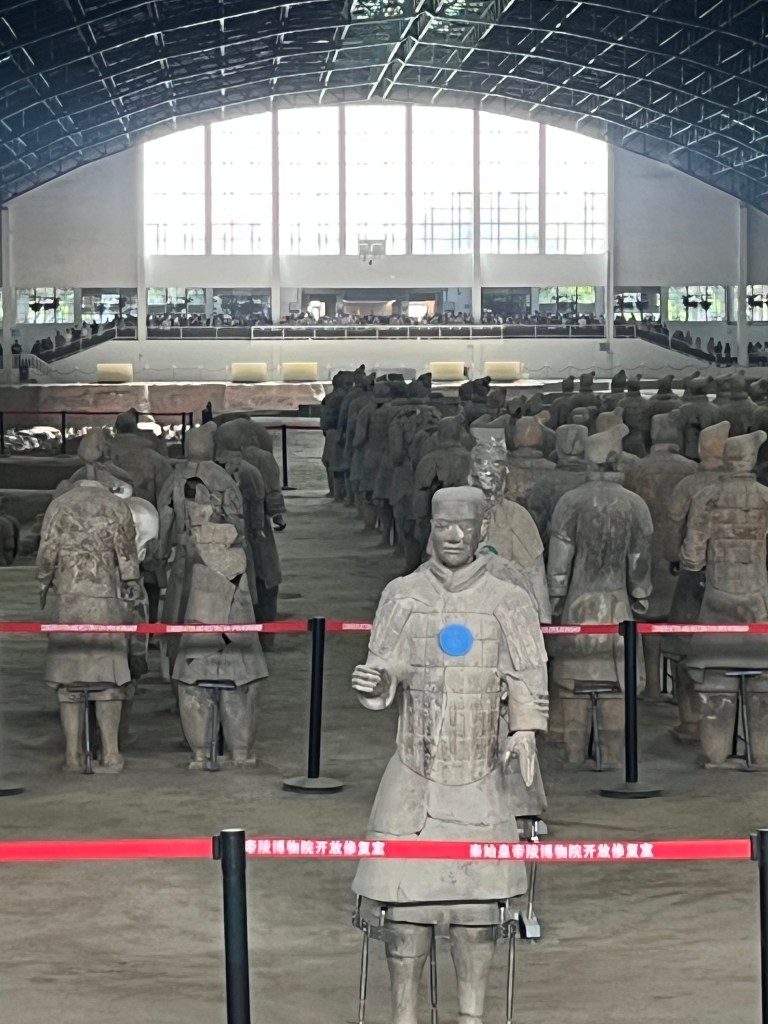
We entered Pit 1 and the sight that greeted us was stunning!

There are 4 main pits, this, pit 1 being the largest, which is 230 m (750 ft) long and 62 m (203 ft) wide, contains the main army of more than 3,000 figures. It has eleven parallel corridors, most more than 3 m (10 ft) wide and paved with small bricks with a wooden ceiling supported by large beams and posts. This design was also used for the tombs of nobles and would have resembled palace hallways when built. The wooden ceilings were covered with reed mats and layers of clay for waterproofing, and then mounded with more soil raising them about 2 to 3 m (6 ft 7 in to 9 ft 10 in) above the surrounding ground level when completed.

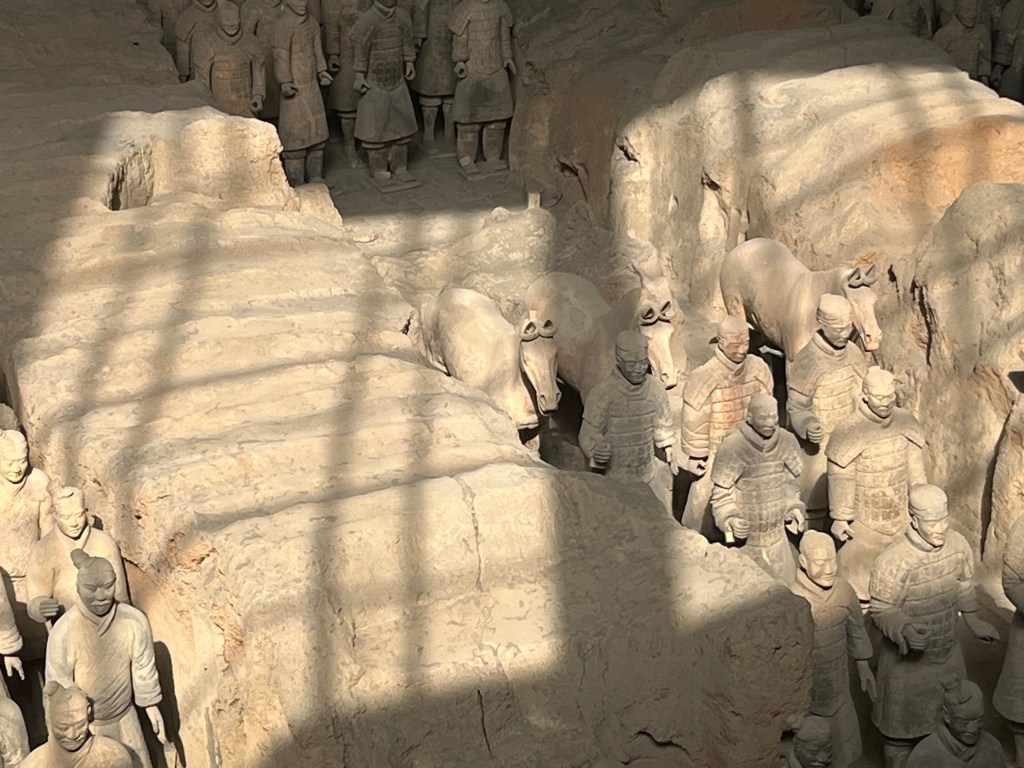
The figures, dating from approximately 200 BC, were discovered in 1974 by local farmers in Lintong County about 20 miles from Xi’An. The figures vary in height according to their rank, the tallest being the generals. The figures include warriors, Chariots and horses. Estimates from 2007 were that the three pits containing the Terracotta Army hold more than 8,000 soldiers, 130 chariots with 520 horses, and 150 cavalry horses, the majority of which remain in situ in the pits. Other, non-military terracotta figures have since been found in other pits, including those of officials, acrobats, strongmen, and musicians.

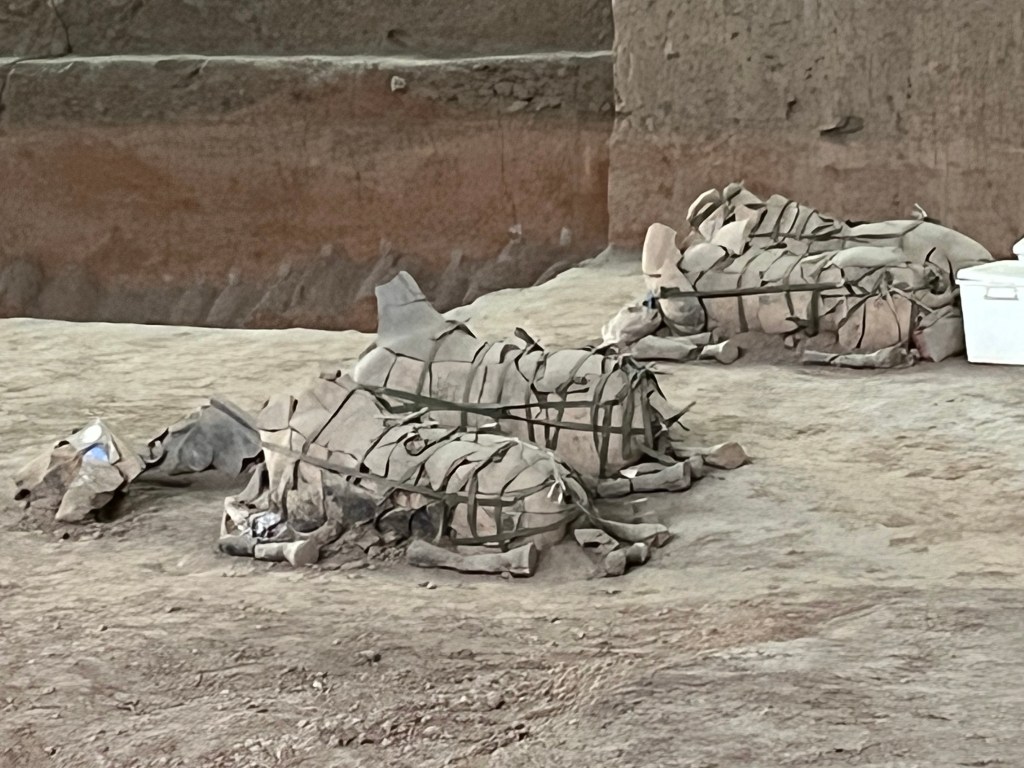
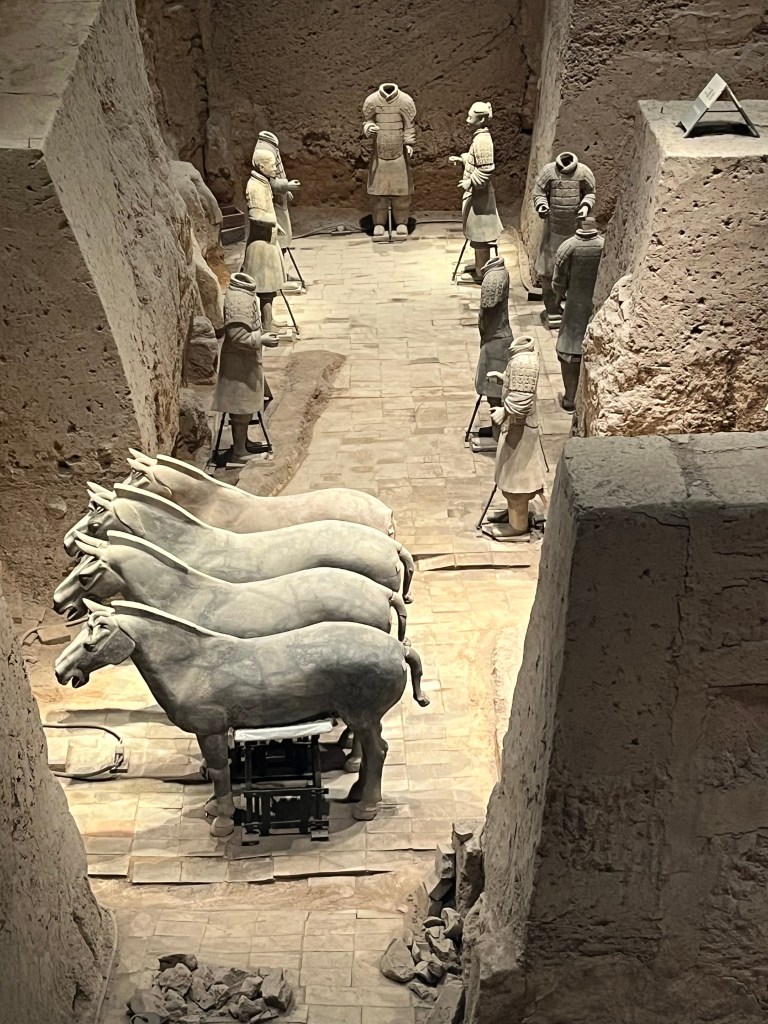
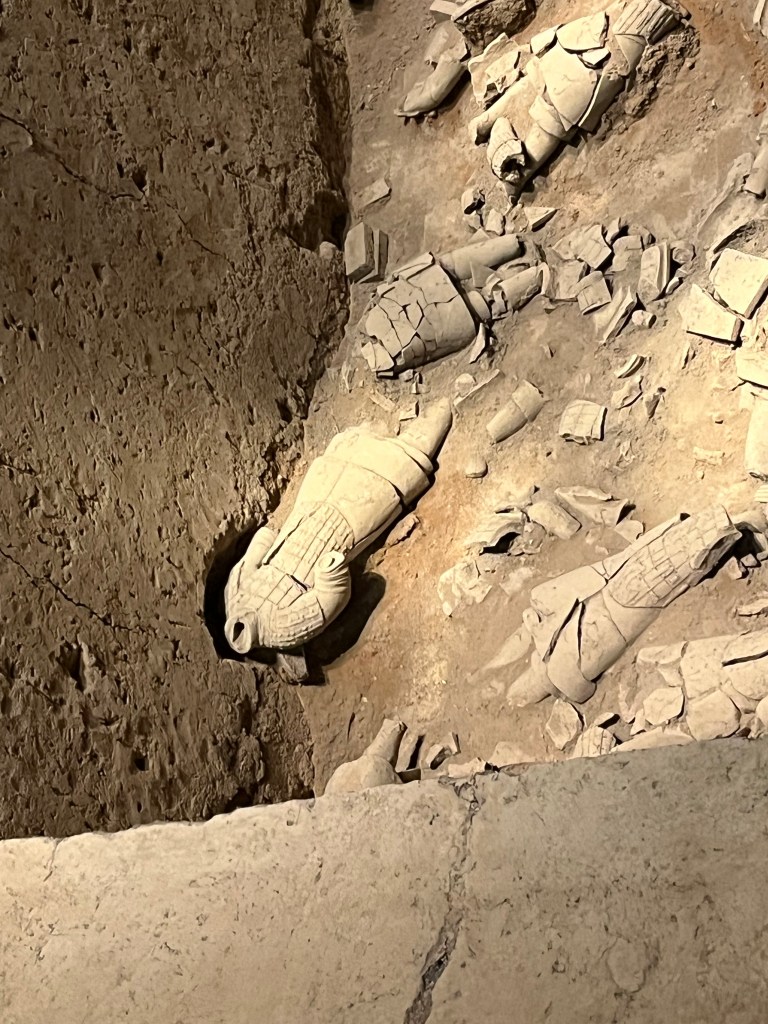
Over the 2,000 years since being built the original roof covering has collapsed and the figures were lost under several feet of soil. Each figure is painstakingly uncovered and put back together by a team of archaeologists.

During our visit we watched a very impressive 3d film about the history of the warriors and had our photos taken which were superimposed on Terracotta figures.

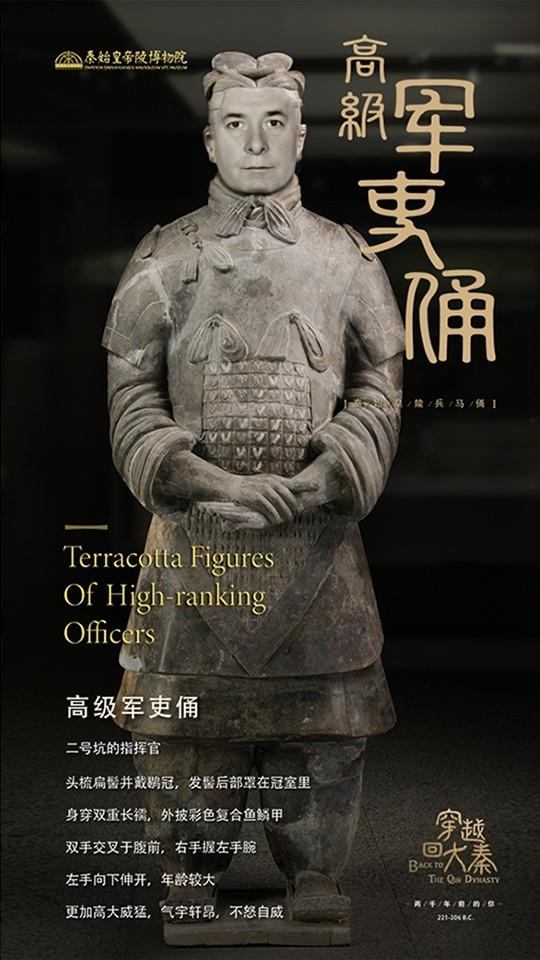
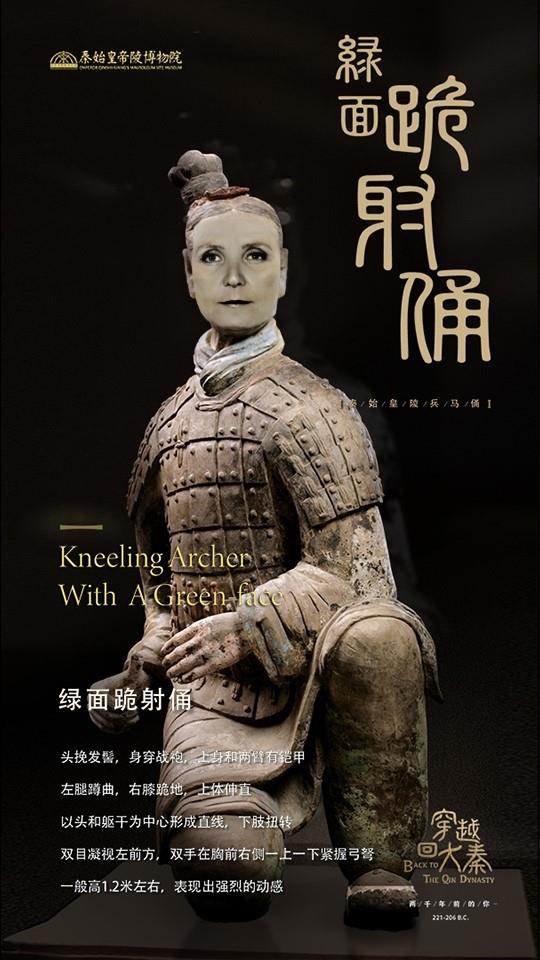
I think I made a great High Ranking Officer! LOL

Diane as an archer.

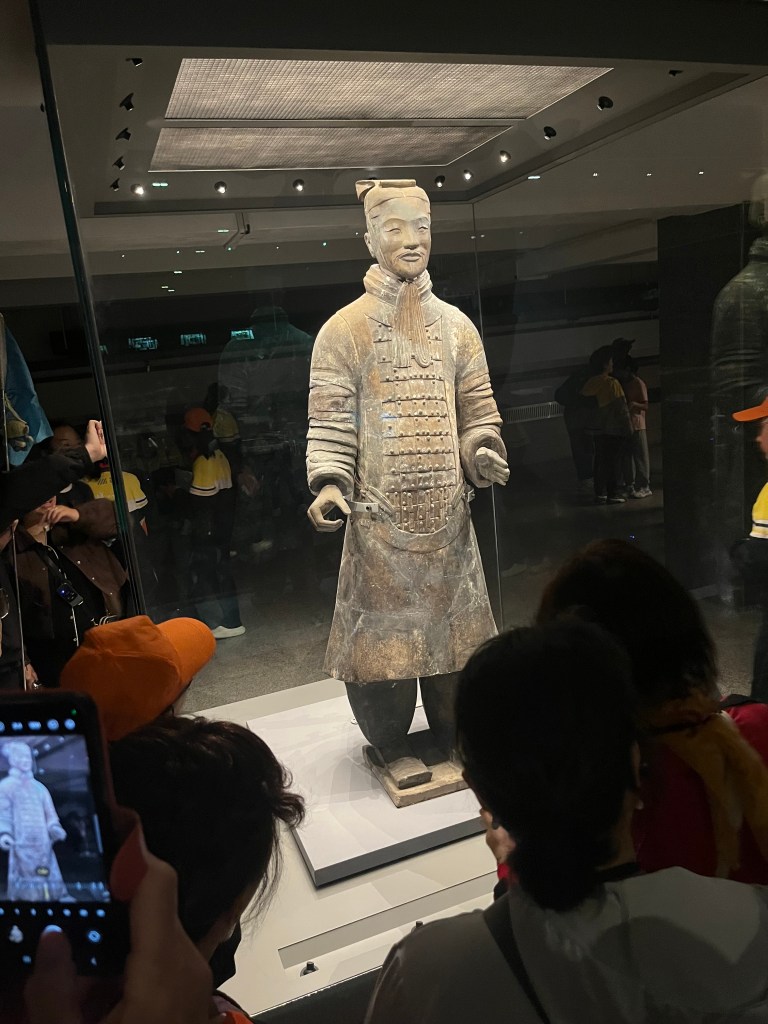
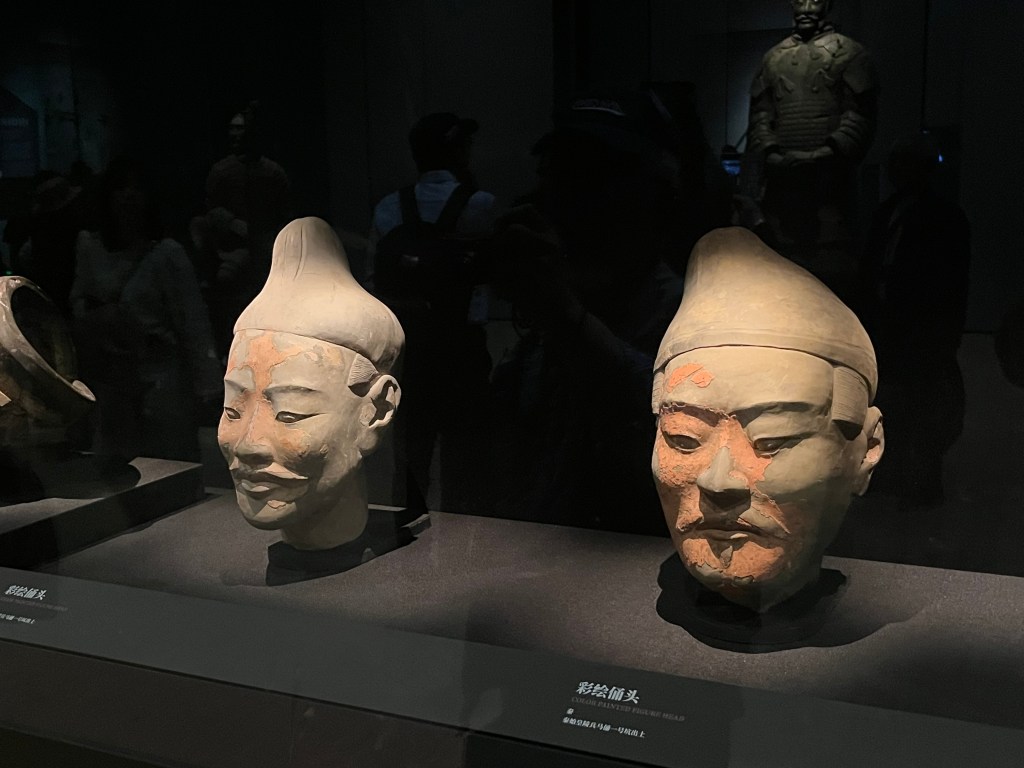
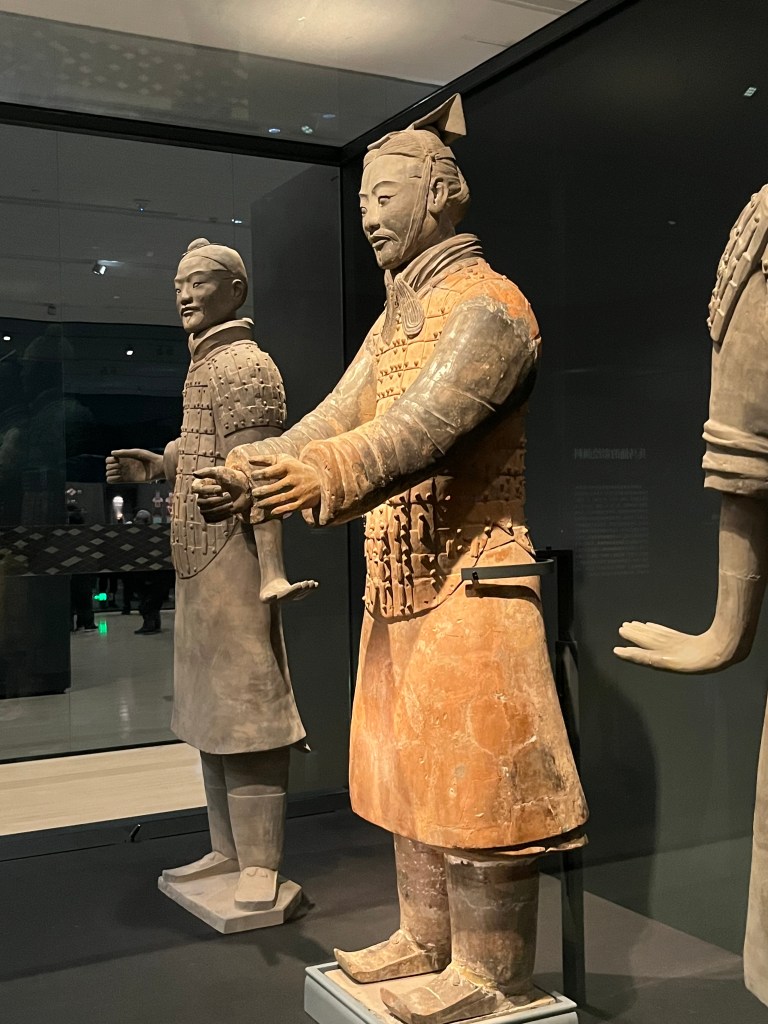
There was a large display of reconstructed figures for a closer look.

The figures were originally painted but as soon as they are uncovered the paint quickly fades although some parts have been preserved.

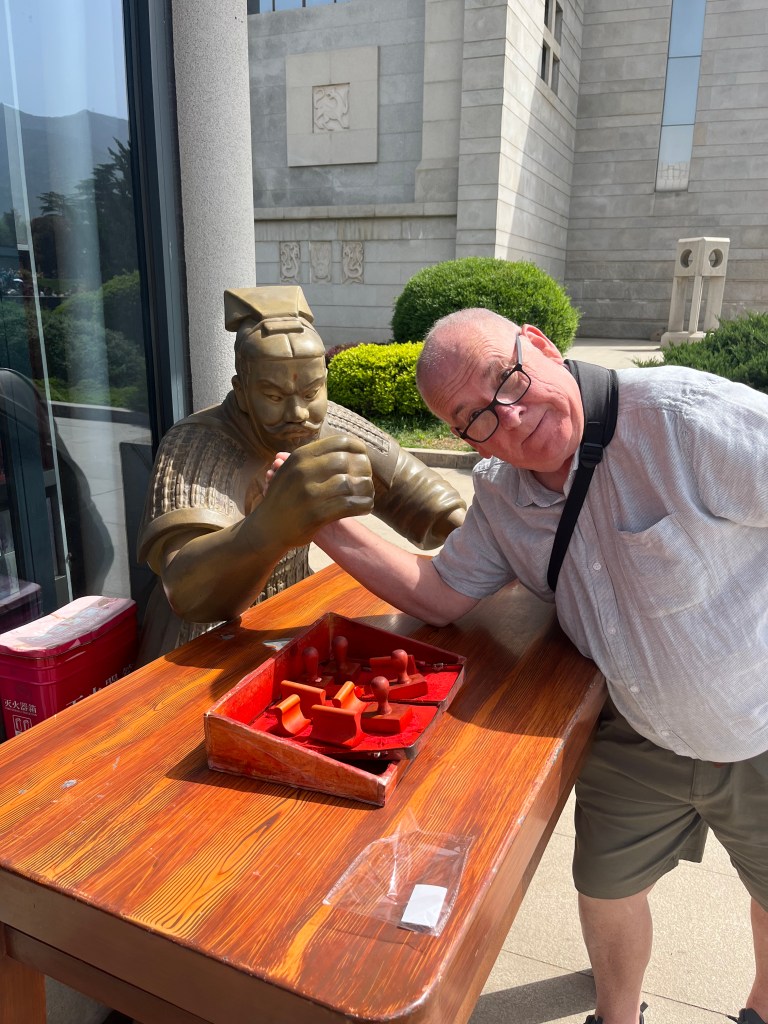
I didn’t win at arm wrestling with a warrior!

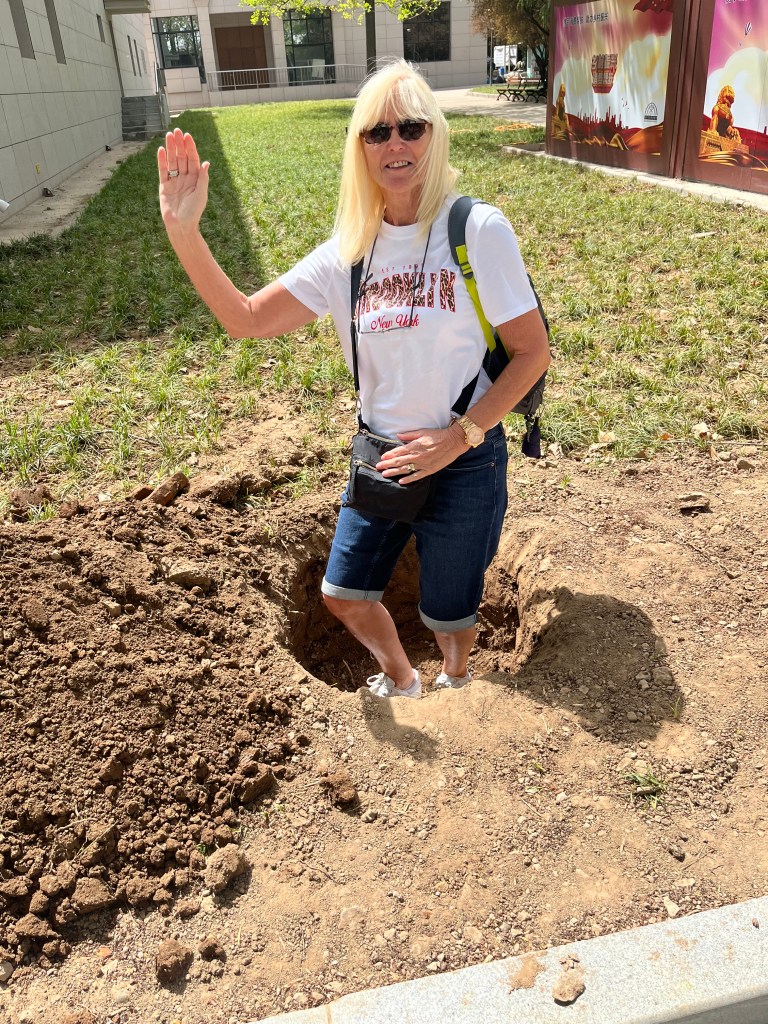
Diane pretended to be a warrior just being uncovered! LOL

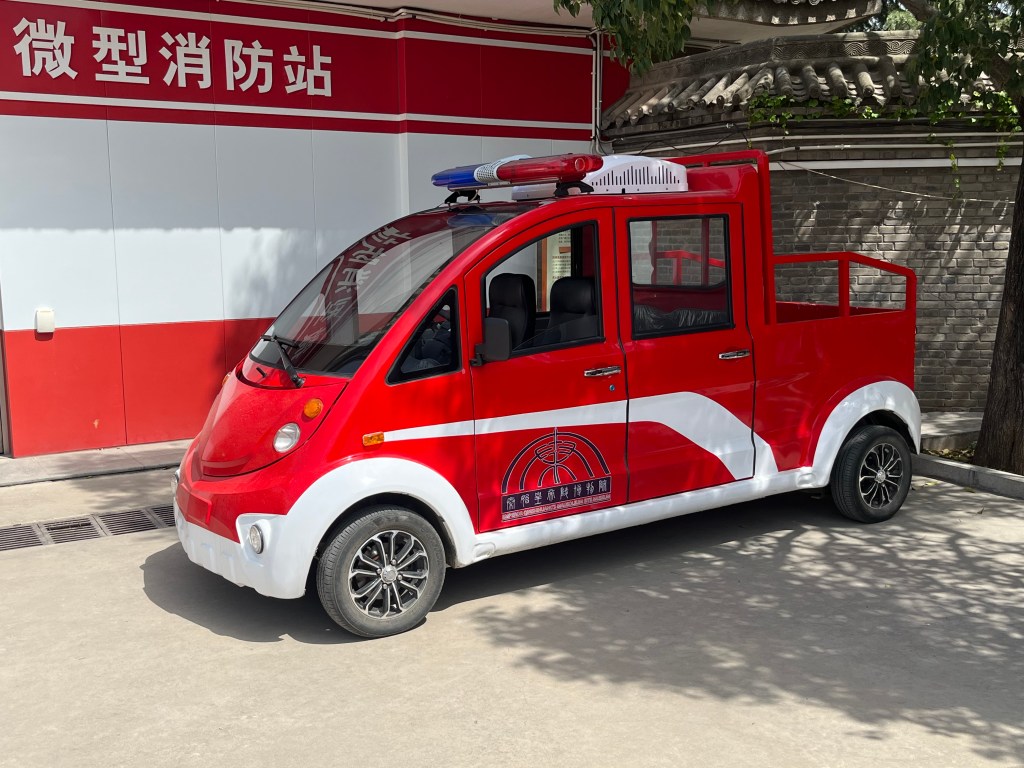
The site is huge and has it’s own fire station with a very cute fire engine.

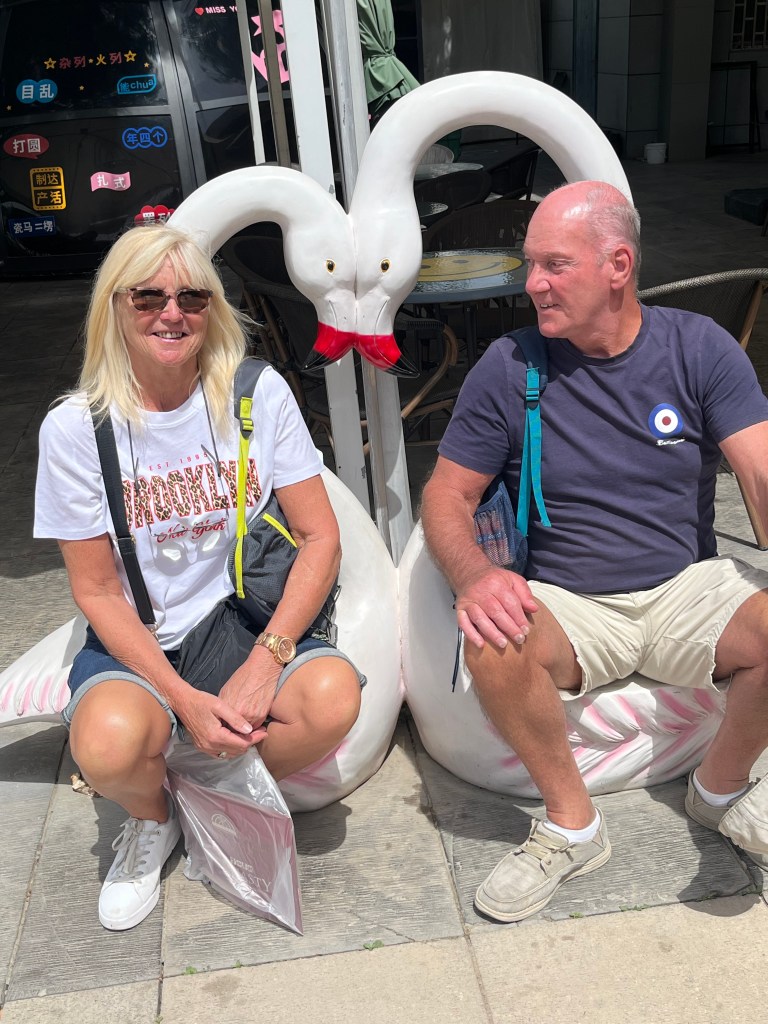
Must be a love thing!

On the way out there was a range of gift shops and cafes.

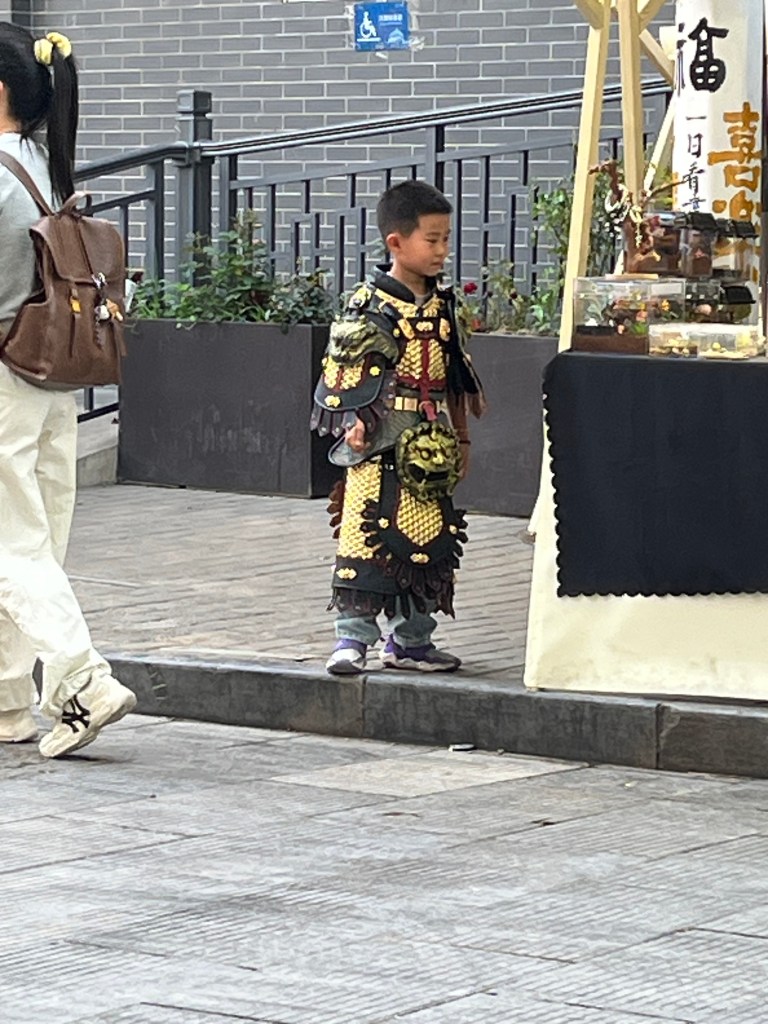
This young guy was a warrior in the making!

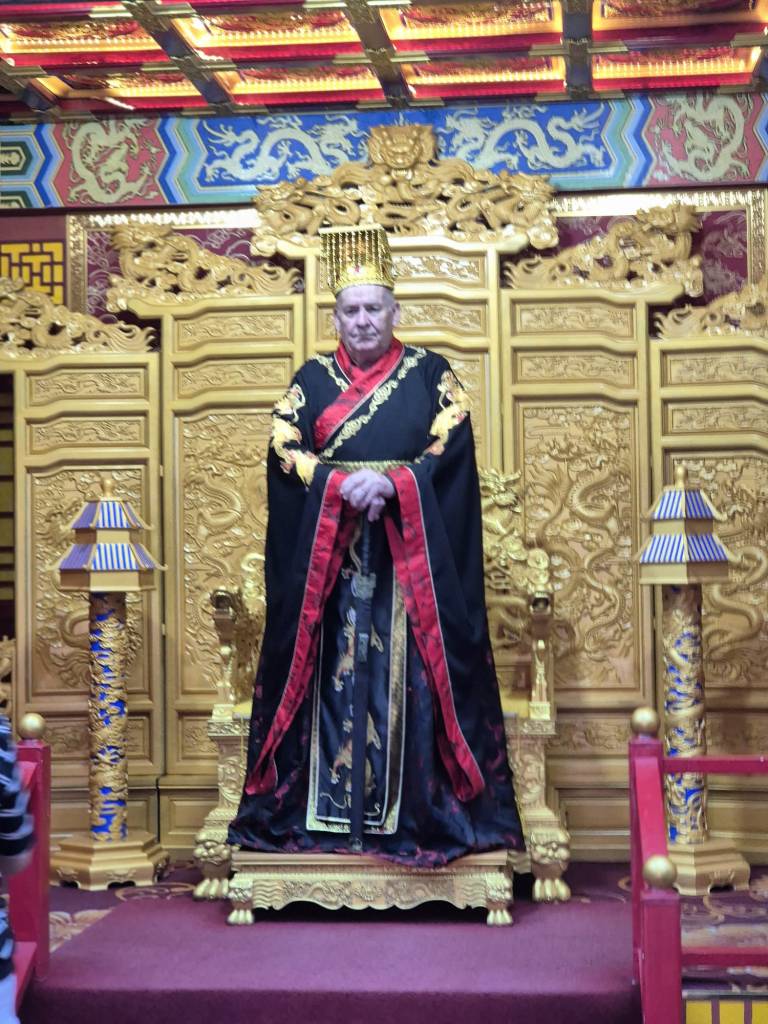
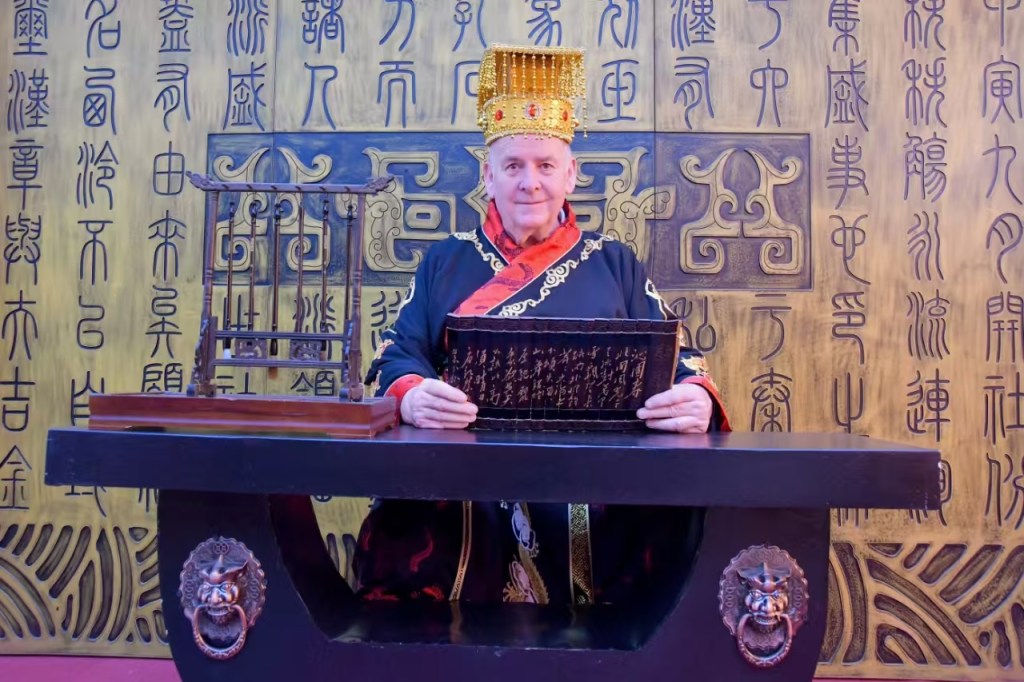
I was made the Emporer of China for 20 minutes.

After a super day out we were soon back at our “English Pub” for a well earned beer.

The Terracotta Warriors is a world class and stunning place to visit, not to be missed if you visit China.

see you all tomorrow

TTFN

Bibbley
To be notified of future posts please subscribe below.

Beijing

We arrived in Beijing at 6.30 AM and took a taxi to our hotel, about 20 miles for £4 which was great. Throughout our 3 week trip we extensively used taxis as they were amazingly good value, I soon got the hang of ordering them on the ‘we chat’ app which was so easy. The majority of bars and restaurants have QR codes on the table and when you scan them in the app it brings up the menu, usually with an English option and just tap on what you want to order, tap again to pay and that’s it, so simple when you get used to it.

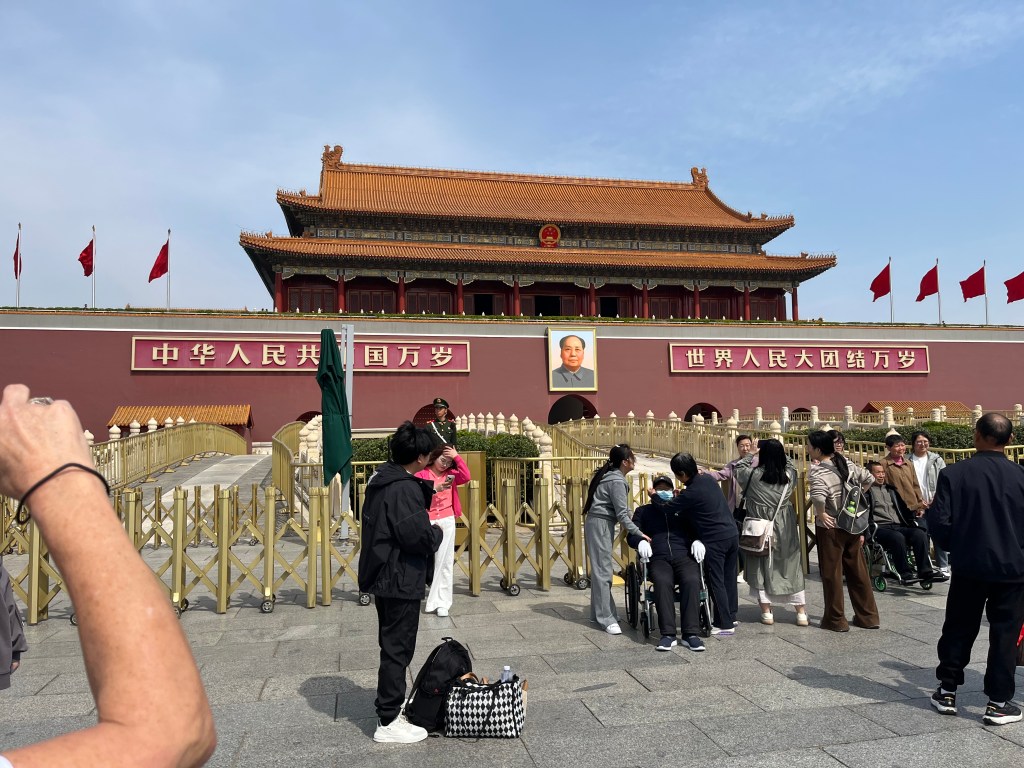
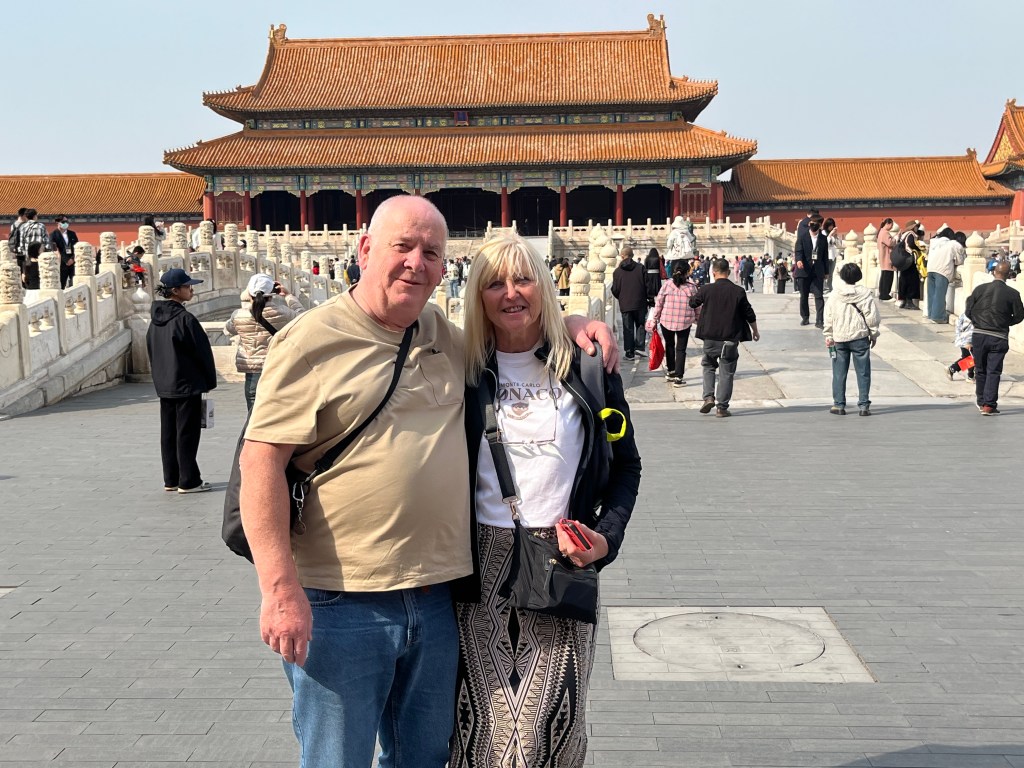
After a quick shower we were soon off to the heart of Beijing, the forbidden palace and Tiananmen square, where I have to confess I made a grave error.

Tickets are required for the palace and I had managed to book and pay for these before we left home. Only £2 each and loaded onto my phone. You must also register online to pass the security barriers to enter Tiananmen Square. After looking around for an hour we sat on a low wall for a rest and a sip of water and then walked up to the security entrance where I realised I had lost my phone. Panic set in as all our train tickets, hotel reservations and my money was on the phone! how could I have been so careless! We found a security guy who spoke English and explained the situation, he phoned the police and an officer quickly turned up. With the aid of google translate he soon understood the situation and after a few minutes with Dianes’s phone he soon located my phone which had been handed in to the police. A 5 minute walk to the security office where it was and I was reunited with my phone, a great testiment to the honesty of Chinese people and helpfullness of the police.

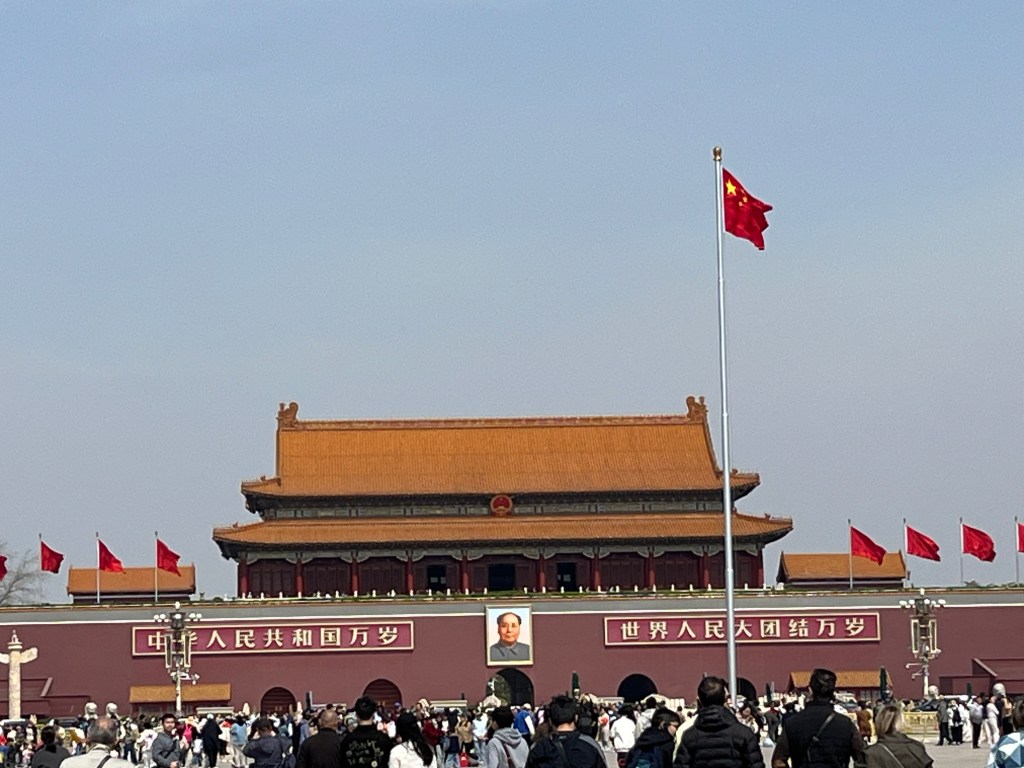
Tiananmen Squre is huge, said to be the largest public square in the world.

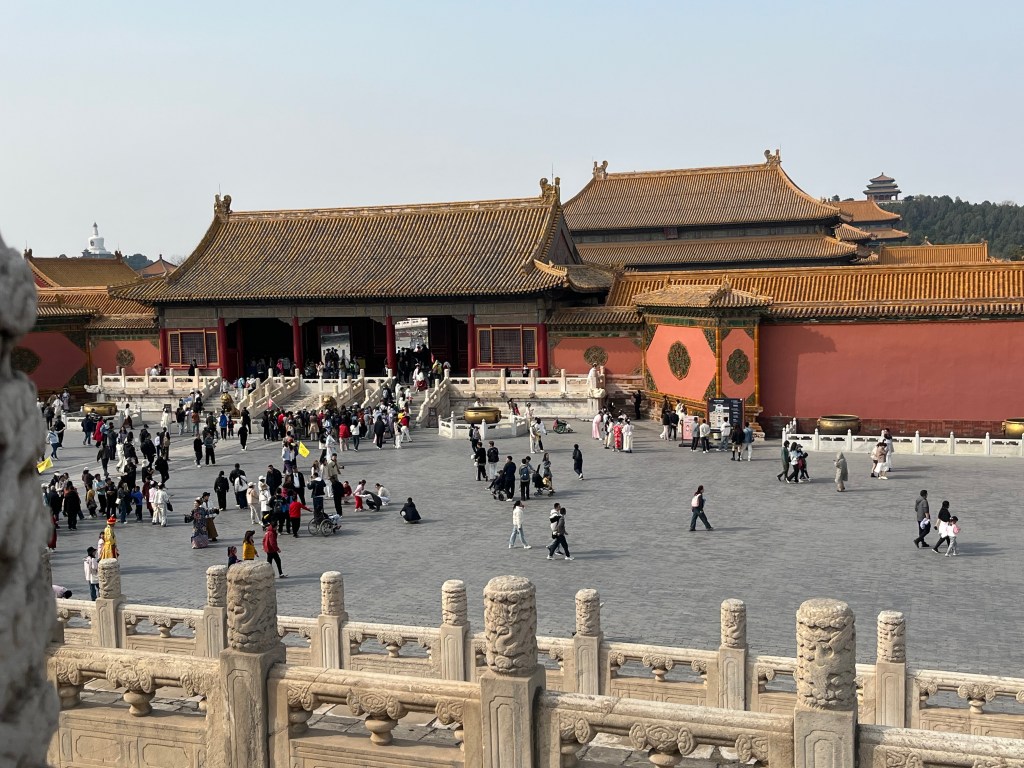
In the afternoon we headed across the 12 lane road to the Palace.

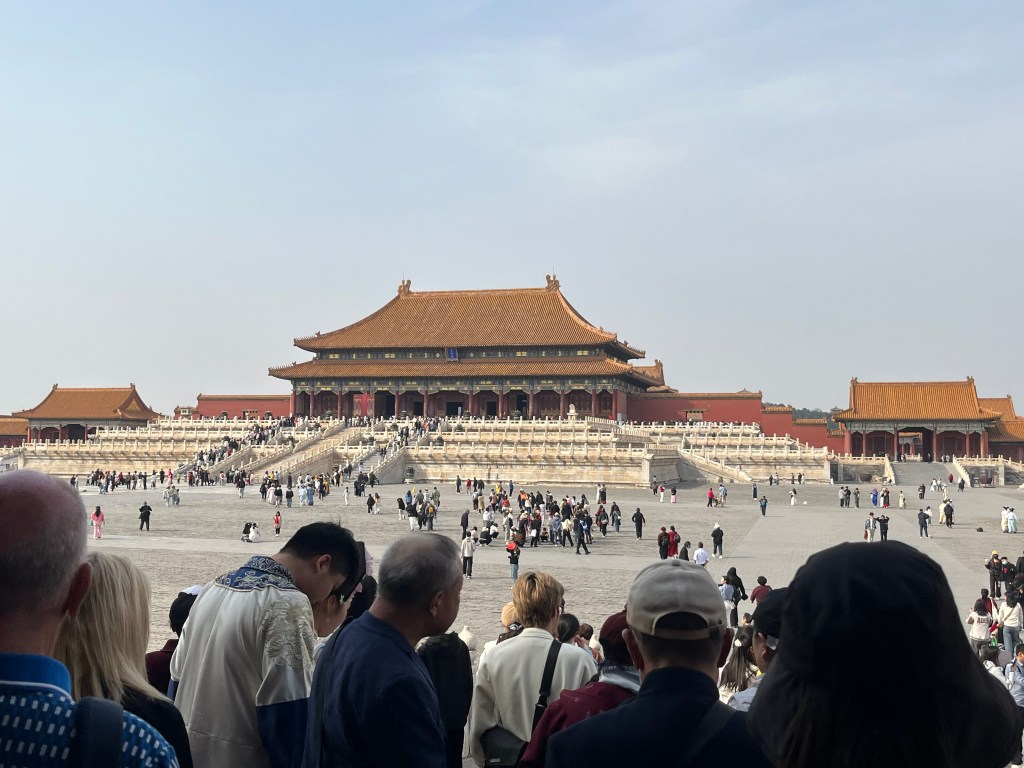
The complex consists of 8,886 ( yes that is correct 8,886) rooms  covering 178-acres and has to bee seen to be believed.

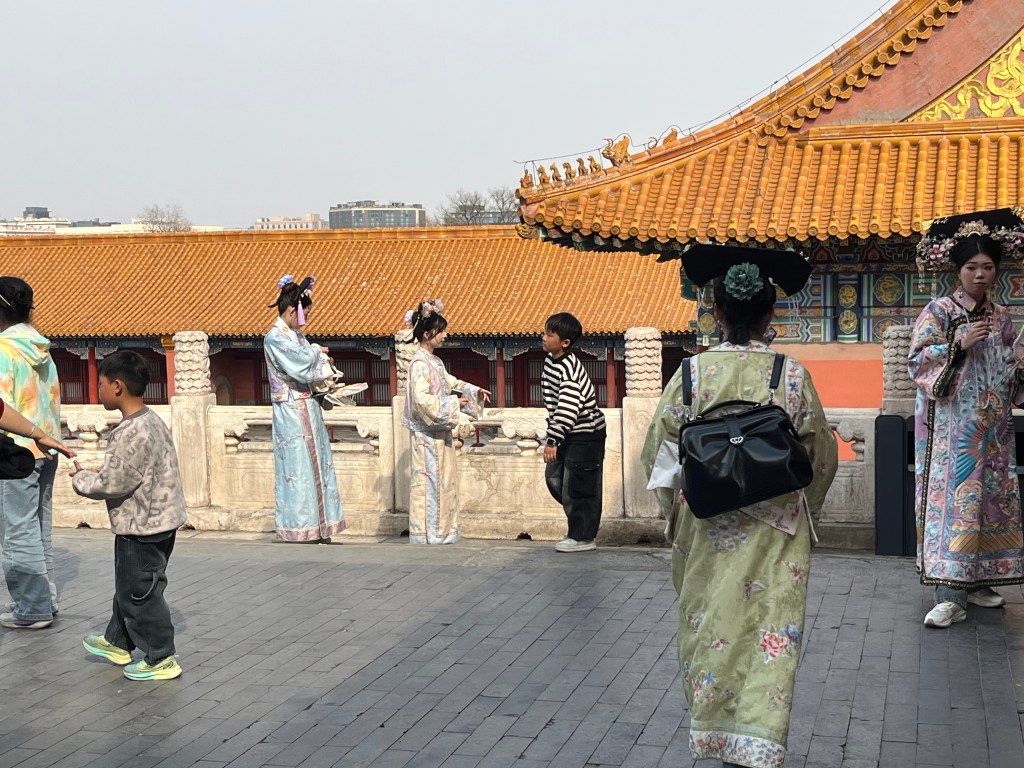
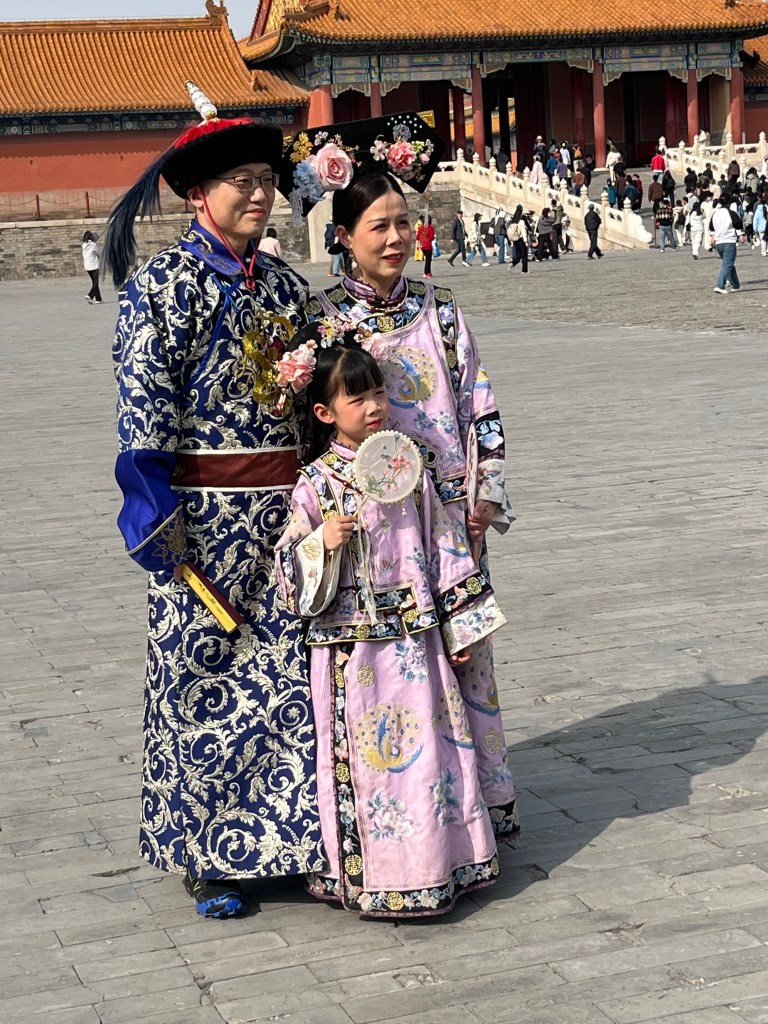
Plenty of women dressed in traditional outfits.

The buildings and huge courtards go on and on, you can just see the end in the top right of the photo.

Our hotel was just a 10 minute walk from the palace and after a long hot day of walking we ended up with a couple of cold beers and looked forward to day 2 in Beijing.

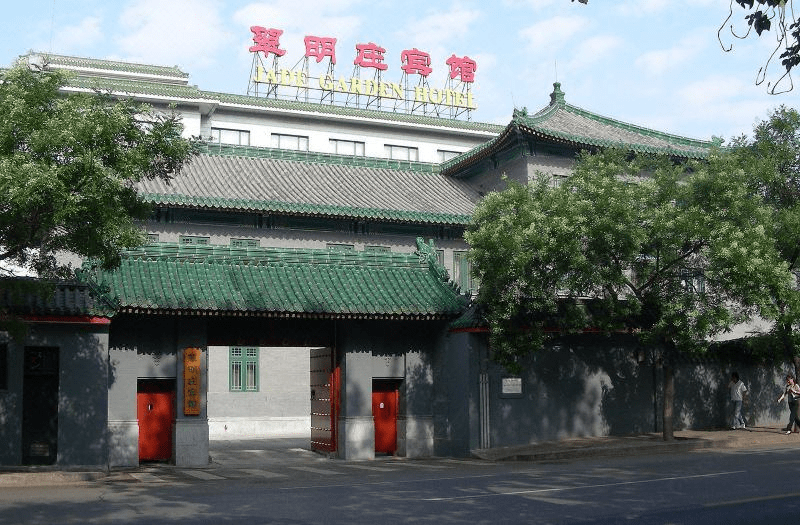
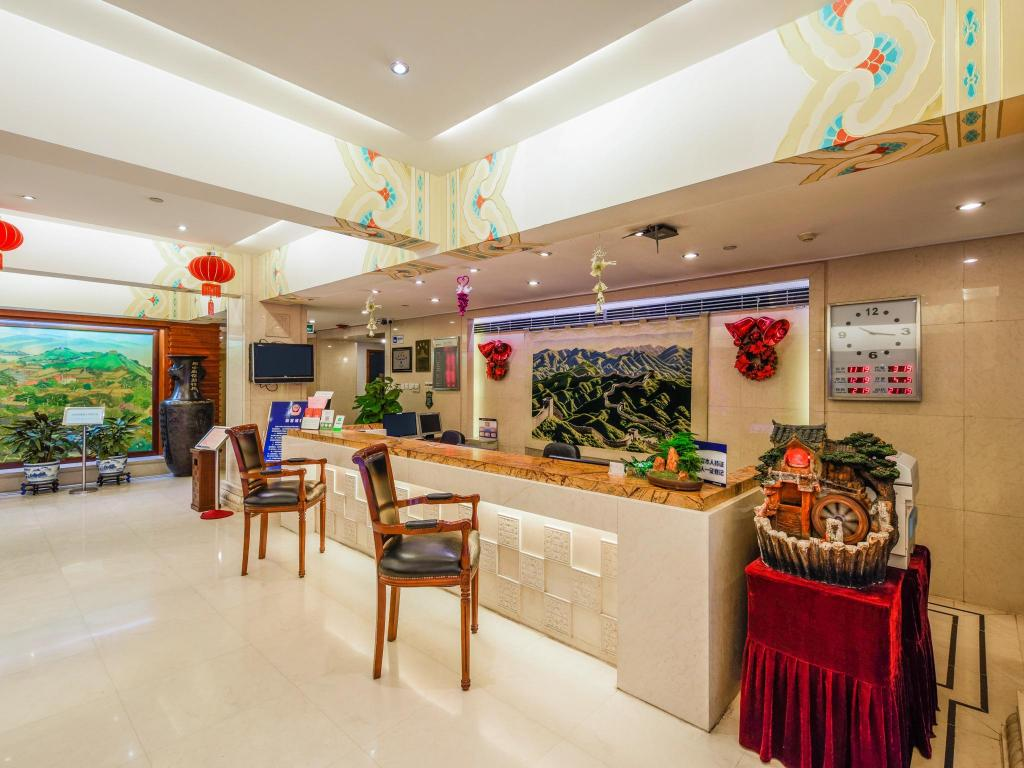
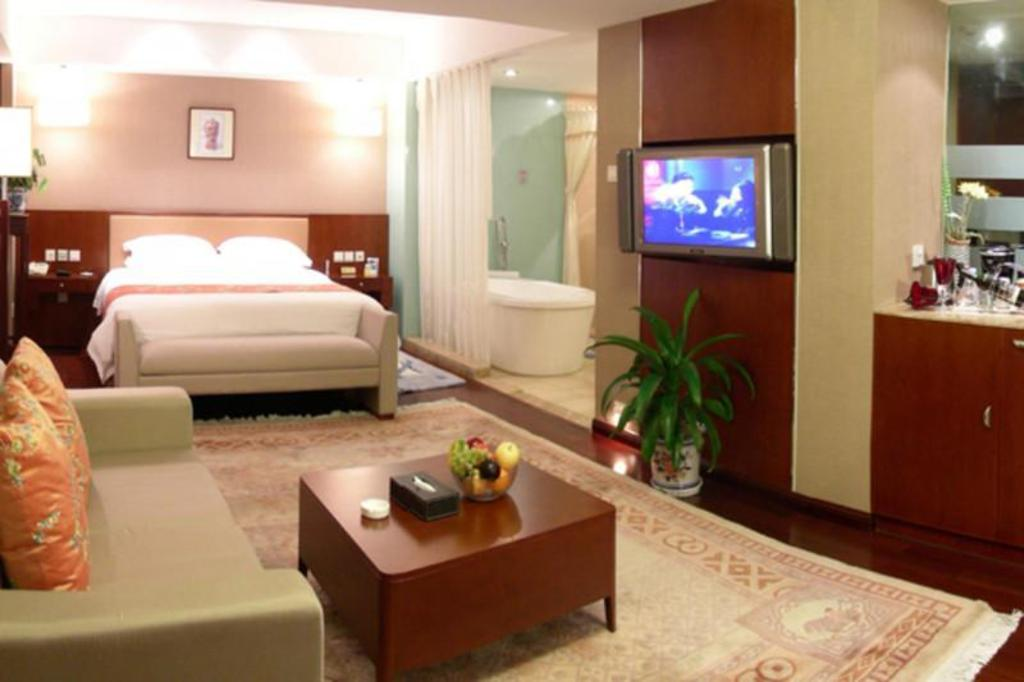
The Jade Garden Hotel, our home for 4 nights and one of the top traditional hotels in Beijing. More about Jade later in the holiday!

So ends our first day and see you all again tomorrow.

TTFN

Bibbley
To be notified of future posts please subscribe below.

Xi’An

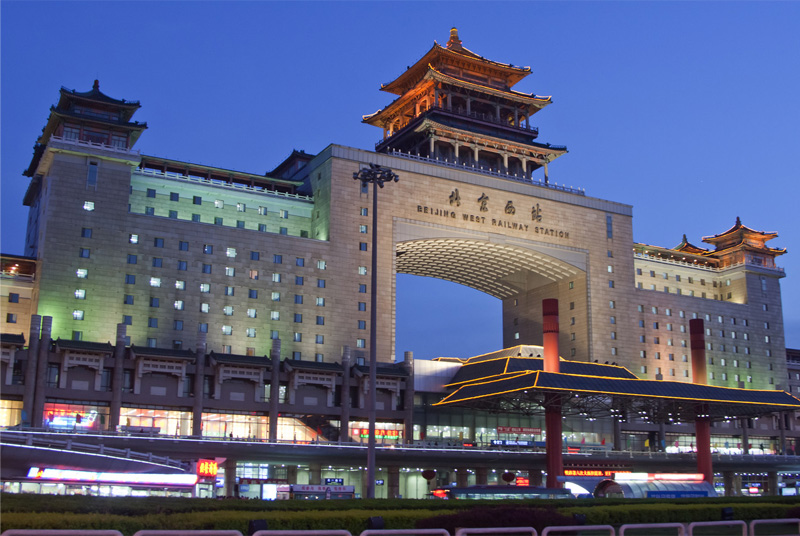
The following morning we set off for the bullet train journey to Xi’An, the former capital of China, from Beijing West railway station.

The 1,134km or 705 mile journey took took only 4hours and 20 minutes!

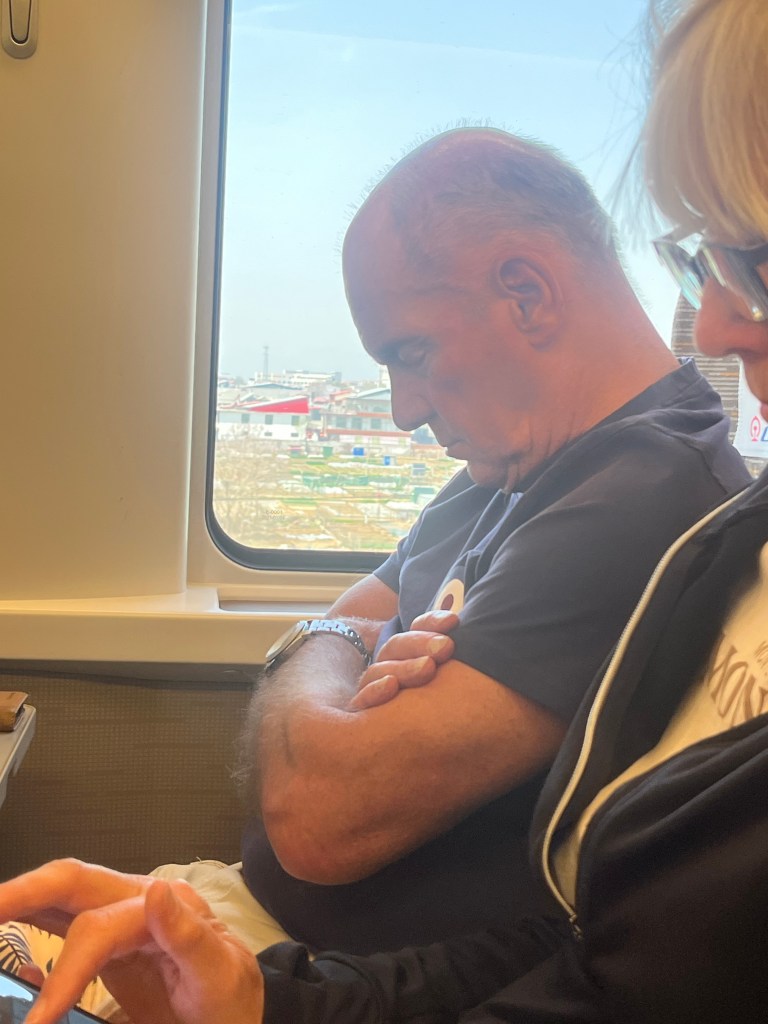
The excitement was just too much for Gary.

Our hotel for the next 3 nights was in the heart of the old town within the ancient city walls.

Being quite thirsty after the long journey we asked the receptionist if the hotel bar was open but unfortunately it was closed. Our faces lit up however when she drew us a map to “Beer Street” only a 5minute walk away, so off we sped.

A short while later we were sat outside the imitation English pub for a few bottles of Tsing Tao, the local brew which was very good. As luck would have it there was a special offer on beer which we took advantage of.

The following morning we set out for a look around the town.

The many food stalls were busy getting ready for the day ahead.

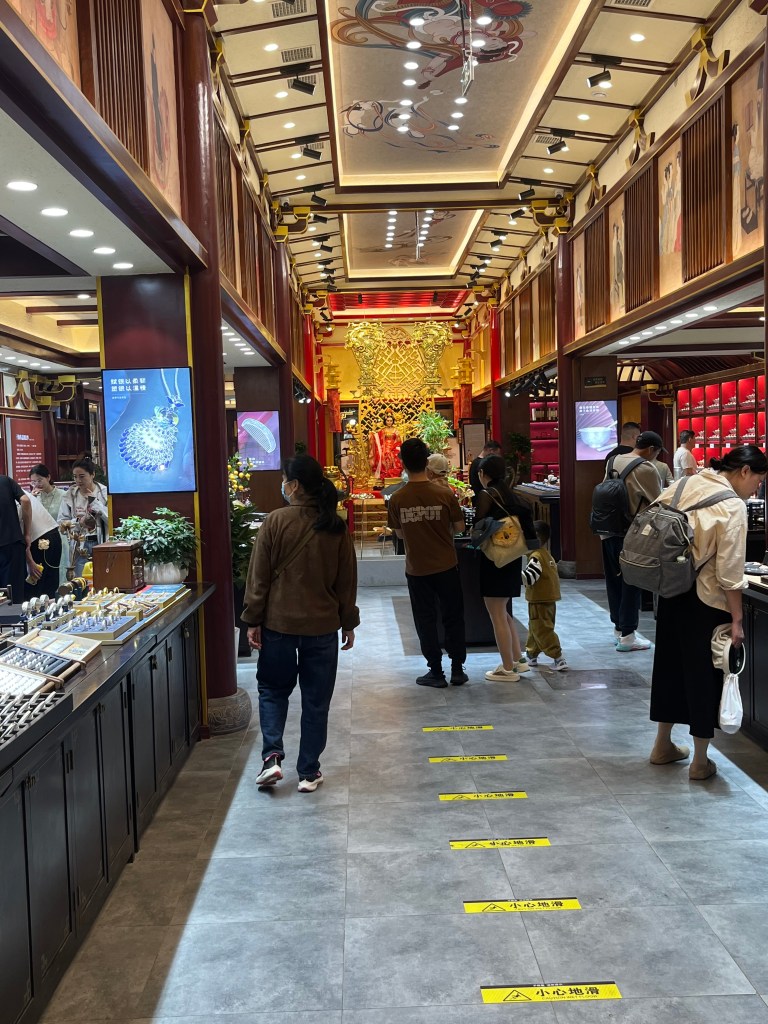
Diane soon found a jewellery store where Gary bought her a lovely pair of Jade earrings for an anniversary present.

As in everywhere we went in China it was all very clean, always workers sweeping the streets or washing the roads and pavements.

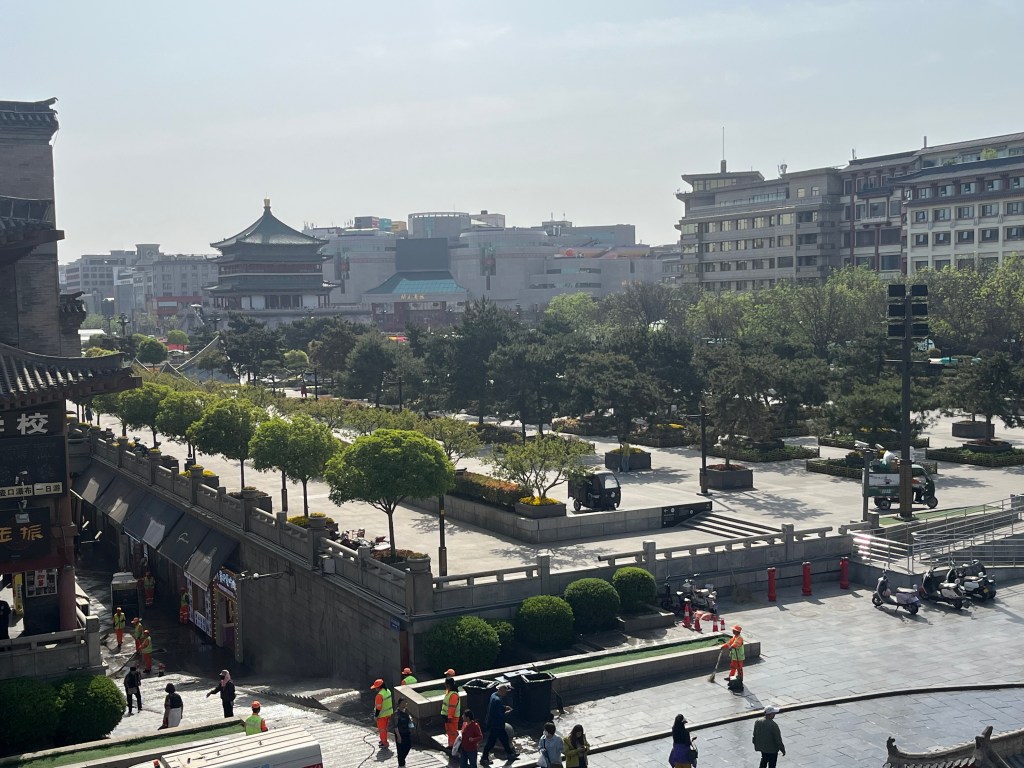
The Drum Tower of Xi’an, along with the Bell Tower is a symbol of the city and was built in 1380 during the Ming Dynasty, it stands towering above the city center and offers a great view of Xi’an.

In the distance you can see the Bell Tower.

The Drum Tower got its name from the huge drum located within the building. In contrast to the Bell Tower, where the bell was struck at dawn, the drum was beaten at sunset to indicate the end of the day.

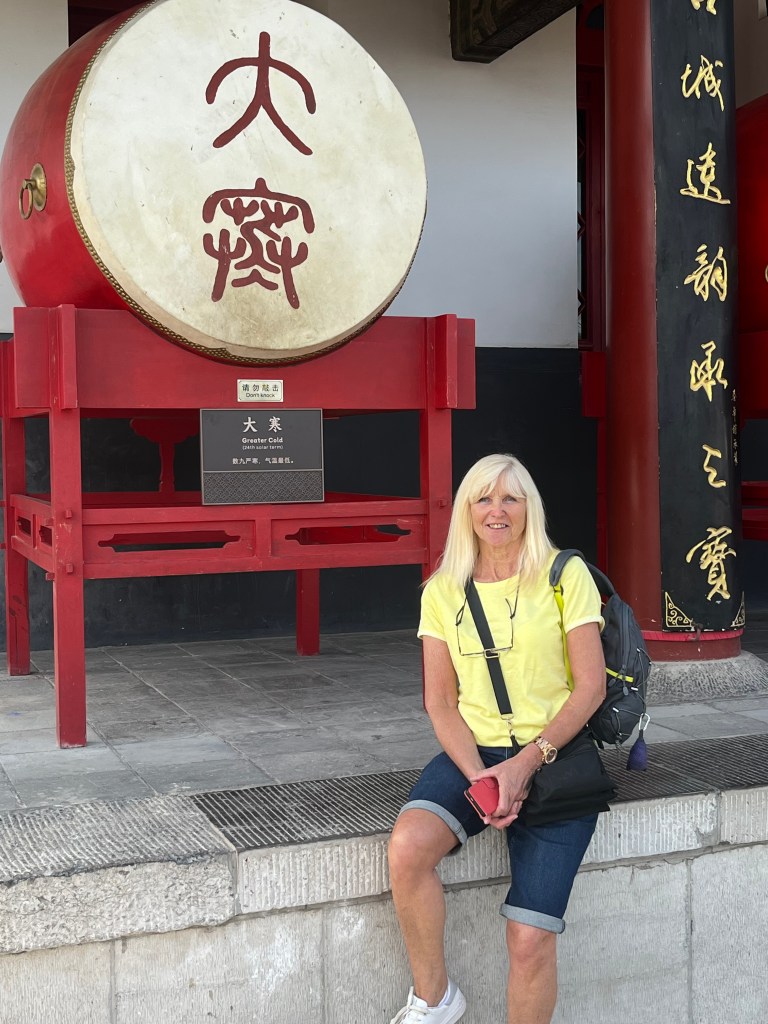
The impressive arrays of drums are only on show and visitors are not allowed to touch any of them.

But of course some people cannot help themselves and Diane got her first, (and not last!) telling off from the security guards for banging the ancient drum.

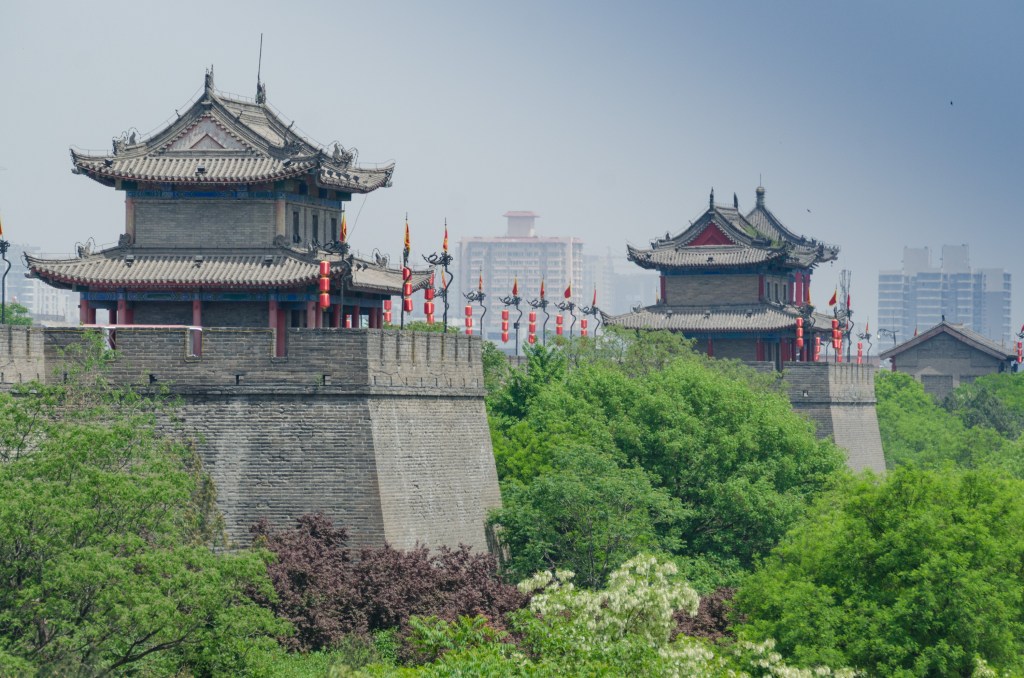
Leaving the Drum Tower we set off for the ancient city walls, one of the 4 main entrance gates you can just see in the background.

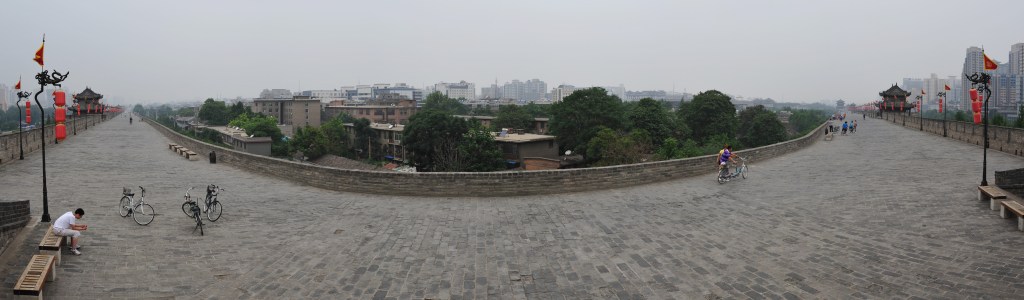
The city walls buil;t in the 14th century are very impressive, stretching for 8 miles and marking the end, (or start?) of the silk road, the ancient trading route from China to Europe.

The Chinese took great interest in the security of their trade products, and extended the Great Wall of China to ensure the protection of the trade route.

By the first century AD, Chinese silk was widely sought after in Rome, Egypt, and Greece. Other lucrative commodities from the East included tea, dyes, perfumes, porcelain, gunpowder and paper; among Western exports coming East into China were horses, camels, honey, wine, and gold.

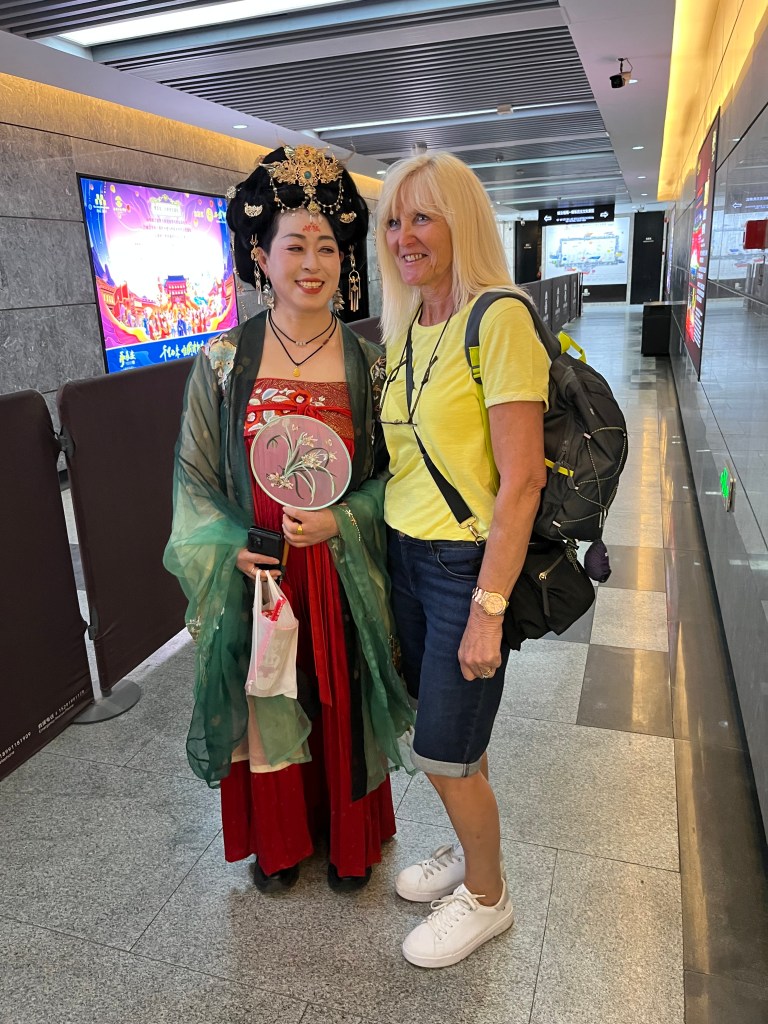
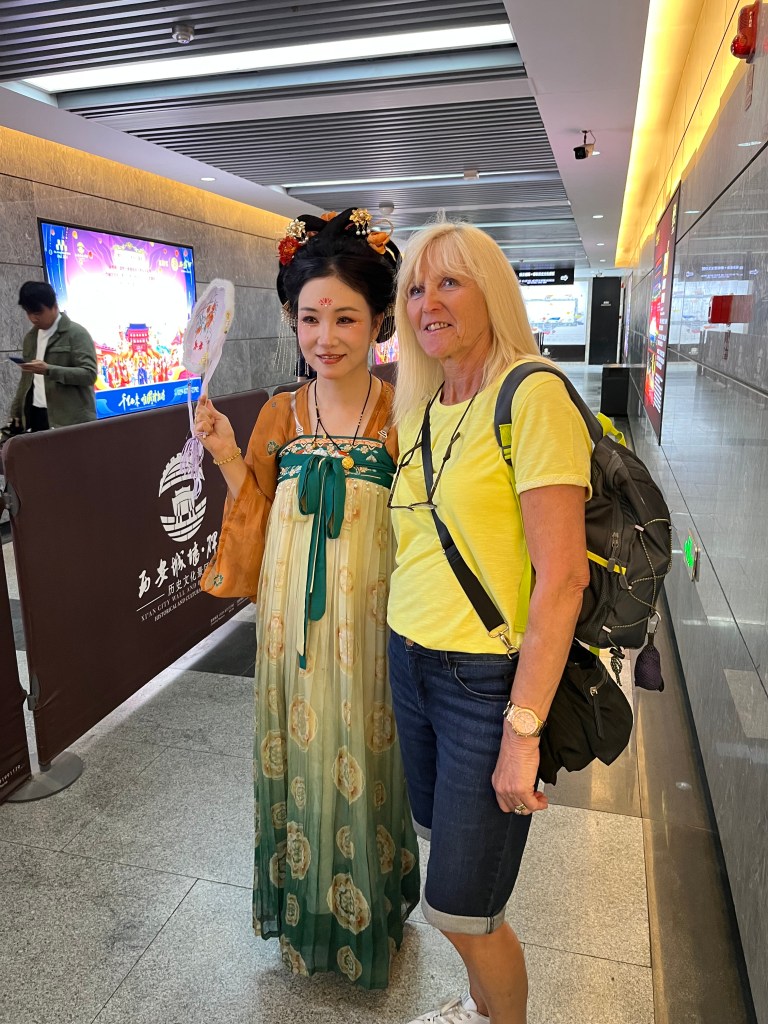
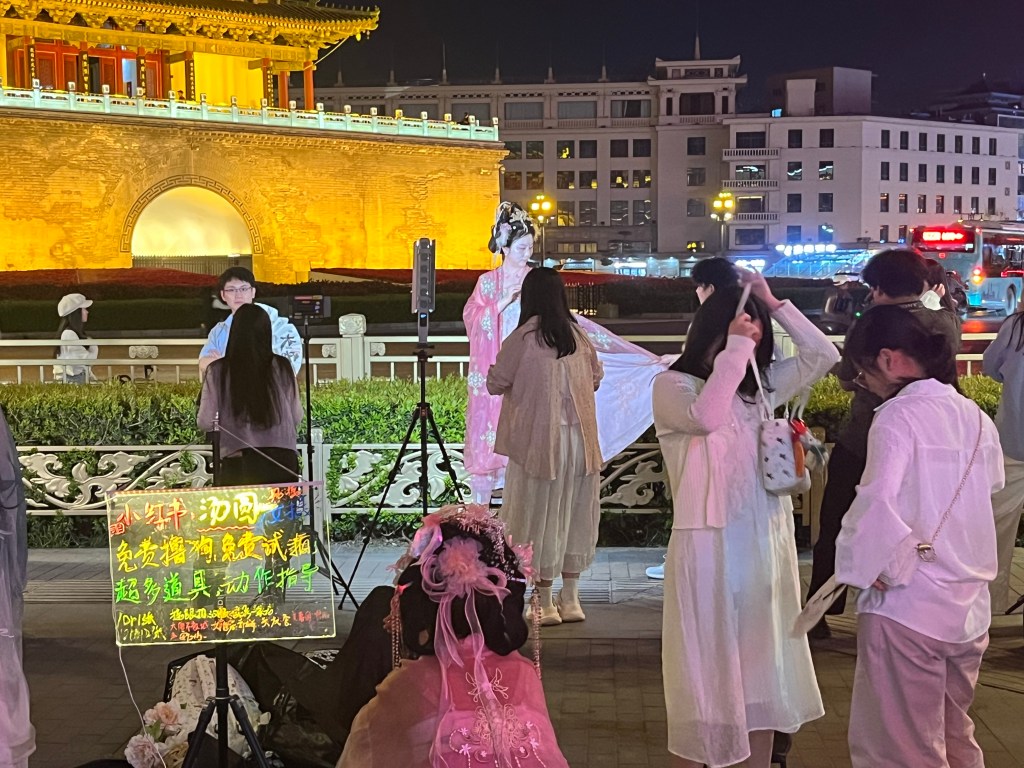
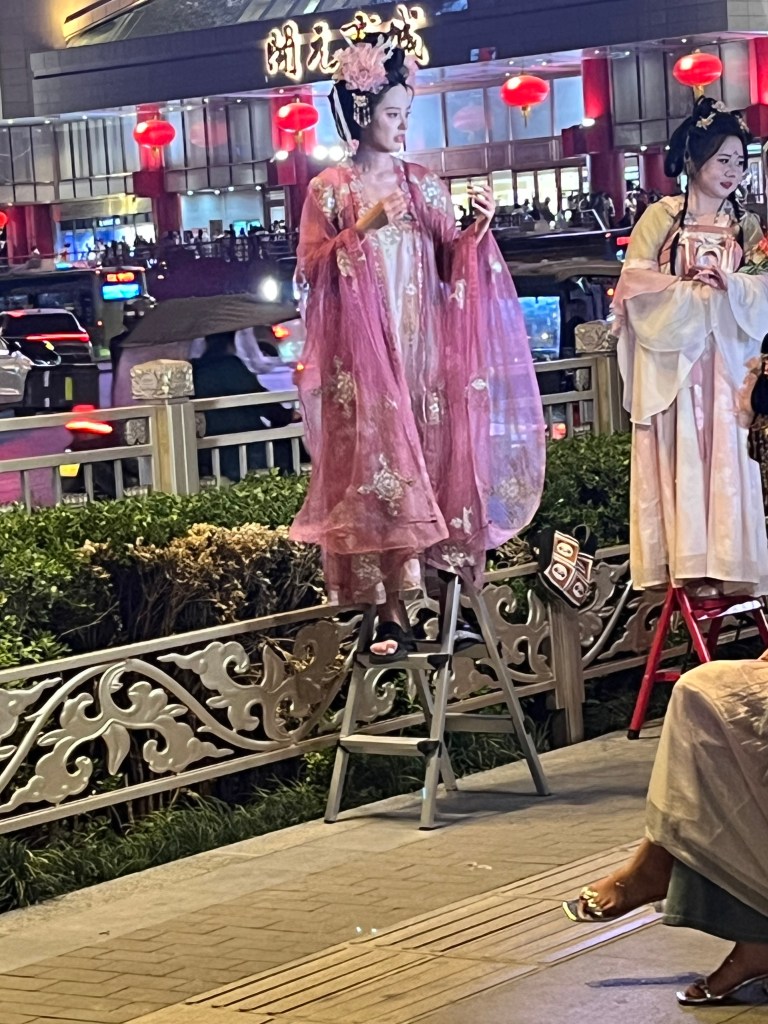
In the underpass on the way to the walls we came across some pretty ladies in traditional dress.

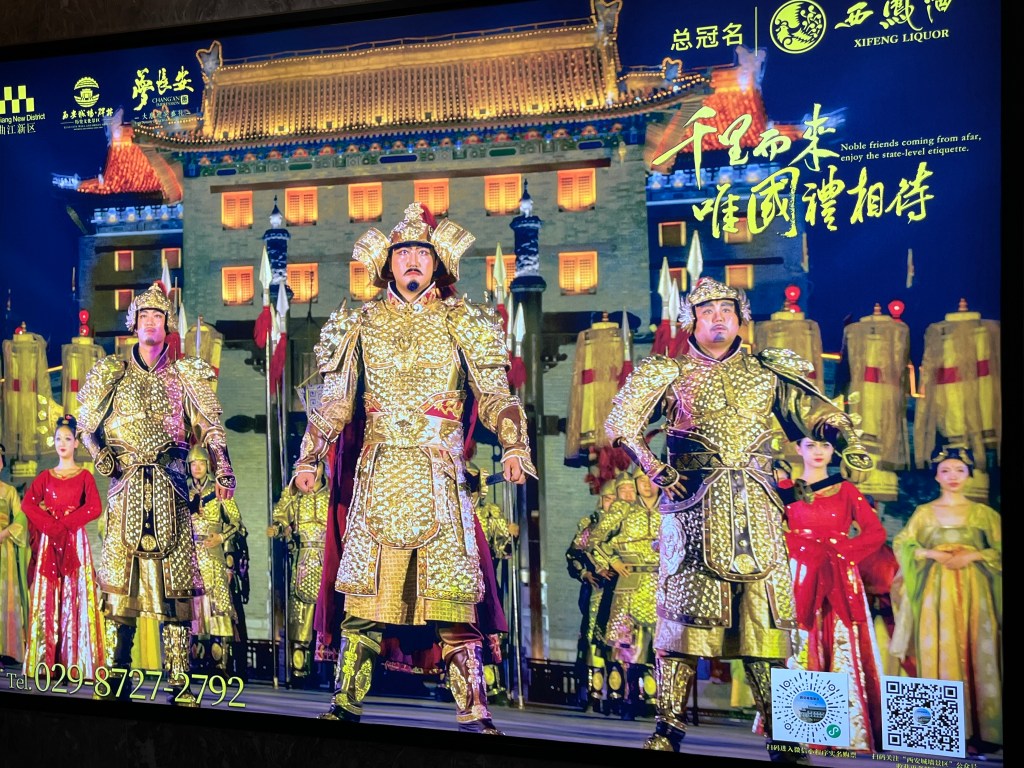
And an advert for a daily show which takes place at the entrance each evening.

Later that evening we strolled along to the Bell Tower which was stunning all illuminated and busy with girls having their photoshoots or doing live stream on TikTok.

So ended our first full day in Xi’AN

see you all tomorrow.

TTFN

Bibbley

To be notified of future posts please subscribe below.

The Temple of Heaven

The following day we took a 20 minute taxi ride to the south east area of Beijing to visit the Temple of Heaven.

As you will recall yesterday was a holiday in China for the Qingming Festival, also known as Tomb Sweeping Day, a 2,500 year old traditional Chinese festival dedicated to honoring  and making ritual offerings to their ancestors and so the whole weekend was going to be busy with families enjoying a trip out and the coming of spring.

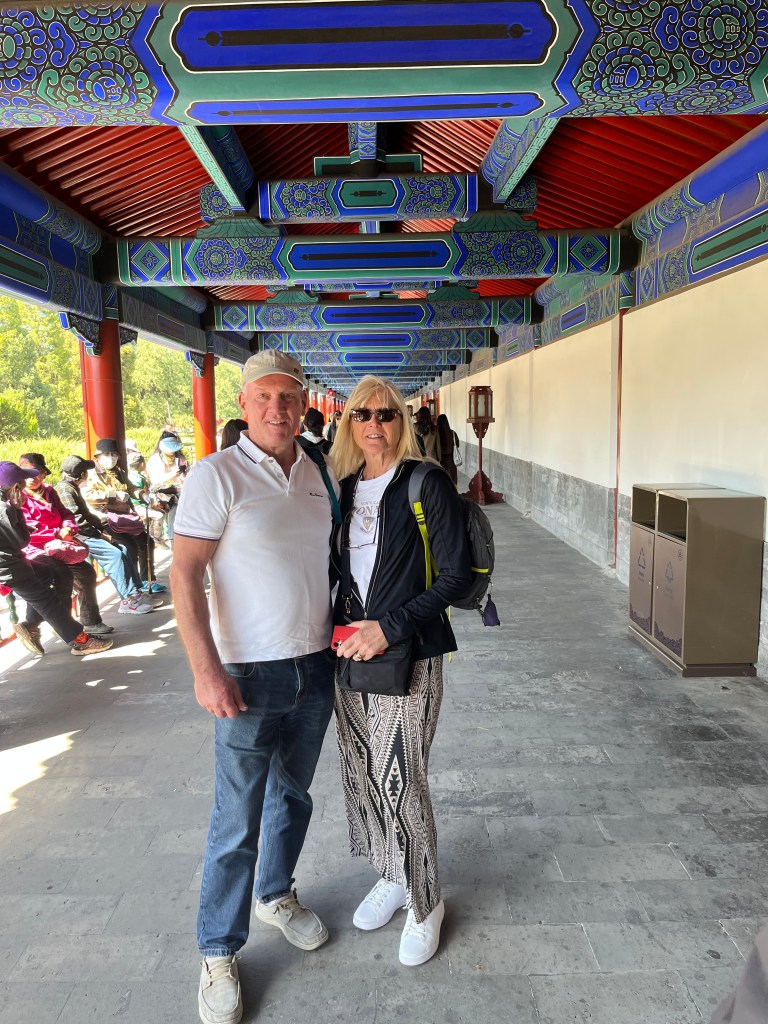
Entering the park, (free for seniors as are many places in China), we strolled along the Long Corridor, this beautifully crafted walkway stretches 350 meters, curving gently through the park. At 5 meters wide, it offers ample space for a leisurely walk. Its intricate decorations are not only visually stunning but also a testament to the artistry of ancient Chinese architecture.

The Temple of Heaven was used as a site by emperors of the Ming and Qing dynasties to offer sacrifice to heaven and pray for bumper harvests. The northern part of the Temple of Heaven is semicircular while the southern part is square, a pattern representing the ancient belief that “Heaven is round and Earth square”. Surrounded by a double wall, and covering an area of 273 hectares, it is divided into the Inner Temple and the Outer Temple by the double wall.

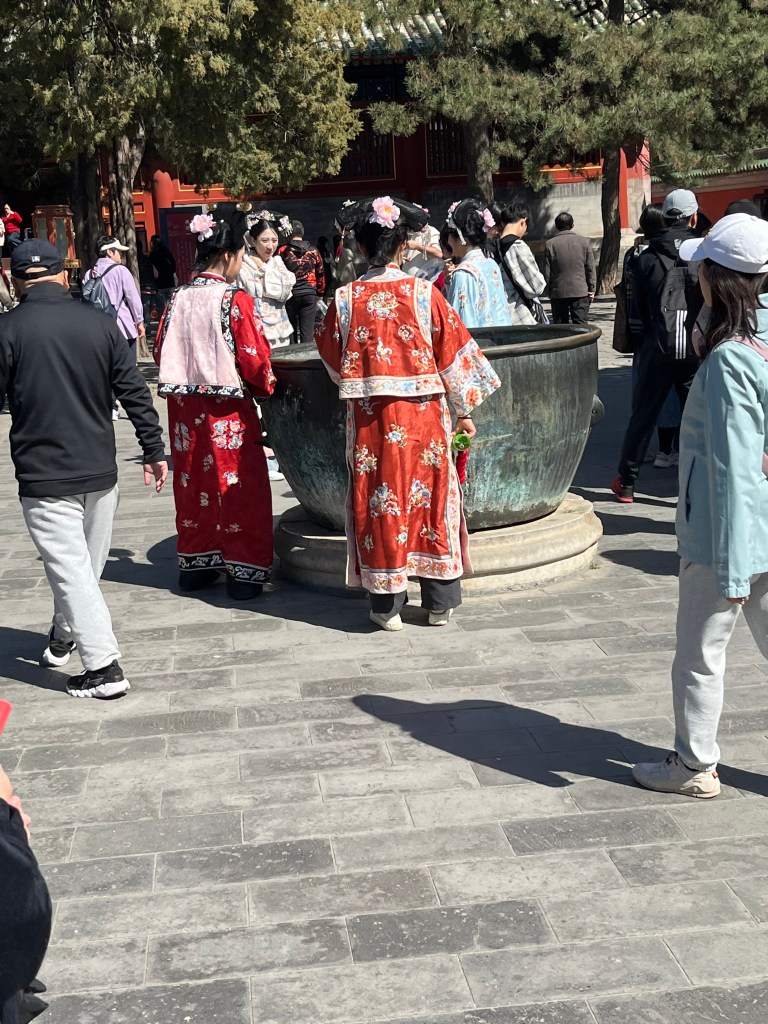
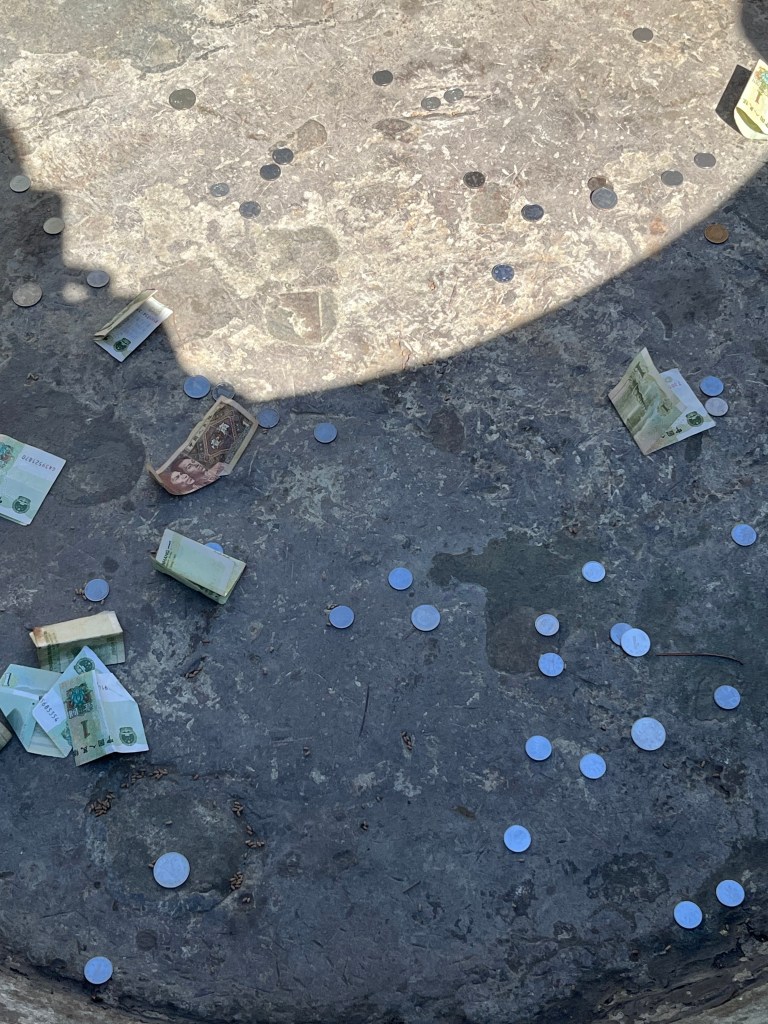
May local ladies dressed in traditional clothes and putting a few yen into the pot for good luck.

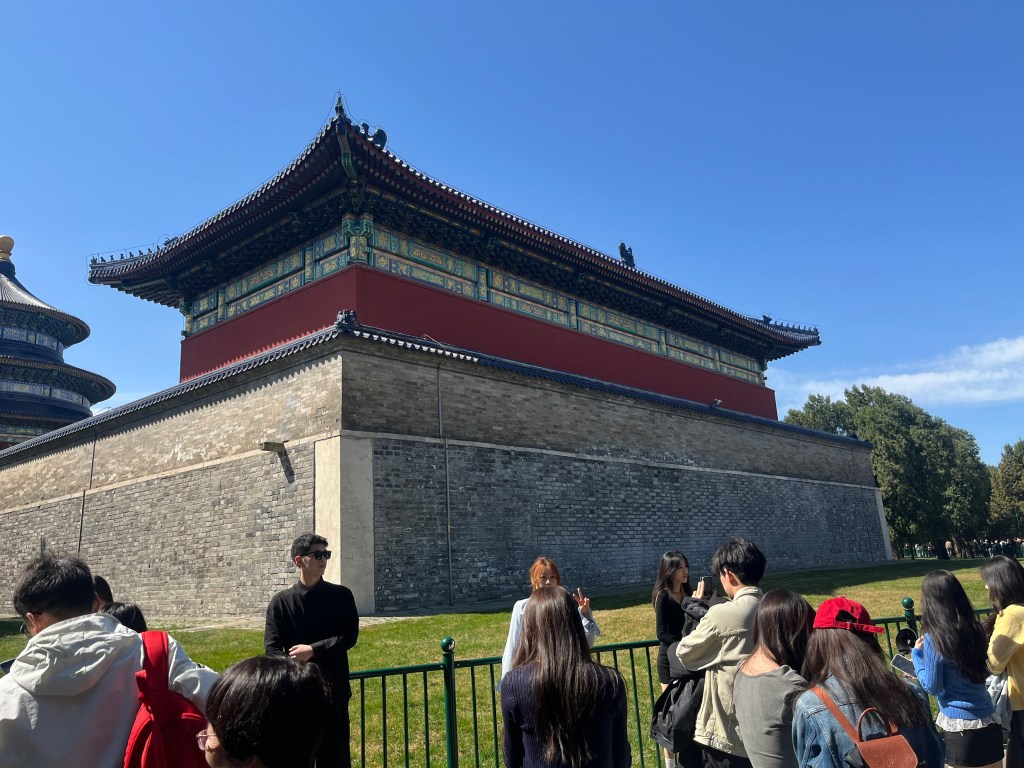
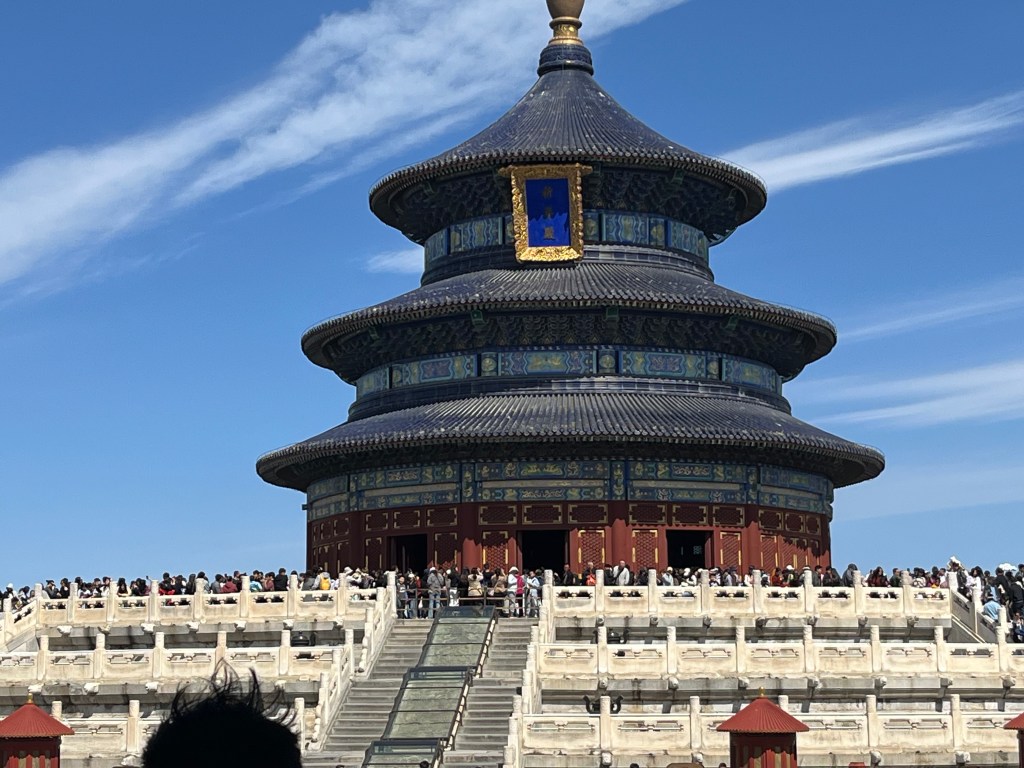
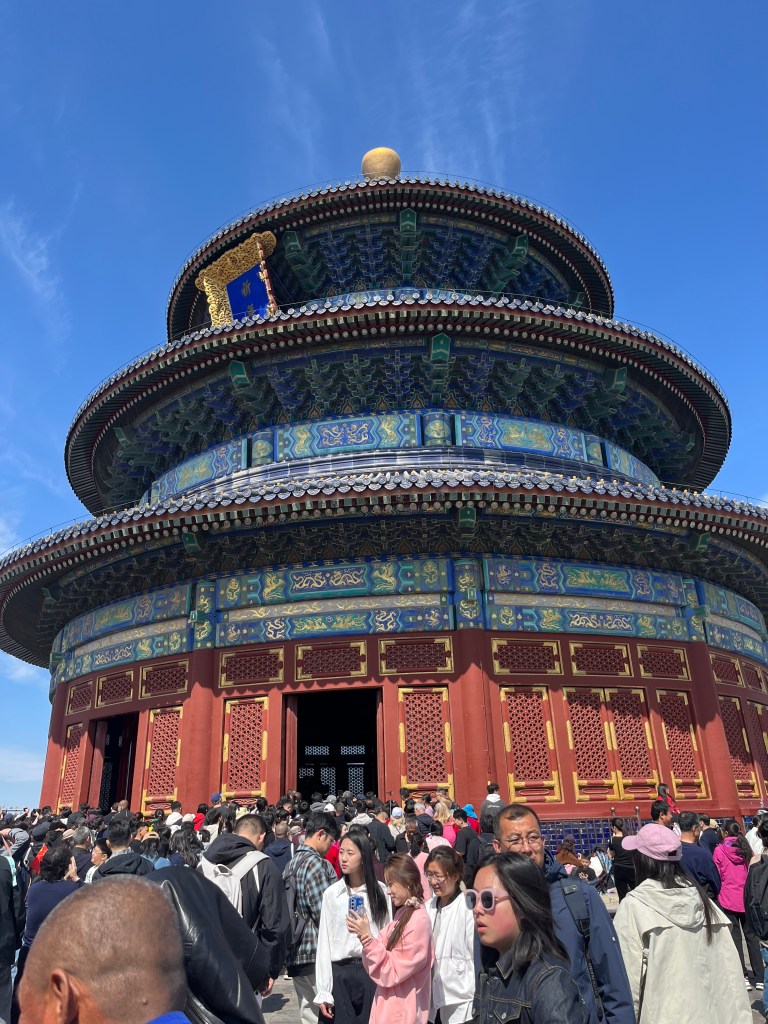
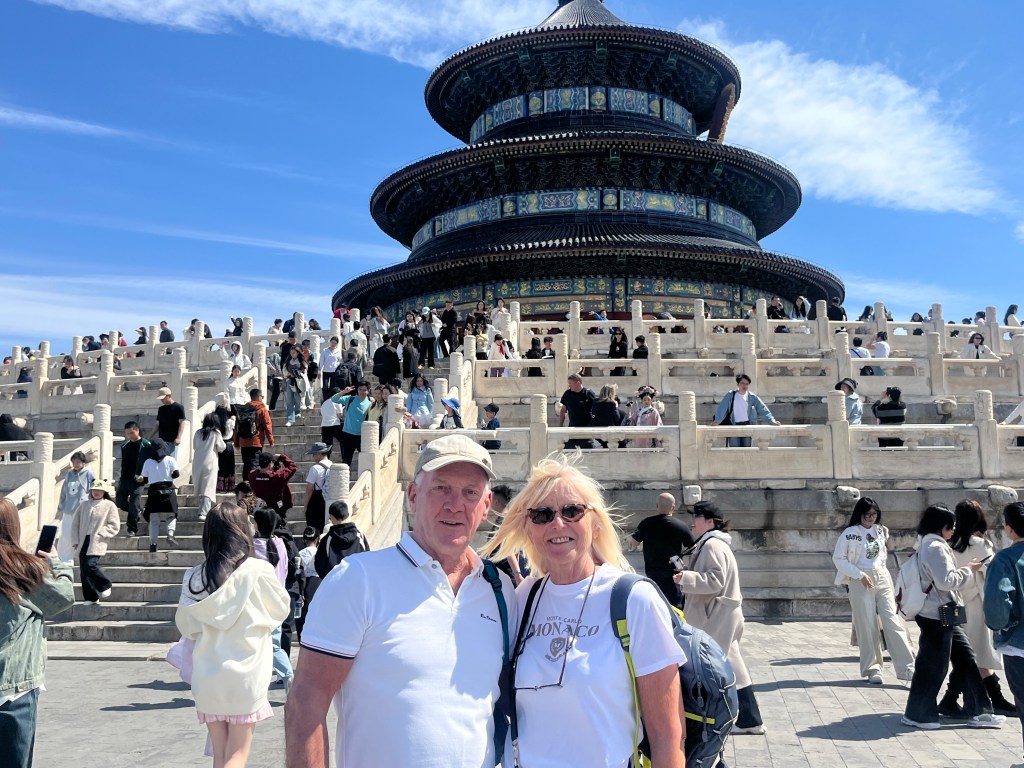
 The Hall of Prayer for Good Harvests, is the most iconic structure of the Temple of Heaven. This magnificent building is known for its unique, circular design and that no nails were used in its construction. Built in 1420, the hall symbolizes the harmony between heaven and earth, which was central to the emperor’s role as the intermediary between the two realms.

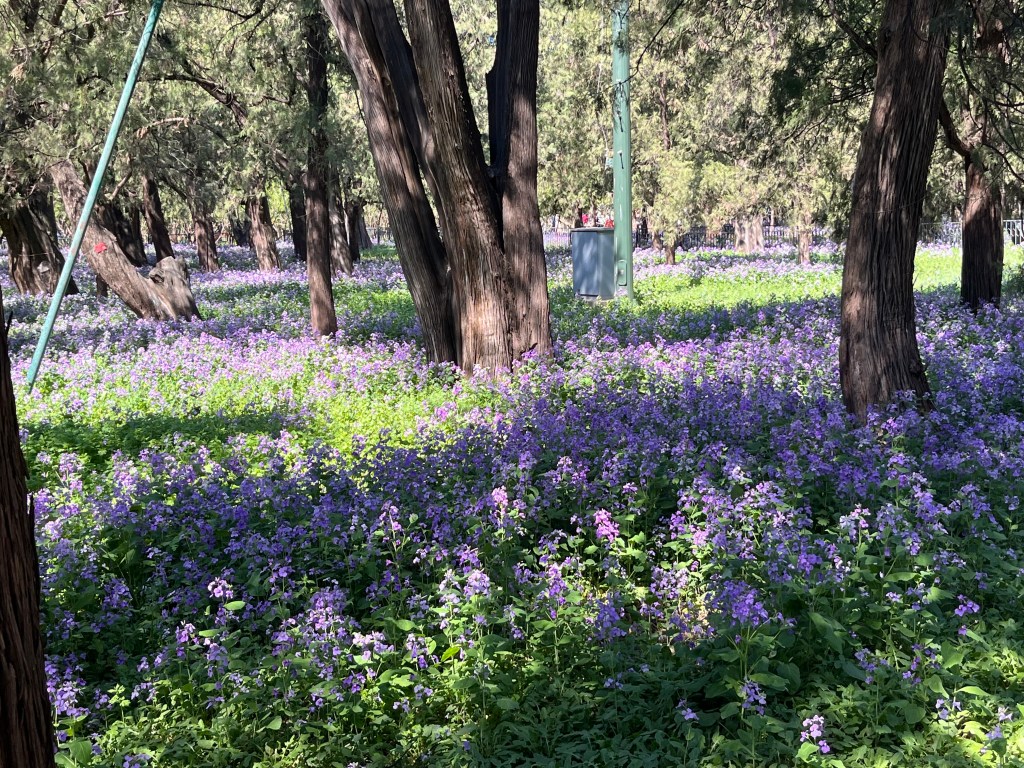
The whole park was very peaceful to wander through once we got past the crowds at the temple.

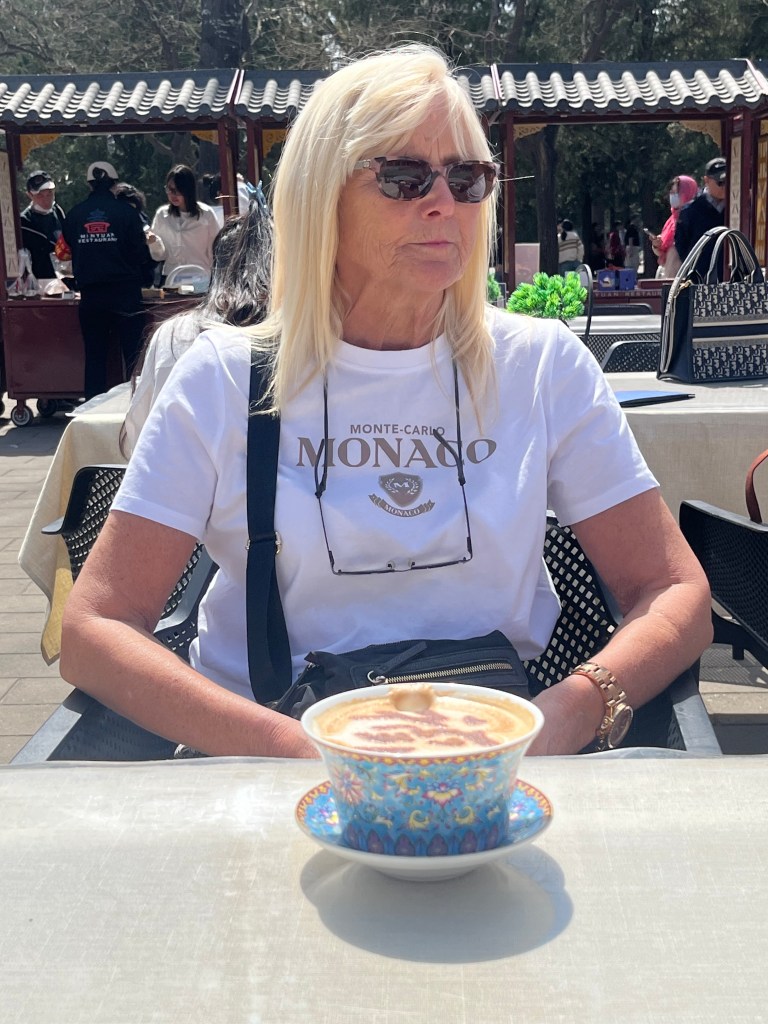
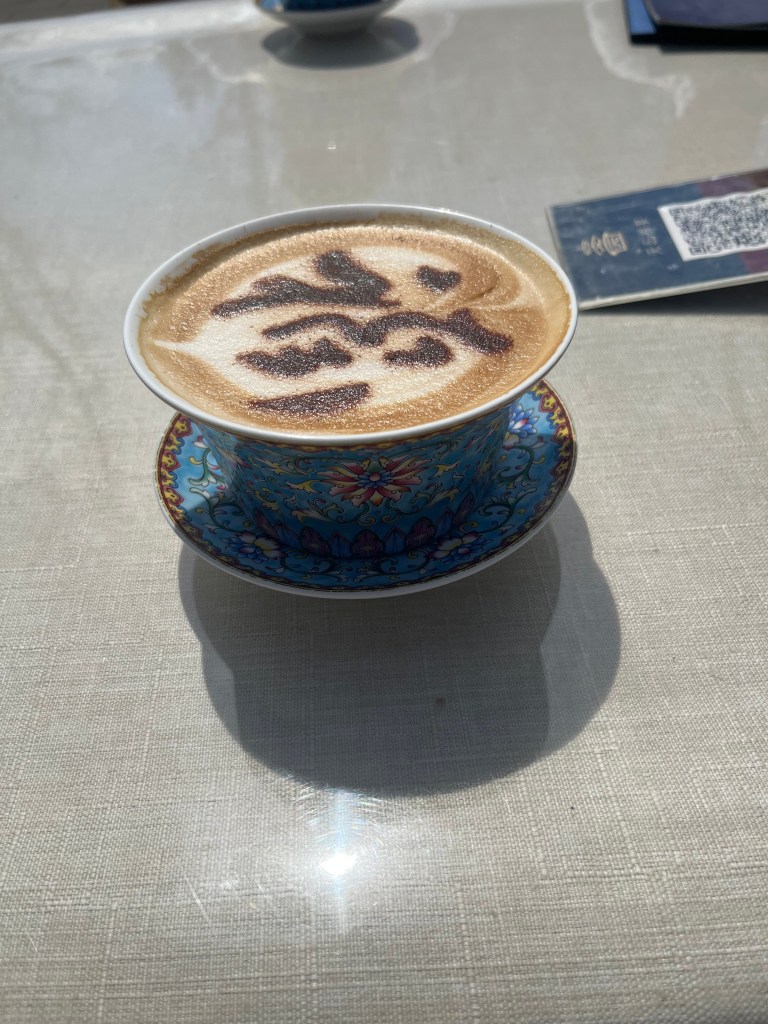
After a couple of hours it was time to take a rest with a cup of coffee.

The second part of the day was to be a visit to the Summer Palace.

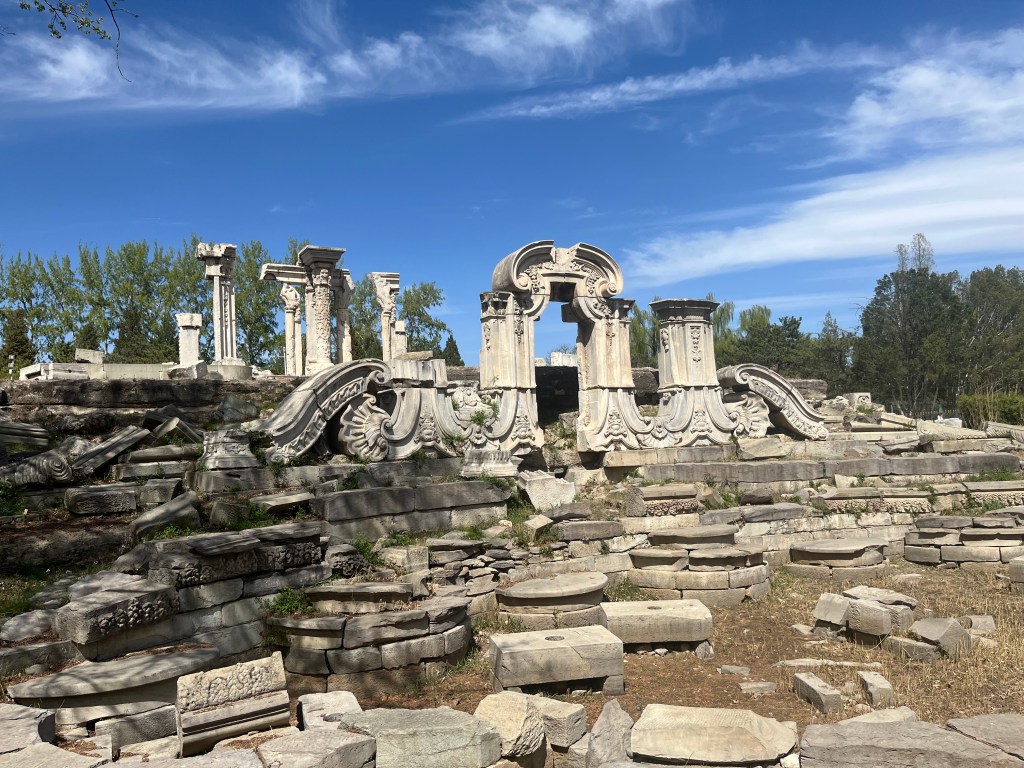
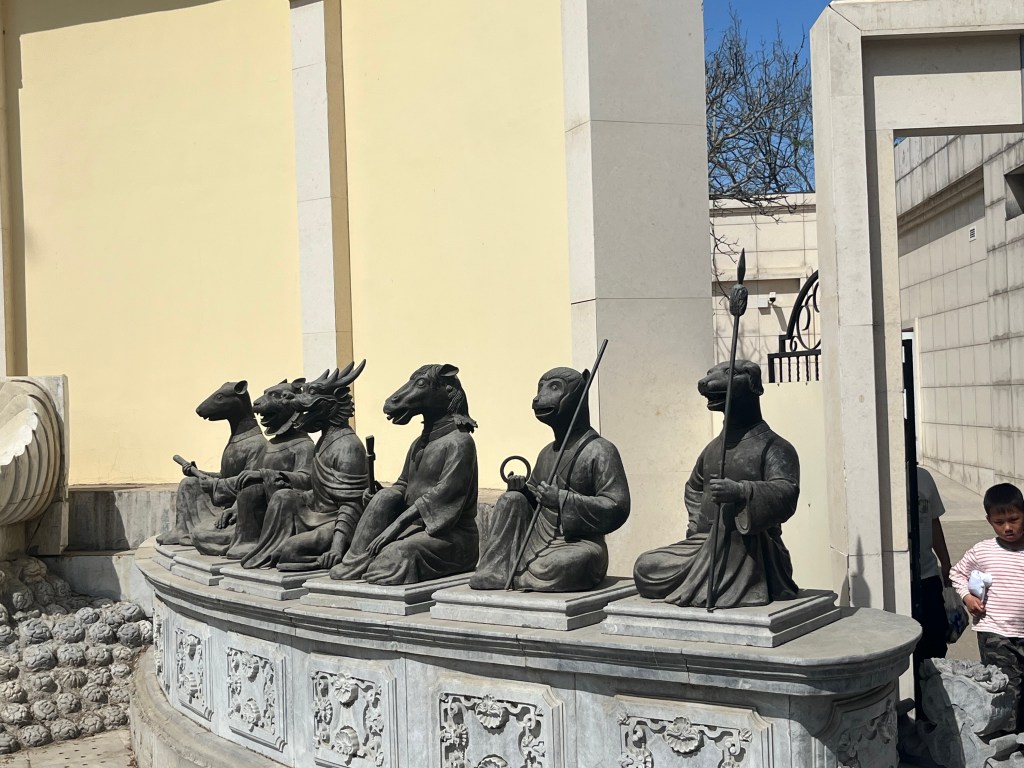
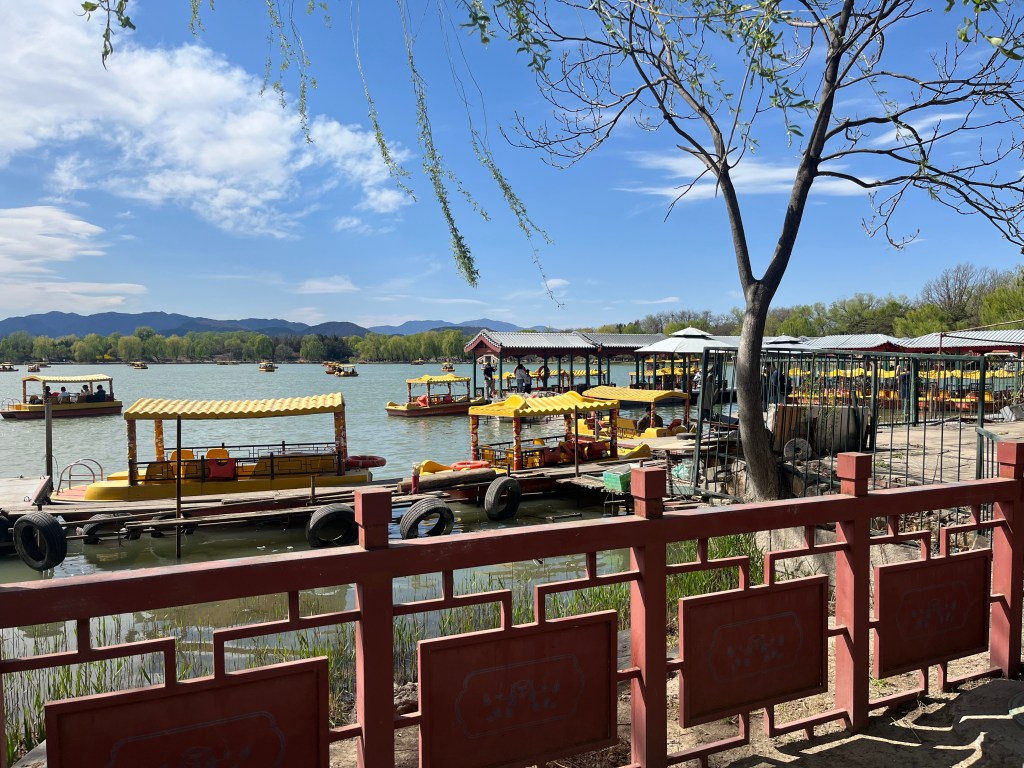
Here I must confess to an error in going to the wrong entrance and having to walk a mile or so through The Old Summer Palace which was built in 1707 and served as a residence for the emperor. It is considered the second Forbidden City. However, it was destroyed by French and British soldiers in 1860 and has never been rebuilt.

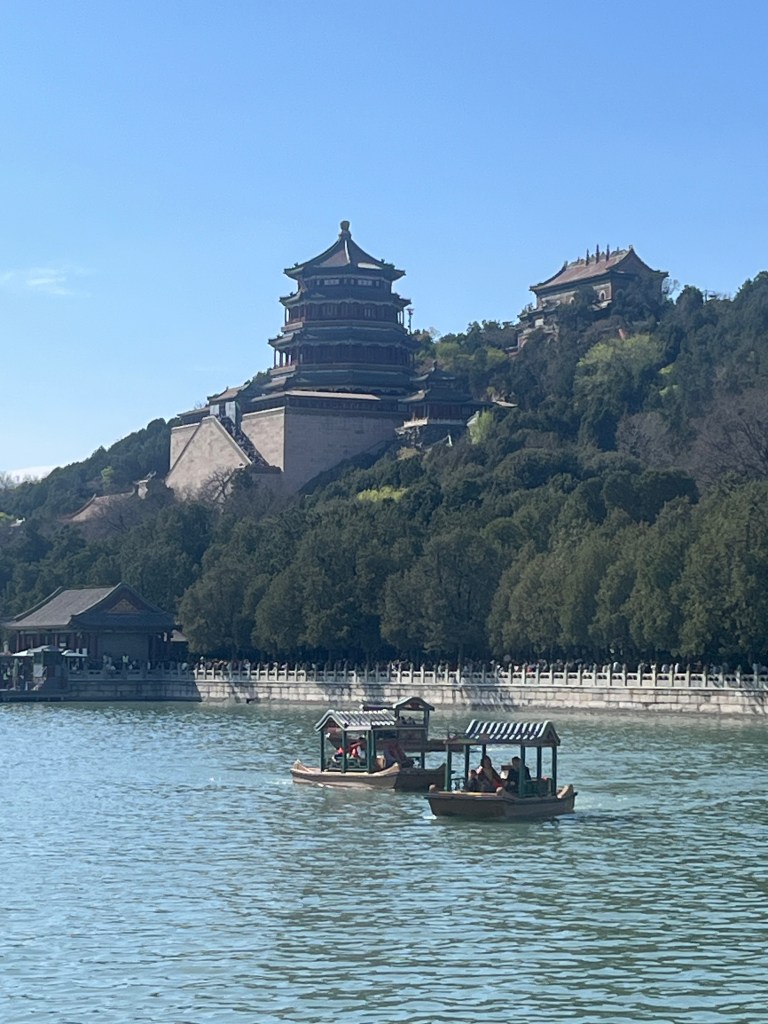
Anyway after a pleasant stroll we reached the Summer Palace which is a well preserved imperial garden and one of the largest of its kind still in existence in China today.

In 1750, Emperor Qianlong (who reigned from 1735 to 1796) ordered the rebuilding of the Garden of Clear Ripples (the original name of the Summer Palace) to celebrate his mother’s 60th birthday.

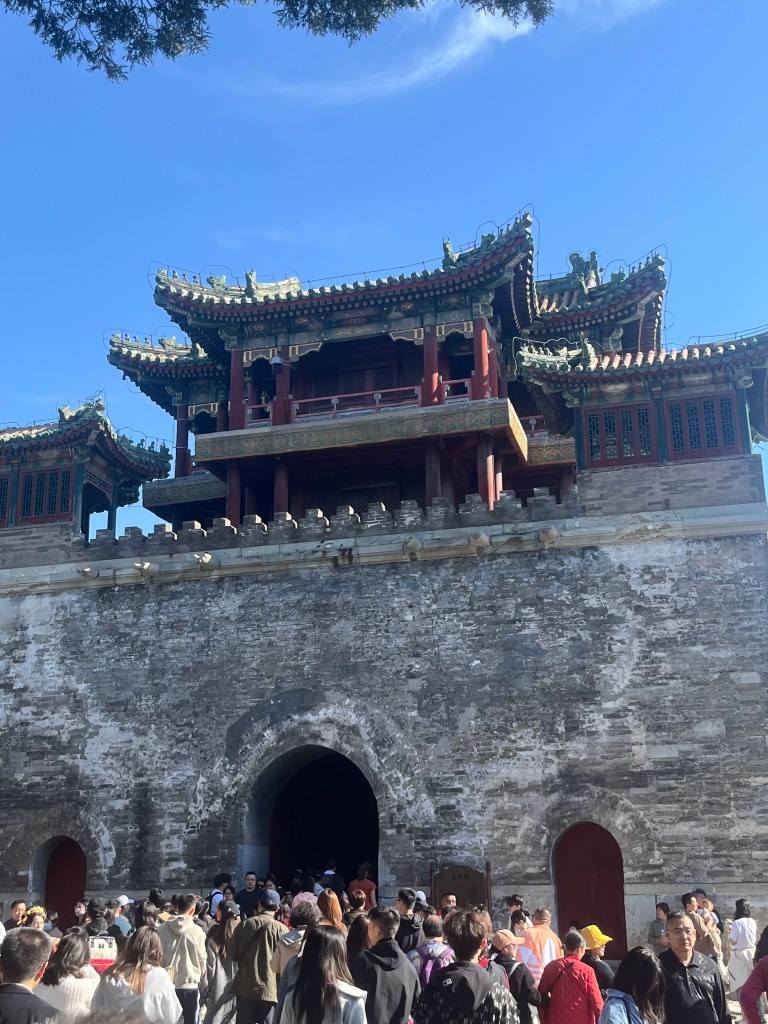
We decided not to climb up to the top of pagoda get a better view!

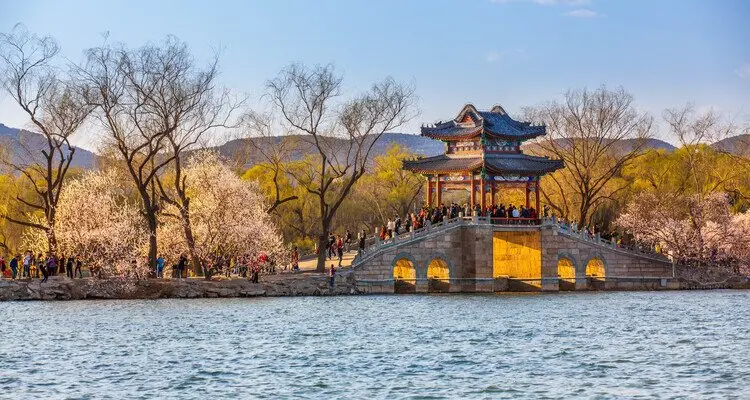
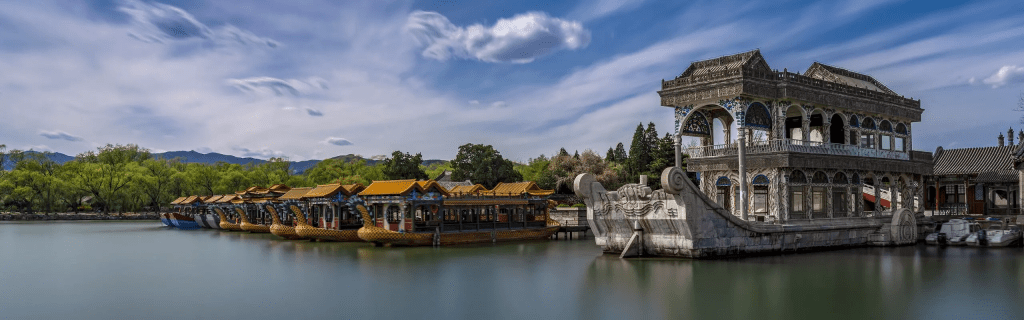
This photo courtesy of “China Highlights”

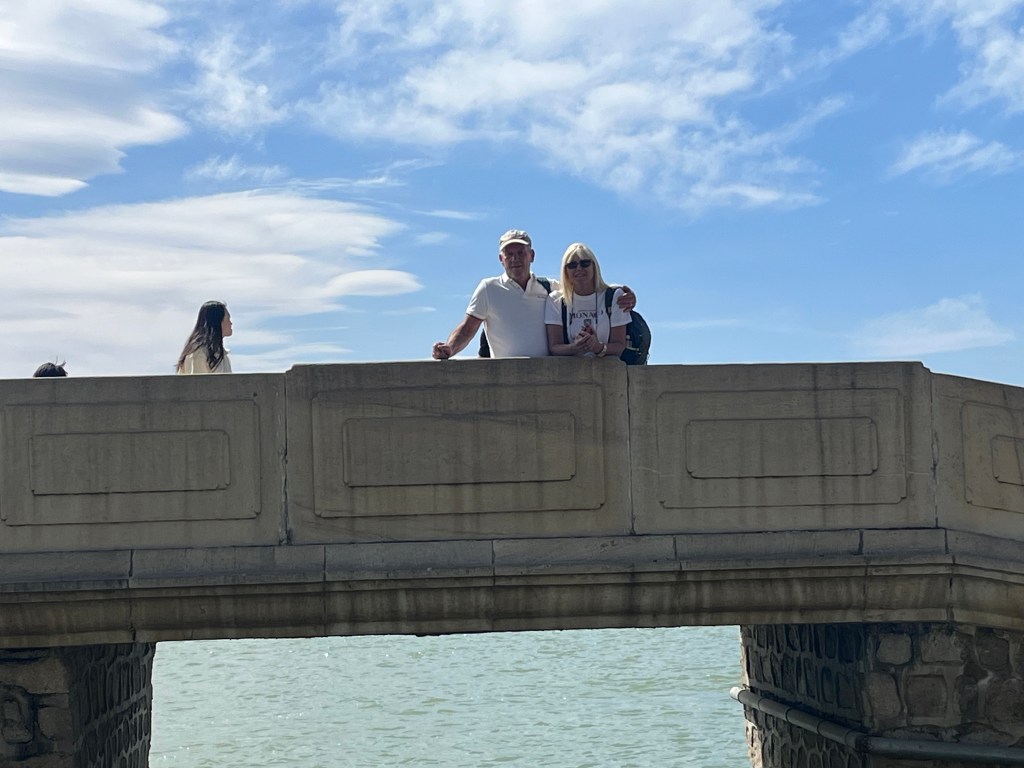
The Stone Boat, also known as the Marble Boat or Qingyanfang, is a lakeside pavilion located on Kunming Lake, near the western end of the lake. The boat was first built in 1755 and was later rebuilt by Empress Cixi in 1893, using funds meant for the navy. 

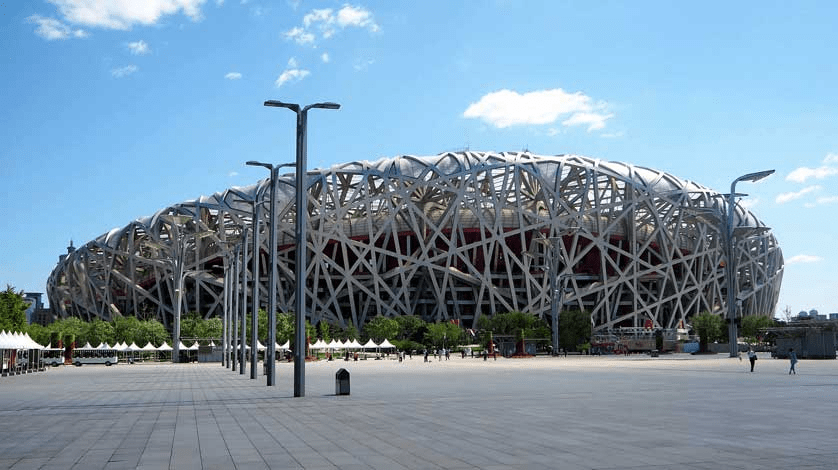
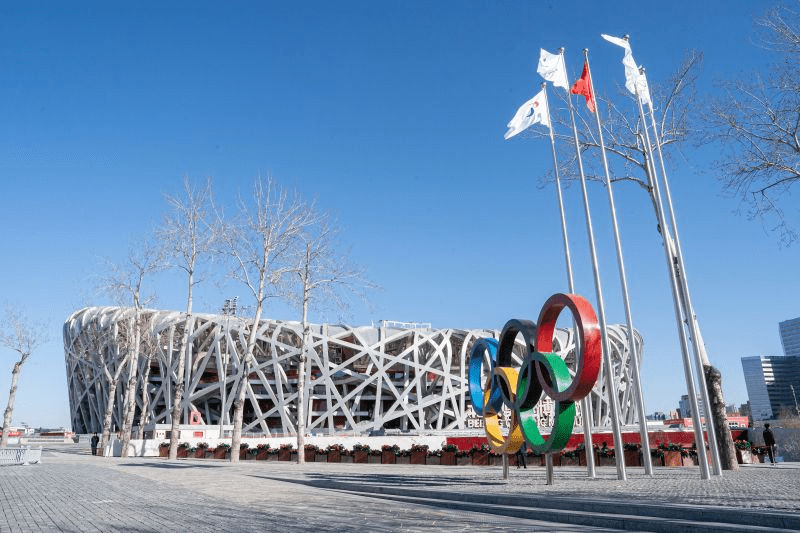
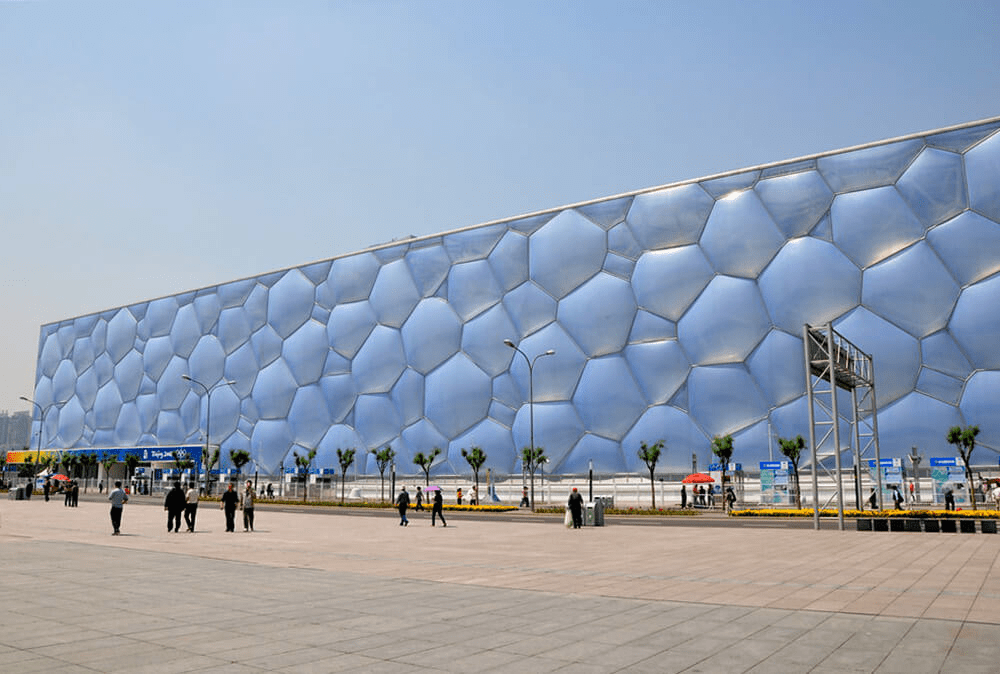
On the way back to our hotel in central Beijing we stopped off at the olympic park, the setting of the 2008 summer olympics and home to the iconic birds nest stadium, ( I wonder what the structural steel contractor thought when he first saw the drawings!) and the water cube swimming complex.

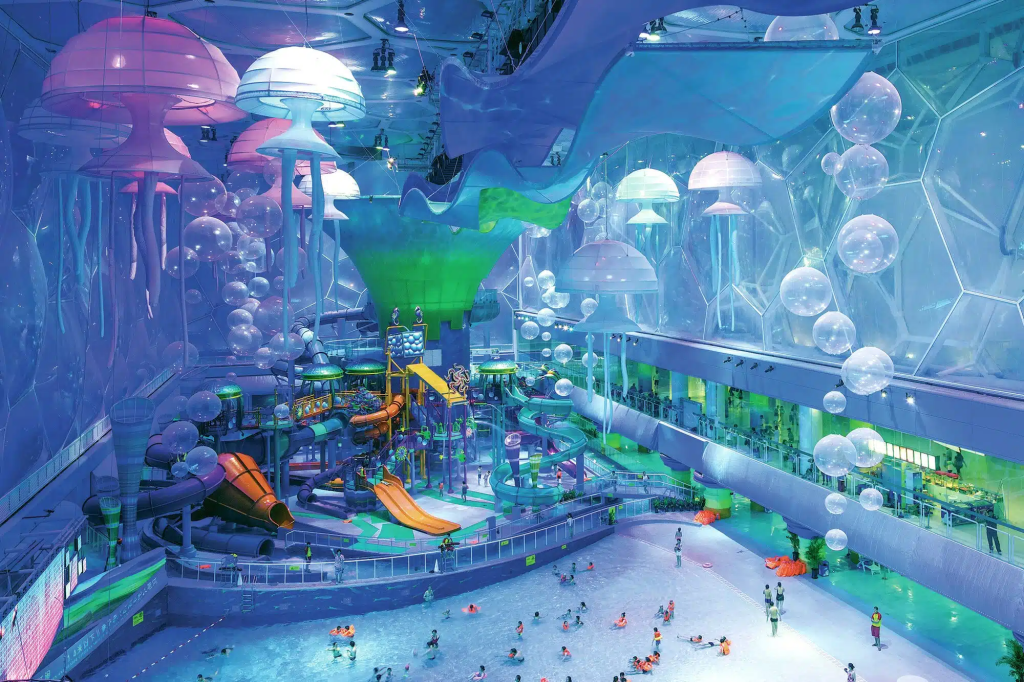
The water cube has two 50m olympic size pools, a diving pool and a stunning fun pool with many slides and water features.

And so that ended our time in Beijing and over a beer in the evening we recounted our days in this remarkable city full of the ancient and historic side of China and looked forward to our next stop in Xi’An, home of the Terracotta Warriors.

See you all there later!

TTFN

Bibbley

To be notified of future posts please subscribe below.

A return to China 2025

Those of you who read my last post will remember that I had planned a 3 week trip to China with Gary and Diane and finsally the day had come and with all suitcase packed we left on April 2nd for the drive to Gatwick Airport.

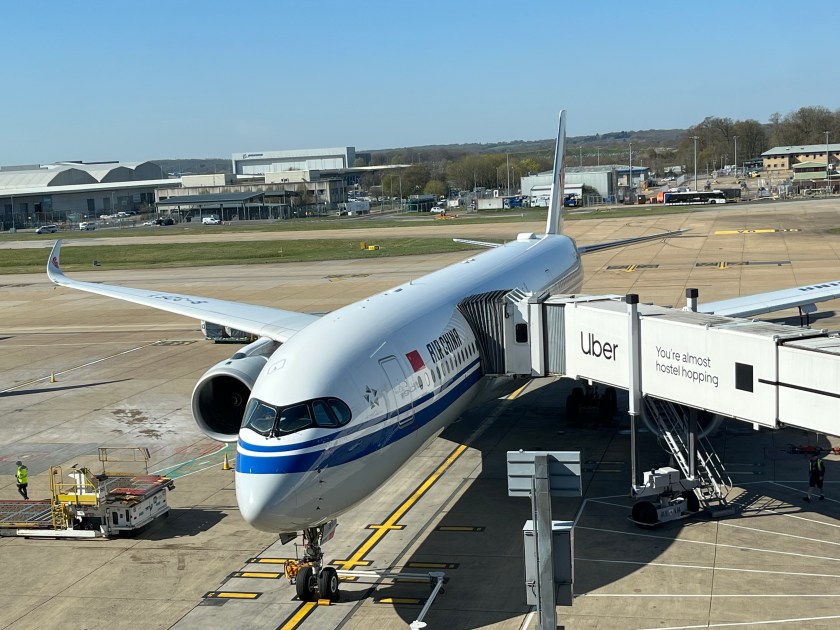
After leaving the car at the off-site parking company a short shuttle bus ride took us to the north terminal and the first sight of our aircraft for the 9hour 40minute flight to Beijing, the capital city with Air China.

Settling into our seats we looked forward to visiting a completely different country and culture. Although I had been to China before the temperature was in the high 30’s and was not completely enjoyable and i didn’t make the most of my time there.

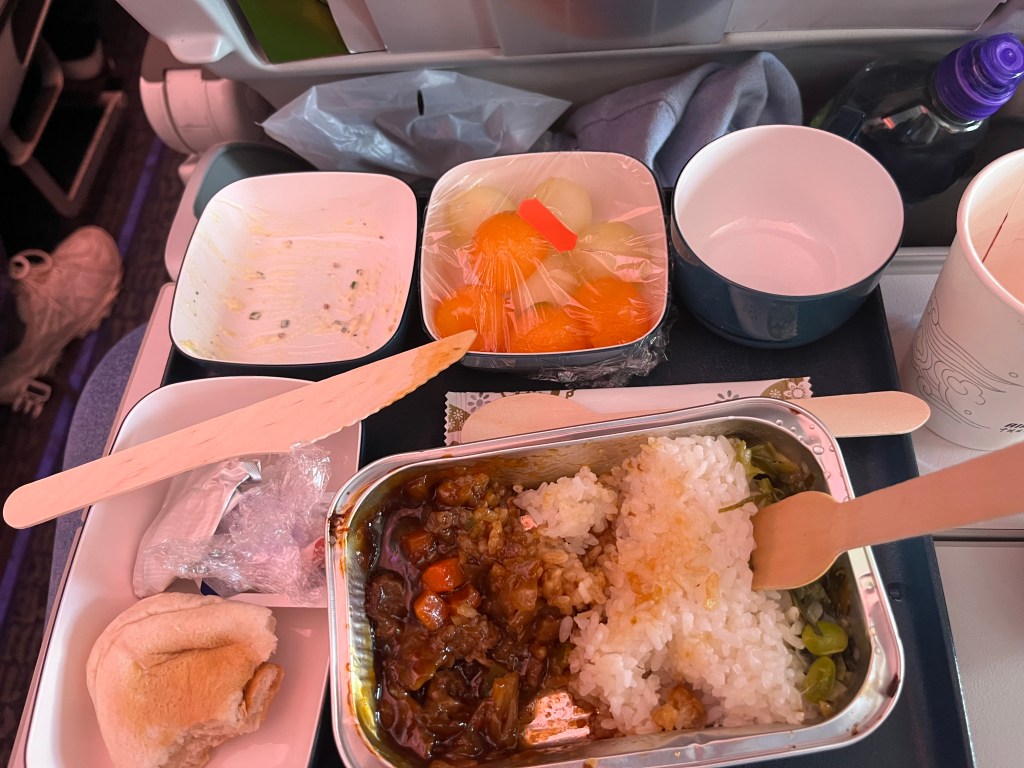
lunch was beef with rice which was pretty good and both Diane and I were pleased to see the wine on the drinks trolley.

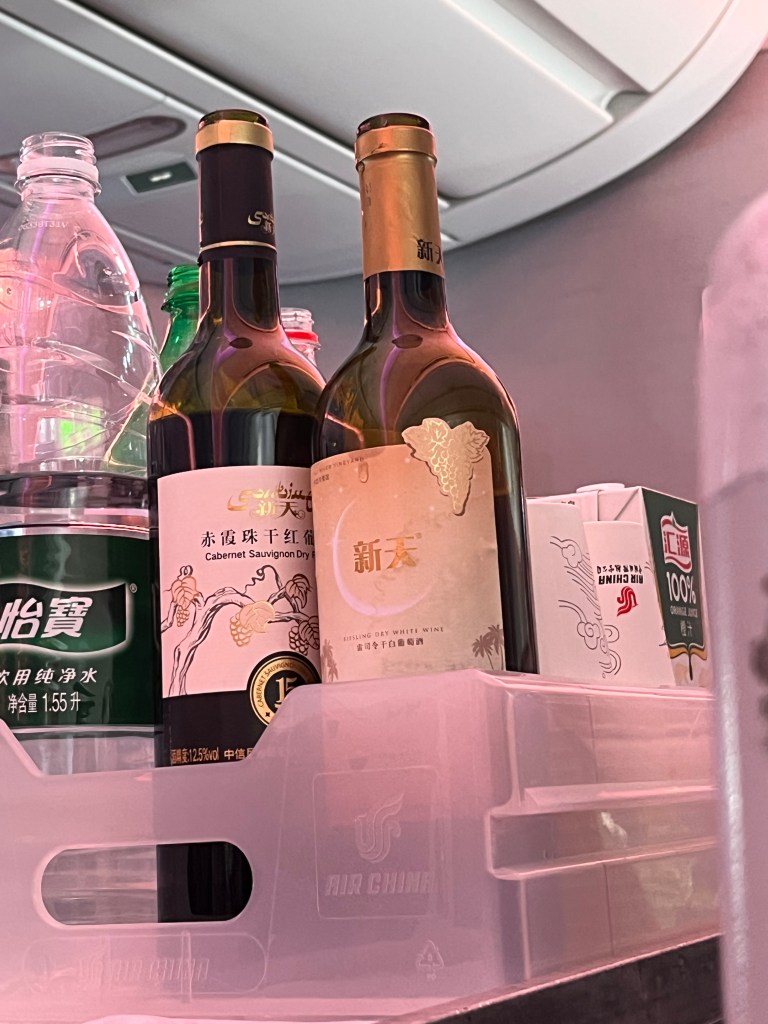
Our first taste of Chinese wine and certainly not the last!

We arrived in Beijing at 6.30 AM and took a taxi to our hotel, about 20 miles for £4 which was great. Throughout our 3 week trip we extensively used taxis as they were amazingly good value, I soon got the hang of ordering them on the ‘we chat’ app which was so easy. The majority of bars and restaurants have QR codes on the table and when you scan them in the app it brings up the menu, usually with an English option and just tap on what you want to order, tap again to pay and that’s it, so simple when you get used to it.

So ends our first day and see you all again tomorrow.

TTFN

Bibbley
To be notified when my next post is published simply enter your email below.